

Spanish Navy and Navantia Design an IAMD Frigate Aiming to Extend F110 class
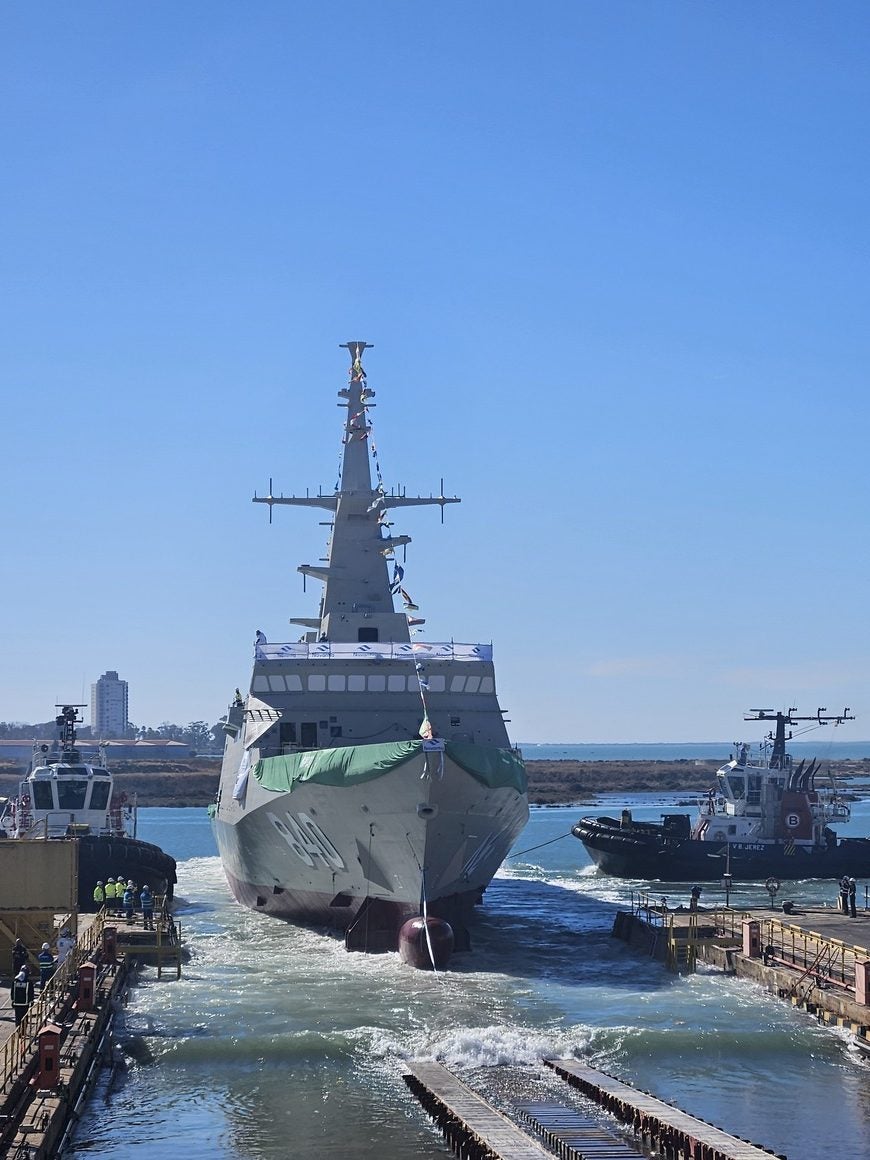
The Spanish Navy and Navantia are working together on the definition of a new frigate, an evolution of the current F110, with enhanced air and missile defence capabilities, with the aim of extending the existing F110 ‘Bonifaz’ class.
The work is based on requirements established by the Spanish Navy for the development of a future capability under its Armada 2050 document and builds on the F110 programme, currently under construction. The future configuration, under the name F110 IAMD (Integrated Air and Missile Defence), will evolve the platform to substantially enhance its air and missile defence capabilities while retaining the versatility, anti-submarine and anti-surface warfare capabilities, and digital architecture that characterise this new generation of frigates.
The objective is to provide a platform capable of simultaneously and jointly responding to a wide range of air threats, ballistic missiles and cruise missiles, while also performing area air defence, high-value asset escort and air defence coordination missions within a naval task group. Its increased speed and endurance will also facilitate its integration into extended deployments and highly demanding combined operations.
New capabilities for the Spanish Navy
Integrated air and missile defence: enhanced capability to detect, classify, track and simultaneously engage multiple threats at greater ranges.
Greater combat power: expanded vertical launch capacity, designed to accommodate different types of missiles and adapt the weapons load to the requirements of each mission.
Advanced command and control: evolution to the SCOMBA New Generation (NG) combat management system, hosted in the cloud and capable of integrating sensors, weapons, autonomous systems (UxVs), onboard systems and data links, enabling a shared tactical picture within the naval combat cloud and supporting the coordination of a naval force’s air defence.
Allied interoperability: designed for full integration into NATO and EU task groups, with the ability to exchange information and operate within joint, multi-domain networks.
Response to emerging threats: an open, scalable and cyber-secure architecture designed to incorporate new sensors, effectors and solutions to counter next-generation missiles and uncrewed systems.
Multi-mission capability: retention of anti-submarine warfare, anti-surface warfare, electronic warfare and asymmetric threat capabilities, together with a multi-mission space for mission modules, a second helicopter and uncrewed vehicles.
Greater availability and efficiency: use of the Digital Twin, condition-based maintenance and the integrated platform management system to anticipate potential issues, optimise through-life support and support crew training.
The future frigates will complement the capabilities of the five F110 frigates currently under construction and will represent an evolution of the F110 family aimed at strengthening the fleet’s air and missile defence capabilities. Their final configuration will be developed in close collaboration between the Spanish Navy, the Ministry of Defence and Navantia, in accordance with operational requirements and the corresponding procurement process.
Sovereign capability and industrial development
The development of these new frigates will provide continuity to a highly complex naval design and shipbuilding capability while strengthening Spain’s strategic autonomy. The programme will mobilise engineering, systems integration and through-life support capabilities, with the involvement of Navantia’s industrial partners, comprising more than 500 companies across Spain, as well as technology centres and academic institutions.
The future frigates will further develop the F110 family, which was conceived from the outset to evolve and adapt to changing missions and threats. They will enable the Spanish Navy to incorporate next-generation capabilities to protect the Naval Force, strengthen deterrence and contribute to collective defence, as well as to European and Allied missions.
About Navantia
With a history of more than 300 years linked to the construction of ships for the Navy, Navantia is a state-owned and strategic technology company for the defence of Spain. Its areas of specialisation range from shipbuilding (surface and submarine) to the design and integration of systems with a high technological content, life cycle support and high value-added services. Additionally, with its brand Navantia Seanergies, it is a global supplier for the development of offshore wind energy and other green energies such as hydrogen. Navantia employs 7,000 people directly in Spain, the UK, Saudi Arabia and Australia.
Committed to building a safe and sustainable future through technological excellence and industrial collaboration, Navantia has contracts with Governments and companies around the world and ties with universities and technological and academic centres. It contributes to sustainability and innovation through its daily commitment to people and the planet, with responsible practices from the point of view of labour, the environment and economic and technological development that are viable regionally, nationally and internationally. It is owned 100% by the Sociedad Española de Participaciones Industriales (SEPI), attached to the Ministry of Finance of Spain.