

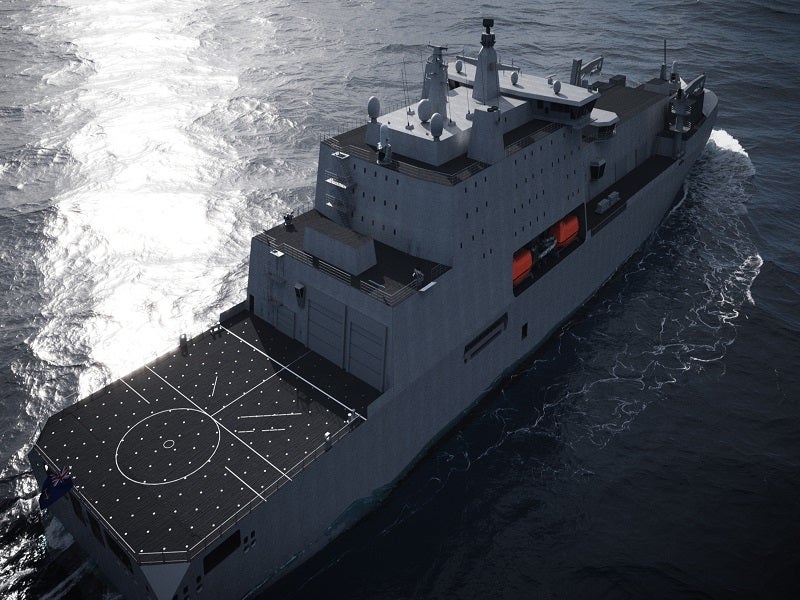
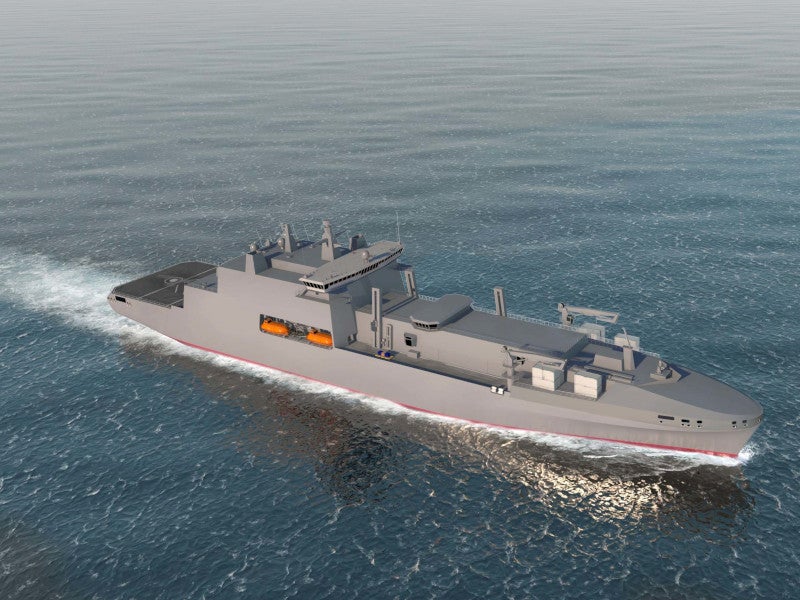
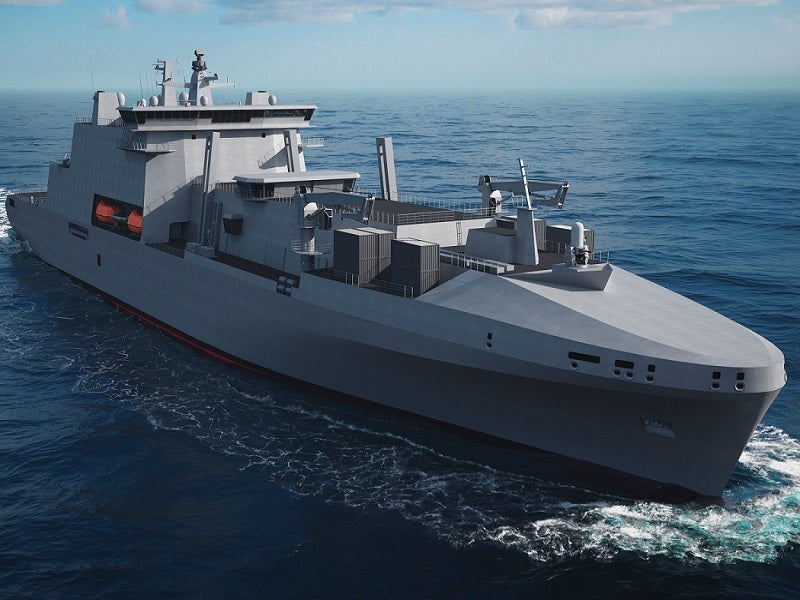
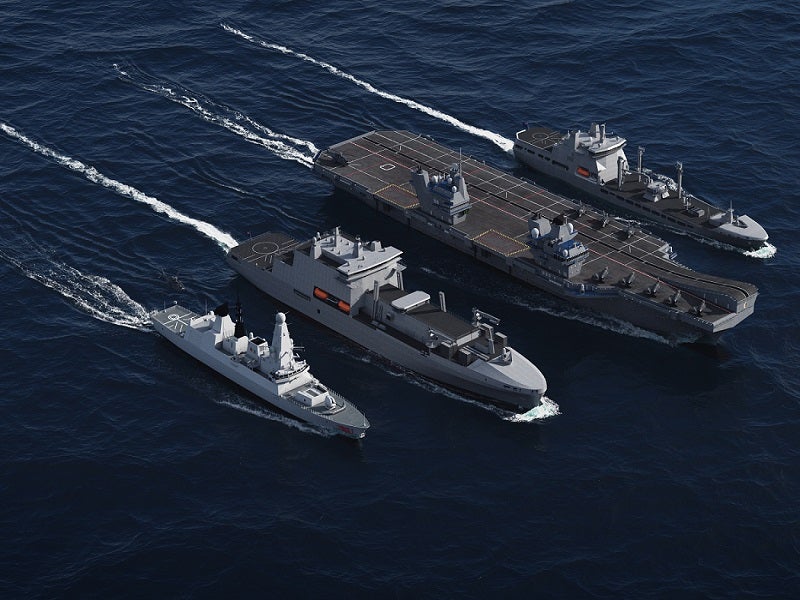
The Fleet Solid Support (FSS) ships are designed to supply munitions, stores and provisions to the Royal Navy’s aircraft carriers, destroyers and frigates. They will also offer logistical and operational support, including missions against piracy and terrorism, and will work closely with allies on joint operations.
Team Resolute, comprising the shipbuilders Navantia and Harland & Wolff along with naval architects BMT, will deliver three FFS ships to the Royal Fleet Auxiliary (RFA), a naval auxiliary fleet owned by the UK’s Ministry of Defence (UK MoD).
Recommended White Papers

Recommended Buyers Guides

The three ships are named the RFA Resurgent, RFA Reliant and RFA Resourceful.
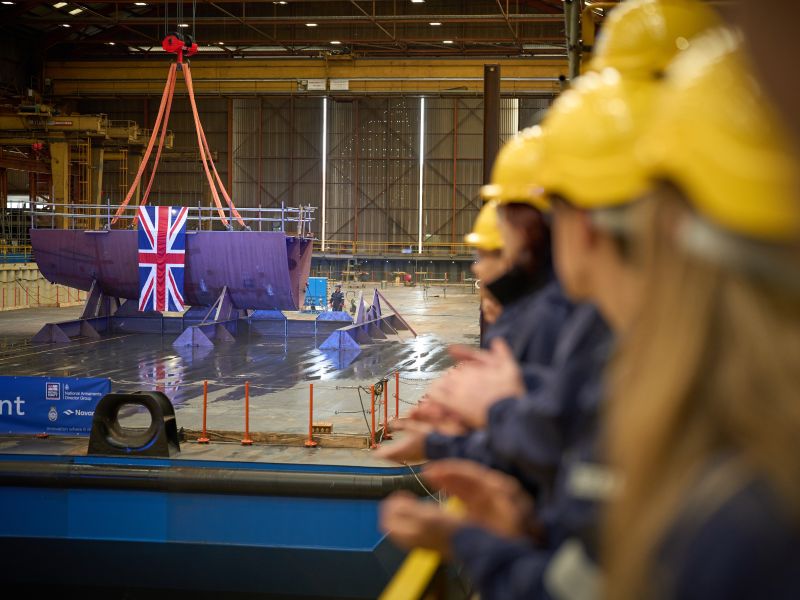
The steel-cutting ceremony for the first ship, the RFA Resurgent, was held in December 2025, followed by a keel-laying ceremony in September 2026.
Construction of the ship module is under way at Navantia UK’s Appledore yard, at its Harland & Wolff facility in Belfast, Northern Ireland, and across Navantia’s yards in Spain. The Harland & Wolff shipyard in Belfast will then handle the ships’ final assembly, systems integration and trials.
The RFA Resurgent is expected to enter service with the RFA in the early 2030s.
Fleet Solid Support design and features
Each FSS ship will measure 216m (708ft) in length and 34.5m in width. The ships will have a displacement of 39,000t, a maximum speed of more than 19 knots and an operational range of range of 11,000 nautical miles.
The ship’s design features a full-width integrated bridge and enclosed bridge wings. Three heavy replenishment-at-sea delivery rigs and stations for solid and liquid reception at sea will be part of the ships.
The vessels will have a storage capacity of 9,000m² (96,875.2ft²) for supplies and stores and enable a centralised replenishment-at-sea control position. They will feature a flight deck capable of accommodating all helicopters operated by the UK’s armed forces, and their hangar can house two Royal Navy Merlins, along with extra room for current and future drones and unmanned aerial systems.
Capable of accommodating 101 people, the ships will have room for an additional 80 personnel to assist with operations or to accommodate embarked helicopters.
Sustainability features
The vessels are designed to achieve net-zero carbon by the end of their 30-year service lives. The design complies with Lloyd’s class, statutory and environmental regulations.
Incorporating energy-efficient technologies to lower power consumption, the vessels will be capable of reducing carbon intensity using low-carbon, non-fossil fuels and upcoming energy alternatives. They will also feature energy storage systems, weather routing systems and hull air lubrication.
Fleet Solid Support ships development and construction
The FSS programme aligns with the goals outlined in the UK Government’s national shipbuilding strategy refresh.
The new ships will replace the RFA Fort Austin and RFA Fort Rosalie, which were sold to Egypt, and the RFA Fort Victoria, which is set to be decommissioned in 2028.
The competition to build the three new FSS ships was launched in May 2021. The UK Ministry of Defence chose Team Resolute as the preferred bidder to construct the ships in November 2022.
In January 2023, Team Resolute was awarded a $1.95bn (£1.6bn) contract to produce the FSS vessels. The team revealed the evolved design for the FSS ship in September 2023.
In November 2025, the Critical Design Review for the programme was completed. This milestone built on the Preliminary Design Review carried out in October 2024.
Most of the ship’s blocks and modules will be built at Harland & Wolff’s facilities in Belfast and Appledore and Navantia’s shipyard in Cadiz, Spain.
The FSS programme is expected to generate 1,200 jobs in UK shipyards and an additional 800 jobs throughout the UK supply chain. It is also expected to involve an investment of around £100m in Navantia UK’s shipyards in Belfast and Appledore.
Radar and navigation systems
The new vessels will feature sensor solutions provider Hensoldt UK’s Quadome Naval 3D air and surface surveillance radar, air traffic management systems, and Kelvin Hughes integrated navigation bridge systems (INBS).
The Quadome 3D air and surface surveillance radar is equipped with the latest software-defined active electronically scanned array technology. It features an integrated identification, friend or foe (IFF) antenna and will be compatible with the HENSOLDT MSSR 2000 IFF interrogator.
The radar offers exceptional value in terms of operational performance, surpassing small target detection and volume tracking, and mission systems interaction capabilities previously only found in more expensive radar systems.
The Quadome radar’s operational benefits include simultaneous 3D air and surface surveillance with various specialist modes of operation. It is user-friendly and easy to maintain, reducing the burden on operators in terms of manpower, training and skills.
The Kelvin Hughes INBS includes SharpEye naval navigation radars and multifunction displays. The INBS can be tailored to meet specific operational and technical requirements, including redundancy and security options, with a seamless open interface to other ship systems. The multifunction displays simplify access to navigation tasks such as radar, charts, helicopter control and conning display.
Propulsion details
The new FSS ships for the Royal Navy will be equipped with four main engines, twin propellers and shaft lines, and two diesel generators.
They will feature GE Vernova’s SeaPulse active front-end power converters, as well as two hybrid electric induction motor generators for power take-off/power take-in, complete with resilient shock mounts, flexible coupling and hosing.
Contractors involved
In January 2023, Team Resolute selected GE Vernova to provide advanced hybrid propulsion technology for three FSS ships. The contract encompasses commissioning, testing, sea trials, certification, and integrated logistics support services to facilitate the seamless integration of hybrid-electric propulsion technology into the FSS ships.
BMT entered a subcontract with Navantia UK for the FSS vessels in February 2023. It will provide critical design, lifelong support and training packages for the vessels. The contract will encompass a comprehensive through-life support and training package, safety and environmental case reports, and assistance to the UK MoD in securing the ships’ security accreditation.
Navantia UK contracted Hensoldt UK to supply critical systems for the three new FSS ships in May 2024.
