

- Type 45 retirements in the mid-2030s will end the Royal Navy’s destroyer era
- Type 83 replacement cancelled: plan shifts to CCV and Type 9X uncrewed ships
- Future air defence pitched as a hybrid crewed/uncrewed mix; Type 45 extension decision due 2027–28
It is not without irony that the Royal Navy’s historic use of warships with the ‘destroyer’ classification, which began – in part – with the 1893 Daring-class destroyer, will end in the mid-2030s when the modern Daring-class air defence destroyers finally leave service.



The current Daring class, also known as the Type 45, will be replaced by an as-yet-unknown and entirely conceptual Common Combat Vessel (CCV), along with a series of similarly conceptual Type 9X uncrewed autonomous vessels.
Confirmed in the recently released and ironically named Defence Investment Plan, the direct replacement for the Type 45 destroyers, the Type 83, was axed by the UK Government as it combats ongoing defence funding issues.
Among the arguments made by the UK Government in axing the Type 83 was that it was a conceptual replacement to the Type 45, with no design confirmed or money behind it.
The same is obviously the case for the CCV and the Type 9X drone ships, which the Ministry of Defence (MoD) will be hoping can be delivered at a lower cost to the likely £2bn ($2.7bn) per ship Type 83 class.
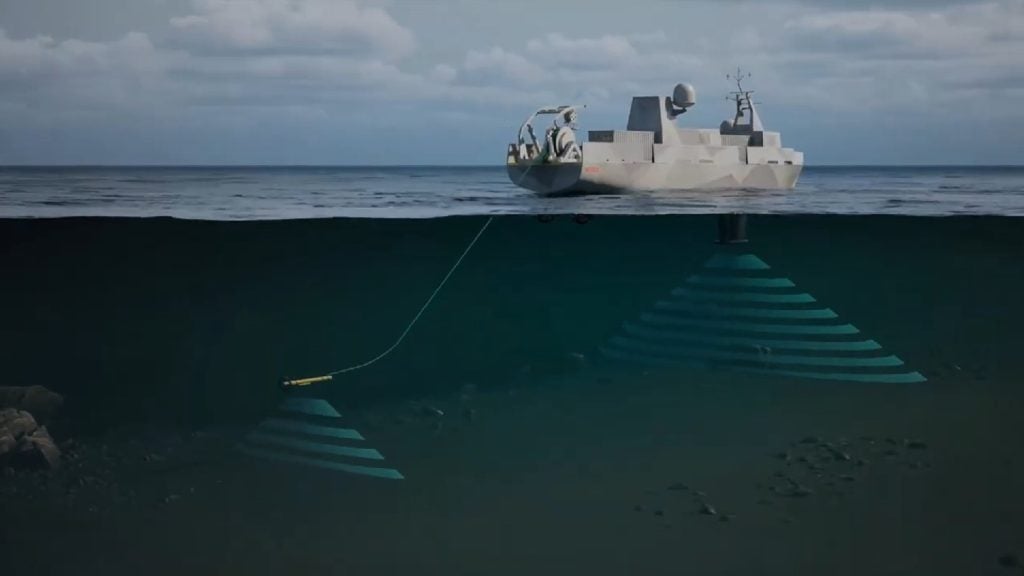
However, such is the novelty of the CCV and the Type 9X force that the MoD has been forced to admit that the autonomous missile launch technology required for the Type 91 arsenal drone ship may not even exist yet.
The Type 83, while technically conceptual, could actually be conceived, using perhaps the hull form of the Type 26 frigate, already being adapted to a destroyer with the Royal Canadian Navy, and extant launch module like the Mk 41 VLS.
This would have retained commonality with the Type 26 frigates, a Five Eyes ally, and kept the BAE Systems shipyards in Scotland comfortably building to a common design for the next generation.
Now, that certainty is less concrete. Doubtless, the likes of Babcock and BAE Systems will be monitoring closely whether their respective frigate shipyards, recently expanded at huge cost, will be able to build the futuristic CCV and Type 9X fleet.
Decision on Type 45 LIFEX by 2028
It is notable that recent parliamentary questions asking the government to confirm the Royal Navy’s force numbers for the mid-2030s onwards, when the Type 9X will, theoretically, begin to arrive, have been rebuffed by Luke Pollard, Minister for Defence Readiness, whose ubiquitous presence in Hansard is as omnipresent as the lack of substance in published answers.
His latest series of communiqués came late on 10 July, just as the light of the weekend and its promise to eclipse the grim monotony of the UK’s defence news, flashed on the horizon.
In the answers, Pollard reiterated that the role of maritime air defence, currently delivered by Type 45 Destroyers, will be delivered in the future by a mix of crewed Common Combat Vessels and uncrewed, autonomous missile (Type 91) and sensor (Type 94) ships.
“The decision to move to this hybrid approach was taken after detailed analysis of current and future threats, including lessons from ongoing conflicts,” Pollard said, adding that the specific analysis which drove the decision was “necessarily classified”.
A decision as to whether the Type 45 will see their service lives extended, almost certainly required, amid the transition to a “Hybrid Navy Maritime Air Defence capability” would not be made until 2027-28.
Was there a different path for the Royal Navy?
The nearest comparison to the UK’s Hybrid Fleet plan is the US Navy’s ongoing effort to introduce a whole swathe of new drone vessels into its force structure, as the service seeks to bridge the numerically gap between it and China’s PLAN.
However, the US Navy is not cuttings its air defence platforms, centred around the Flight III Arleigh Burke-class guided missile destroyers and the planned DDG(X).
Rather, uncrewed platforms will augment, not replace, crewed capability.
The UK, currently in its absolute infancy in integrating uncrewed platforms into fleet structure, is confident that it can make a transformational leap from concept, design, build, test, to fielding, in less than 10 years.
Thus, as it stands, the destroyer link will be broken as the Royal Navy transitions from a fleet of designated warships to mere host platforms for ‘capabilities’, as matelots are increasing consigned to shore-based, or probably more accurately, computer lab-based, roles.


