

- MoD RfI implies the Type 91’s remote, low-maintenance launch silo may not exist yet
- Current VLS/silos need regular crewed maintenance—hard to square with a 30-day uncrewed endurance
- UK must choose: fund new launcher tech or try COTS/container options, with uncertain cost vs now-cancelled Type 83
The publication of the UK Defence Investment Plan in late June was intended, among other aims, to provide clarity as to the direction the Royal Navy would take amid significant hype and hyperbole of its transition to a so-called Hybrid Navy, centred on its Type 9X drone warships.



Central to this was the Type 91 arsenal ship, a platform intended to act as a floating weapons battery in a disaggregated ship-sensor-effector network.
The problem? The vertical launch system for such an uncrewed capability, by the UK Ministry of Defence’s (MoD) own admission, does not yet exist.
Publishing an update to a Request for Information (RfI) on 30 June on Jaggaer One – the UK’s Defence Sourcing Portal – the UK MoD made a telling admission.
According to the RfI, the MoD, referred to as the Authority, “recognises” that current and planned maritime missile launchers or silos carry substantial platform design and integration work, requiring “high levels of maintenance and operator interaction”.
As such, such silos were “not optimised for remote operations in the Hybrid Navy onboard uncrewed surface vessels”.
Given this, the UK MoD said that it was “seeking information from industry suppliers regarding developed and conceptual high-performance missile launchers / silos with low maintenance and operator interaction capable of operations onboard both crewed platforms and USVs.”
In other words, the silo or vertical launch system intended to house the missile on the Type 91 USV, which would be the air defence and strike capability controlled by the proposed Common Combat Vessel, may not exist in the market.
In axing the conceptual – but deliverable – Type 83 air defence destroyer programme, the UK MoD centrepiece for the Hybrid Navy strategy could equally be no more than blueprints on a drawing board.
The future Type 91 missile silo is intended to allow operation for at minimum of 30 days without requiring maintenance or dedicated onboard engineers.
Has the UK swapped one concept for another?
Vertical launch systems require daily maintenance checks carried out by qualified ship’s engineers, who are tasked with ensuring critical systems are kept operational. For the US Navy’s Mk 41 VLS, which is being integrated onto the Type 26 and Type 31 frigates, this is thought to entail about 0.5 hours per day.
In a 2021 US Navy Maintenance Note regarding the Mk 41 VLS, it was stated that “due to harsh environment” and cell hatch ageing, “cell hatch failures on all Mk 41 ships were increasing”, attributed to saltwater intrusion.
A future Type 91 USV, equipped with a range of air defence and strike missiles – given the proposed 30-day non-maintenance period, would likely find itself operating in the extremely harsh conditions of the North Sea and North Atlantic, in keeping with the UK’s move towards more regionally focused, non-blue-water maritime strategy.
Such an endurance would require the Type 91 to remain close to a shore-based maintenance facility to rectify any problems, given the absence of an embarked crew.
It is unknown what industry solutions exist, if any, that would enable a minimum 30-day period without maintenance, particularly for sensitive equipment like a VLS or other launch system.
A proposed Deck Launching System from BAE Systems was revealed in 2018, offered as a deck-mounted up-to-strike-length launch system, which would be installed with a protective housing to keep saltwater off critical components.
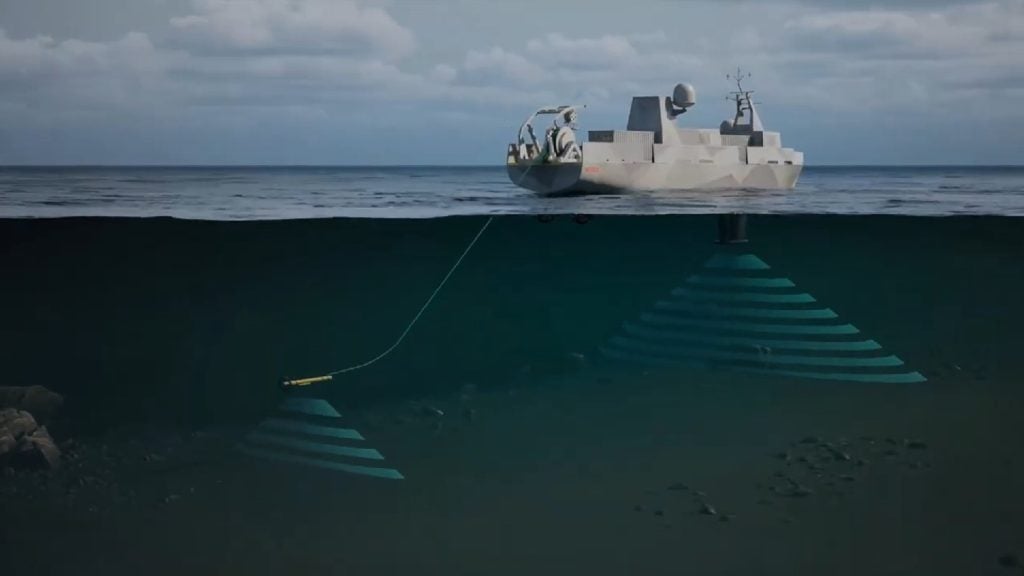
The UK could go down the proposed route of the US Navy’s arsenal ships, which is exploring ways in which to increase the number of missile silos in the fleet through a concept known as Distributed Maritime Operations (DMO). The US is thought to want to develop up to 100 un/minimally crewed missile platforms over the next decade.
This could be a costly decision, with the cash-strapped UK MoD having to ensure that the distributed capability created through the Type 9X network could be cheaper than the Type 83 air defence destroyer alternative. This is by no means a guarantee, with the Type 9X series broken down as follows:
- Type 91: Uncrewed missile platforms to increase the firepower of the Hybrid Fleet
- Type 92: Uncrewed sense platforms designed to hunt enemy submarines across the North Atlantic, supporting new Type 26 and 31 frigates.
- Type 93: Extra-large uncrewed underwater vessels which will work alongside crewed hunter-killer submarines to seek and destroy enemy submarines
- Type 94: Uncrewed sense platforms designed to scan the skies for threats to the Hybrid Navy or the UK
The Type 83 air defence warship would have been an evolution of the Type 45 class currently in service, and likely derived upon the Type 26 hull form being built for the UK, Canadian, and Australian navies. The Type 83 would have likely utilised a strike-length Mk 41 launch system, a type well understood and operational throughout Western navies.
It is planned that the Type 45 class will begin to leave service in 2035, offering an extremely short window for the UK to design, develop, field, test, and mature what would be the lynchpin for its future naval posture.
Could a COTS solution work?
It could be that a cheaper commercial-off-the-shelf (COTS) approach could work for the UK, leveraging existing shipping with containerised mission payloads.
This would reduce overall costs while theoretically providing capability, albeit some key equipment like the launch silos having are still in the concept stage.
In a May 2026 analysis conducted by the US Congressional Budget Office (CBO), the US Navy was calculated to have around 9,100 silos across its fleet.
Presenting three distinct options to increase the number of missile silos to counter a Chinese Navy that was now numerically superior, the CBO said the uncrewed option of buying used USVs and equipping them with missile launchers would add the fewest missile cells (144) and missile-carrying ships (12) but would be the lowest cost at $1.2bn.
Option 1, adding missile launchers to existing and reactivated ships would add the most missile cells (640) and missile-carrying ships (69) to the fleet and cost $4.3bn through 2030.
Option 2, buying used merchant vessels and retrofitting, would add half as many missile cells (320) and fewer than one-third as many ships (20) and cost $2.3bn, to the end of the decade.


