

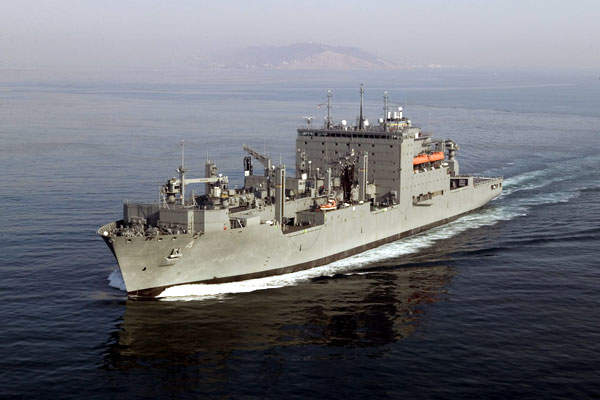
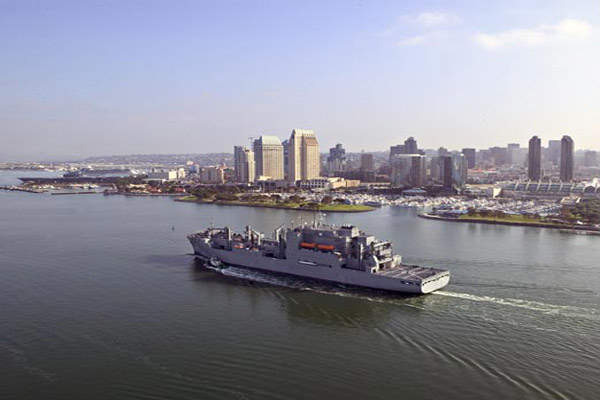
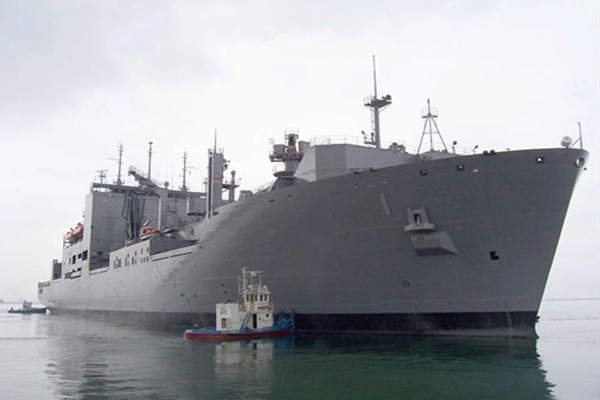

In October 2001 the US Navy awarded National Steel and Shipbuilding Company (NASSCO) a contract valued at $709m for the design and construction of the first and second ships in the T-AKE dry cargo and ammunition ships programme. The programme covers a total of 14 ships with a total value of $3.7bn.
Recommended Buyers Guides

By December 2008, the navy had exercised its options to build 14 T-AKE ships, which are required to replace the Kilauea T-AE 26 ammunition ship and Mars Class T-AFS combat stores ships which are approaching the end of operational life.
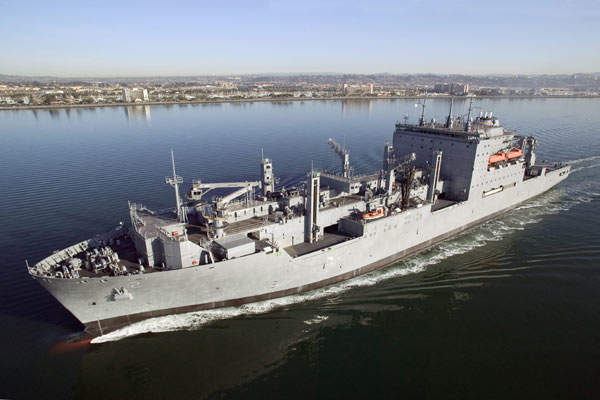
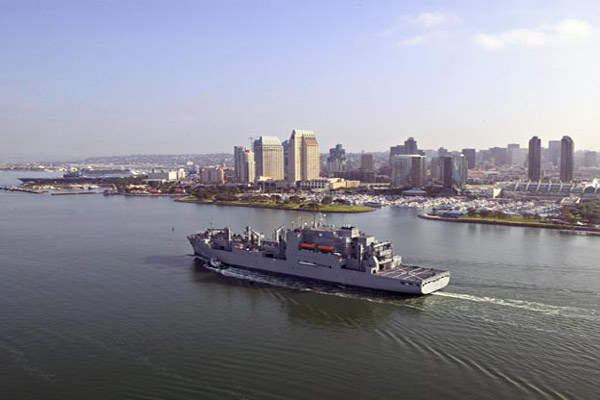
The USNS Lewis and Clark is the first-of-class T-AKE dry cargo and ammunition ship and is part of the more than 40 ships within the US Naval Fleet Auxiliary Force.
The ships, which are not armed and are classified as non-combatant ships, are capable of operating independently for extended periods at sea while providing underway replenishment services and contribute to the US Navy’s ability to maintain a forward presence.
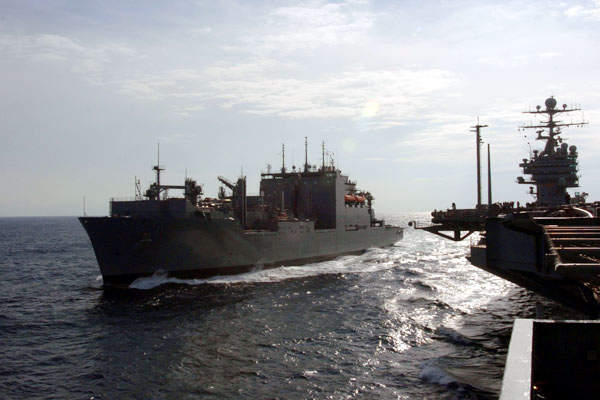
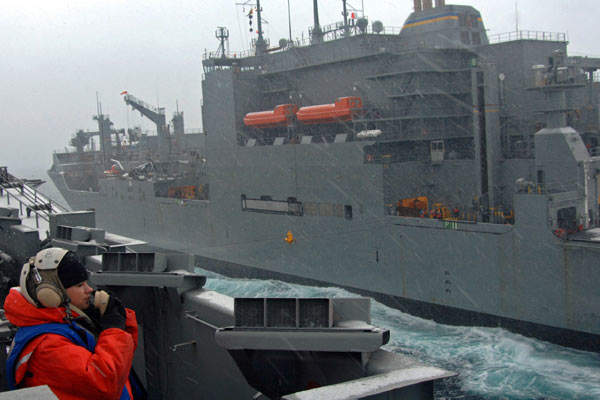
The ships provide underway replenishment services with logistic lift from sources of supply in port or at sea and the transfer of cargo including ammunition, food, fuel, spares, potable water and expendable supplies and materiel to battle groups, station ships, shuttle ships and other naval ships at sea.
Lewis and Clark Class vessels
The ships of the class are: USNS Lewis and Clark (T-AKE 1), launched May 2005 and delivered in June 2006; USNS Sacagawea (T-AKE 2) launched June 2006 and delivered February 2007; USNS Alan Shepard (T-AKE 3) launched December 2006 and delivered June 2007; USNS Richard E Byrd (T-AKE 4) launched May 2007 and delivered November 2007; USNS Robert E Peary (T-AKE 5), launched October 2007 and delivered June 2008; Amelia Earhart (T-AKE 6) launched April 2008 and delivered in October 2008; and Carl Brashear (T-AKE 7) launched September 2008 and delivered to the navy on 4 March 2009.
Willy Shirra (T-AKE 8), the eighth ship of Lewis and Clarke Class was launched on 8 March 2009 and delivered on 1 September 2009. Matthew Perry (T-AKE 9) was launched on 16 August 2009 and delivered to the Navy on 24 February 2010.
In February 2008, the US Navy placed the contract with NASSCO for the construction of the tenth of class, Charles Drew (T-AKE 10). It was launched on 27 February 2010 and delivered to the Navy on 14 July 2010.
In December 2008, the USN placed contracts with NASSCO for two additional vessels – USNS Washington Chambers (T-AKE 11) and USNS William McClean (T-AKE 12). Washington Chambers (T-AKE 11) was launched on 11 September 2010 and delivered to the US Navy on 23 February 2011. USNS William McClean (T-AKE 12) was launched on 16 April 2011 and was delivered in September 2011.
The contract also provided funding for long lead time materials for T-AKEs 13 (USNS Medgar Evers) and 14 (USNS Cesar Chavez). The keel for USNS Medgar Evers was laid in October 2010. The ship was launched in October 2011 and delivered to the US Navy in April 2012. The keel for final ship in class, USNS Cesar Chavez, was laid in May 2011. It was launched in May 2012 for the delivery in Q4 2012. T-AKEs 12, 13 and 14 will operate as part of Military Sealift Command’s Maritime Prepositioning Force (Future).
Lewis and Clark accommodation
The Lewis and Clark’s crew comprises 124 civil service mariners as well as a military detachment of 11 sailors to provide operational support and supply coordination. When needed, the ship can also carry a helicopter detachment.
The ship provides comfortable accommodation for the crew with berthing, messing, leisure areas and community spaces for a combined naval and civilian complement.
T-AKE cargo capacities
The dry cargo capacity is 6,675t. There are two cargo potable water tanks with a capacity of 200t or 52,800gal. The five cargo fuel tanks can carry 3,242t of fuel.
The ship is constructed with two multipurpose cargo holds for dry stores and ammunition, three specialty cargo and spares holds, and specialty cargo spaces on level 01.
A lightweight portable cargo dunnage system is used in the holds to protect the cargo from mechanical and water damage. There is a dedicated cargo hold for frozen, chilled or dry stores. The cargo holds are air conditioned.
There are also extensive cargo pre-staging areas on the main deck, four cranes each rated at 5t for loading and offloading pierside or at anchorage, and eight cargo elevators for transferring the cargo between the main deck and the allocated stowage locations.
Replenishment
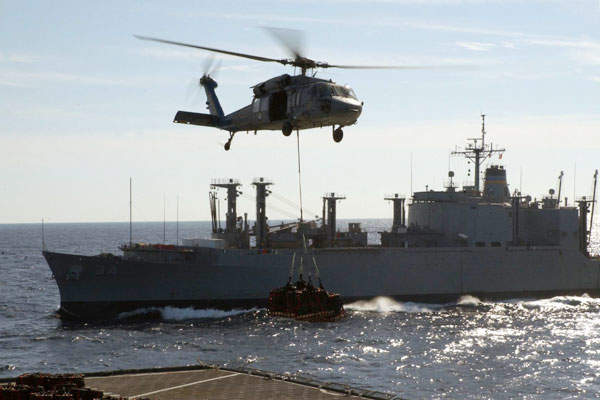
Each Lewis and Clark ship is capable of simultaneous operation of five connected replenishment (CONREP) stations and vertical replenishment (VERTREP) operation by aircraft, using the flight deck situated on the main deck. There is a total of three dry-cargo and one liquid-cargo connected replenishment stations on each side of the ship.
Aircraft
There are flight deck, hangar and support facilities for two embarked military or commercial helicopters.
Propulsion
The Lewis and Clark Class is powered by an integrated propulsion system based on four Man B&W 9l and 8l diesel generators providing a total installed power of 35.7MW.
The two propulsion motors, supplied by Alstom, are mounted in tandem and are twin synchronous variable speed, reversible, double-wound motors with brush and slip ring excitation.
The propulsion system drives a single shaft with a fixed pitch propeller. A bow thruster is installed for manoeuvrability.
The ship is fitted with a 6.6kV power-distribution system.
Safety systems
A suite of firefighting systems include: seawater sprinkling and dewatering systems in cargo holds and a foam firefighting system for the flight deck, helicopter hangar and the machinery space bilges. Also an FM-200 clean agent fire extinguishing system is installed in the machinery spaces and other spaces.
Pollution control systems include a ballast water exchange and a cargo fuel vapour recovery system.
