

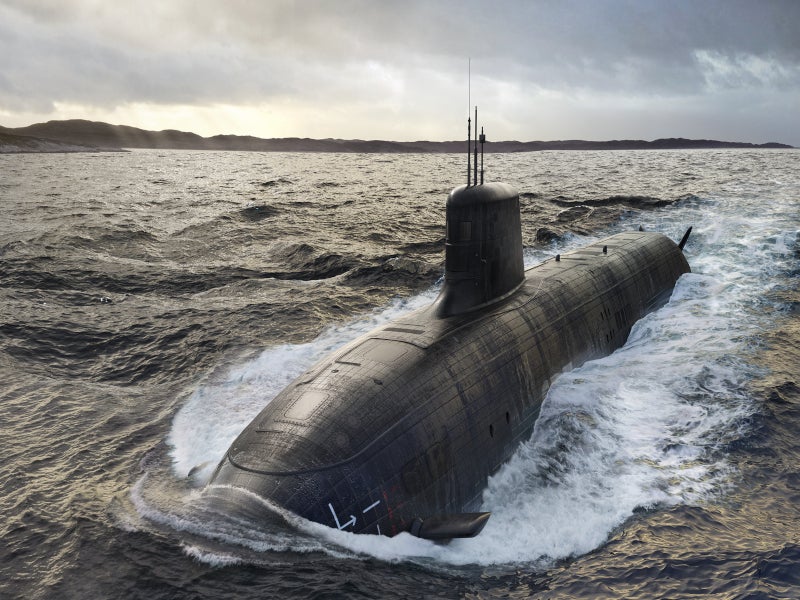

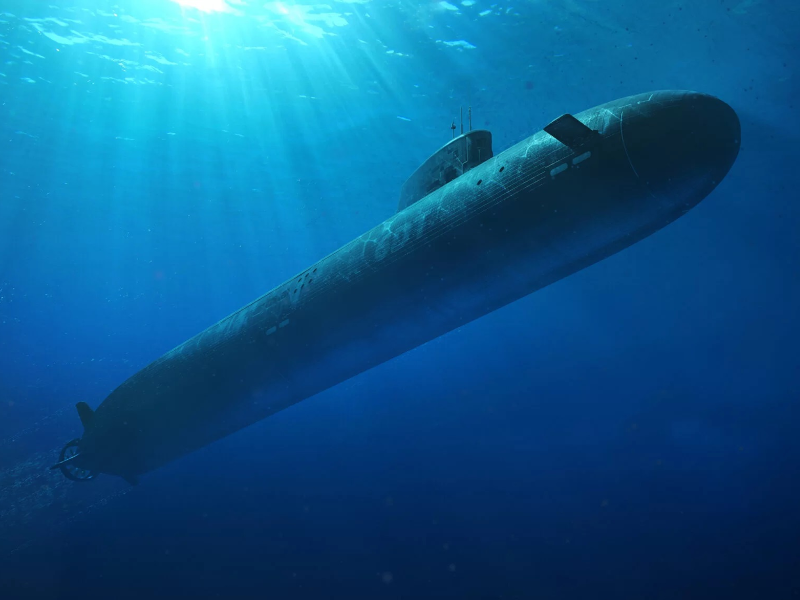
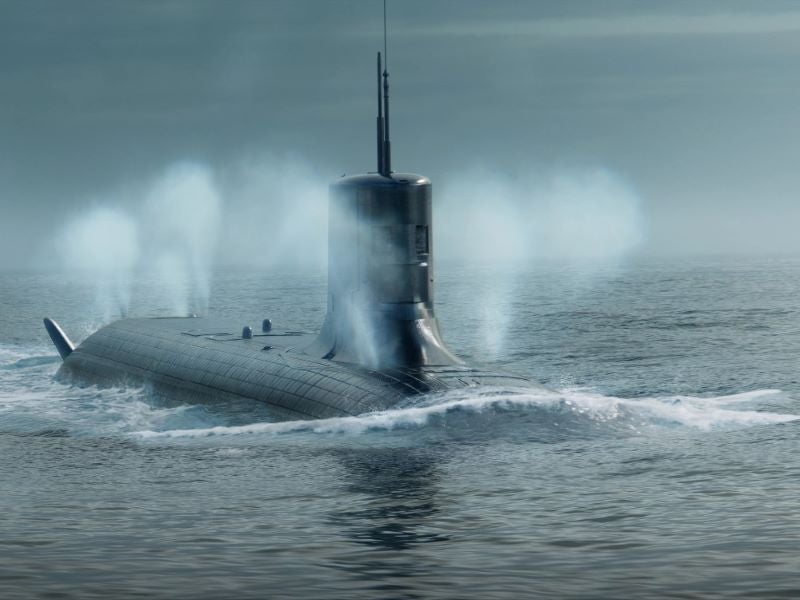
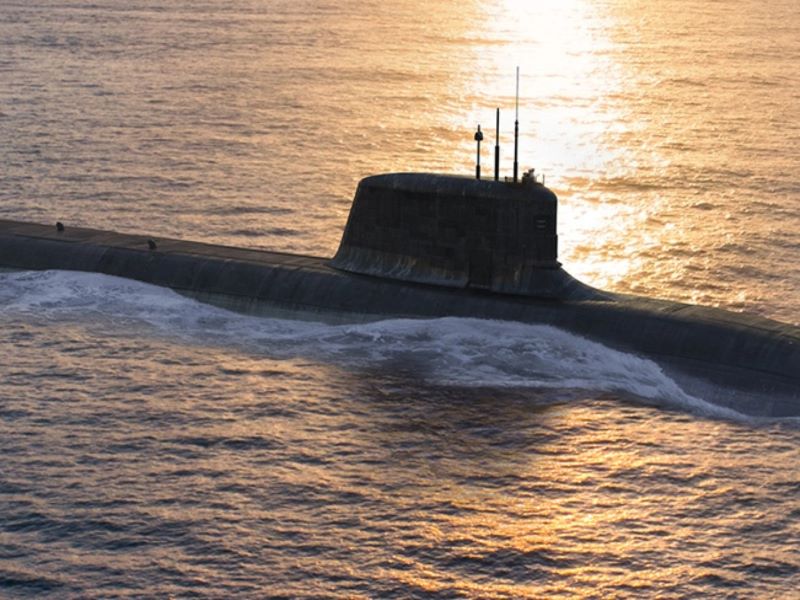
SSN-AUKUS is a fleet of conventionally armed, nuclear-powered submarines (SSN) to be built for the UK and Australian navies as part of the Australia-UK-US (AUKUS) trilateral agreement signed in September 2021.
The SSN-AUKUS submarines for the UK Royal Navy will be constructed at the shipyard in Barrow-in-Furness, Cumbria, UK. The first batch of the new submarines is expected to be delivered in the late 2030s, which will replace the existing Astute-class submarines in the UK Navy.
Recommended White Papers

Recommended Buyers Guides

The Royal Australian Navy is expected to acquire a total of eight SSN-AUKUS submarines, which will be built at the Osborne Naval shipyard in Adelaide, South Australia, and delivered to the navy in the early 2040s. The SSN-AUKUS submarines are intended to replace the Collins-class diesel-electric submarines that have been in service with the Royal Australian Navy.
The Australian Navy will also purchase three Virginia-class submarines from the US in the early 2030s, subject to approval from the US Congress. Under the AUKUS partnership, Australia will also have the option to purchase two more Virginia-class submarines in the late 2030s to maintain its underwater capabilities until the delivery of the SSN-AUKUS submarines.
In February 2026, the Australian Government confirmed a A$310m ($219.1m) payment to procure long‑lead items from the UK. The funding is intended to enable the manufacture of key components for nuclear‑powered submarines, including the nuclear propulsion systems for Australia’s first two SSN-AUKUS submarines.
SSN-AUKUS submarines development details
The US, UK and Australia are collaborating through the AUKUS enhanced security partnership to provide Australia with nuclear-powered submarine capability and to jointly create a new class of attack submarines aimed at strengthening undersea capabilities, enhancing deterrence and countering China’s influence in the Indo-Pacific region.
AUKUS leverages the UK’s advanced design capabilities and integrates technologies from all three nations, including submarine technologies from the US.
The programme is structured around two pillars. Pillar one centres on supporting Australia’s acquisition of its first conventionally armed, nuclear-powered submarine fleet. The ‘optimal pathway’ for Pillar 1 extends into the 2040s.
Pillar two focuses on developing a suite of next‑generation defence technologies, alongside technology sharing and improved interoperability across the three nations’ armed forces. Four priority areas – cyber, AI, quantum technologies and enhanced undersea capabilities – were initially announced. These were later broadened to eight workstreams, adding greater information exchange, innovation initiatives, hypersonic and counter‑hypersonic systems, and electronic warfare.
In March 2024, the Australian Government chose UK-based defence company BAE Systems and submarine company ASC to construct Australia’s new fleet of nuclear-powered submarines.
In November, the same parties had entered an AUKUS Mobilisation Deed, setting out a framework for contracting with the Australian Government through the Australian Submarine Agency (ASA). This followed the heads of agreement and a tri-lateral announcement naming the Commonwealth of Australia’s shipbuilders.
In December 2024, the ASA, BAE Systems and ASC signed a tasking statement, a contractual arrangement to support joint work on the build strategy, supply chain management plans and a workforce development strategy.
In November 2025, BAE Systems, Raytheon Australia, General Dynamics Mission Systems and Thales announced a proposal to lead the design work and establish the basis for the manufacture and integration of combat systems for SSN-AUKUS.
Under the agreement, the companies agreed to collaborate on the development of a tri-national Command System for Australia and the UK, drawing on General Dynamics’ existing AN/BYG-1 system and making use of the industrial base and workforce that already support the Royal Australian Navy.
AN/BYG-1 is an open-architecture submarine combat control system that brings together tactical control, payload and weapons management, and information assurance. It is installed on Australia’s Collins-class submarines and on the US Navy’s Virginia, Los Angeles, Ohio, Columbia and Seawolf-class submarines.
In March 2026, the AUKUS partners unveiled the first AUKUS Pillar II Signature Project, focused on developing advanced payloads and enabling systems for AUKUS uncrewed undersea vehicles, with deliveries set to begin in 2027.
SSN-AUKUS submarine design details
SSN-AUKUS will be a state-of-the-art advanced submarine based on the UK’s next-generation, interoperable SSN design, integrating cutting-edge technologies from all three nations.
The integration of propulsion, sensors and weapon systems, as well as the common vertical launch system in the SSN-AUKUS, will be based on the Virginia-class technologies from the US.
The submarine will be equipped for advanced intelligence, surveillance, underwater warfare and strike missions.
Investment details
Australia is expected to invest up to A$368bn over the next 30 years in the SSN-AUKUS development programme, apart from investments of A$2bn and A$8bn to upgrade the Osborne Naval shipyard in South Australia and the HMAS Stirling naval base in Western Australia, respectively.
Australia’s investment in the programme will also strengthen the industrial bases in the UK and the US to build and support the submarines.
The UK Government will invest £5bn ($6bn) through 2025 to upgrade the country’s nuclear enterprise and fund the SSN-AUKUS submarine development. The investment is expected to be followed by continuous funding over the next ten years to support the submarine development programme.
In October 2023, the UK Ministry of Defence granted BAE Systems £4bn in funding to support the company in advancing the detailed design phase of the programme and acquiring necessary long-lead items, extending development work through 2028.
The US is investing $2.4bn in its submarine industrial base from 2023 to 2027 to increase the production capacity of Virginia-class SSNs.
In February 2026, the Australian Government announced an investment of A$3.9bn as an initial commitment towards delivering a new submarine construction yard at Osborne.
The government announced an additional A$4.6bn investment in July 2026 in Australian Naval Infrastructure to support the ongoing delivery of the construction yard at Osborne.
Contractors involved
BAE Systems received a contract worth £85m from the UK’s Ministry of Defence to support early design and concept work on the SSN-AUKUS submarines in September 2021.
Rolls-Royce Submarines, a Rolls-Royce subsidiary based in Derby, UK, will provide the nuclear reactors for Australia’s AUKUS submarines.
Babcock International, a UK-based nuclear engineering services company, will support the nuclear infrastructure development, workforce upskilling, and regulatory and safety standards for the SSN-AUKUS programme.
In November 2025, Australian submarine battery systems company PMB Defence Engineering signed a contract with BAE Systems to support the possible integration of its nickel-zinc battery technology into the design of nuclear-powered submarines for the UK and Australia.
Thales was appointed as the Main Sonar Design Authority and Integrator and the Sonar Contracting Authority for the UK SSN Programme.
In August 2026, ANI selected a joint venture between Amentum and Laing O’Rourke as its capability partner to support the delivery of the new construction yard at Osborne. The partners will provide nuclear-related programme management, construction management and safety leadership.
