
Defence Science and Technology Laboratory (Dstl) has granted SeeByte and Blue Bear a contract under the Progeny Maritime Research Framework, to investigate and build a safe architecture for Mixed Multi-Domain Swarms (MMDS) of Robotic Autonomous Systems (RAS), announced 11 July in a release from Seabyte.
SeeByte leads the collaboration, bringing knowledge of Maritime Autonomy in the Surface and Subsurface domains, while Blue Bear brings understanding of the Air domain and Air Assurance. The first phase is a 12-month research programme. The MMDS design may be implemented, tested, and evaluated in subsequent phases.
SeeByte's CTO, Scott Reed, stated, "We are immensely proud to be supporting Dstl and the wider UK MoD in the first phase of this exciting project, as we work together with Blue Bear to address some of the most pressing Defence challenges in delivering secure distributed autonomy at scale and mass."
The joint work is part of the Dstl Maritime Autonomous Systems (MAS) initiative, which aims to ensure that the Royal Navy can operate swarms of mixed multi-domain UxVs in a secure manner. The first phase of this effort will describe the MMDS architecture, which will allow RAS systems to collaborate in swarms of mixed multi-domain vehicles and offer mission deliverables. This work applies secure-by-design practises from the start to ensure that the architecture can be built within the agreed-upon thresholds of cyber risk.
Research into Heterogeneous Autonomous Multi-Domain Swarms (HAMS) from LTCOL Daniel Lee of the Australian Army in 2019 examined the application of autonomous and unmanned swarms that may consist of a variety of uncrewed vehicles, giving the example of swarms that included UAV’s for intelligence, surveillance and reconnaissance (ISR) purposes, or to serve as long range repeaters in the stead of satellite communications, while within the same swarm uncrewed ground vehicles extend the same network and act as short duration logistics resupply vehicles for combat forces.
An autonomous networked swarm could actively defend itself through by cueing kinetic offensive action against enemy or from one of the multi-role platforms within the swarm itself. It can also mitigate against degradation by pre-emptively positioning to avoid attack against the swarms communications node.
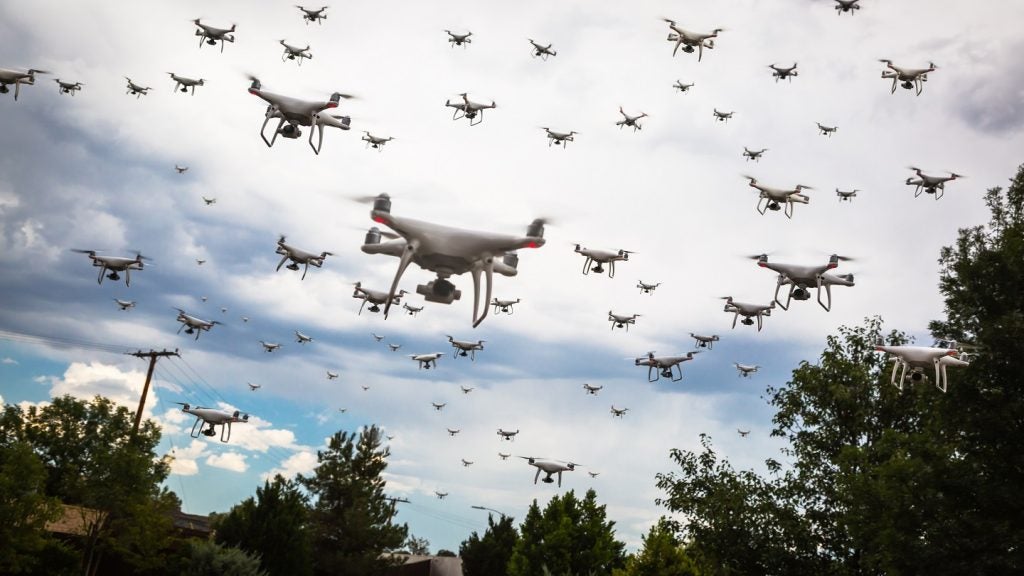
In May, the Dstl conducted a trial of a collaborative swarm of drones in a trilateral demonstration of AI and autonomy technologies as part of AUKUS Advanced Capabilities pillar, known as Pillar 2. The platforms that took part in the exercise included Blue Bear Ghost and Boeing/Insitu CT220 unmanned aerial vehicles (UAVs), Warrior armoured vehicle, Challenger 2 tank, and Viking uncrewed ground vehicle (UGV).