

- The Royal Netherlands Navy will integrate Destinus’ containerised drone interceptor to ships in the surface fleet
- A Concept Development & Evaluation phase will see the Dutch military test the efficacy of the concept until Q2 2027
- Hornet B2 is a new iteration of the baseline, born out of recent maritime testing, and it remains in early development
The Dutch Ministry of Defence’s Materiel and IT Command will procure Hornet containerised drone interceptor systems to protect a number of surface combatants from attack drones.
Securing an agreement with the Dutch Government will help the company determine technical specifications of its new generation Block II (B2) Hornet system for the maritime domain.
Go deeper with GlobalData


Discover B2B Marketing That Performs
Combine business intelligence and editorial excellence to reach engaged professionals across 36 leading media platforms.
Its predecessor, Hornet B1, is already in serial production.
The system is launched from a sealed canister by a rocket booster, deploys folding wings, and transitions to electric-powered cruise flight. It is designed to engage one-way attack uncrewed aerial vehicles using electro-optical / infrared sensing and AI processing in the terminal phase, with engagement decisions remaining under human command.
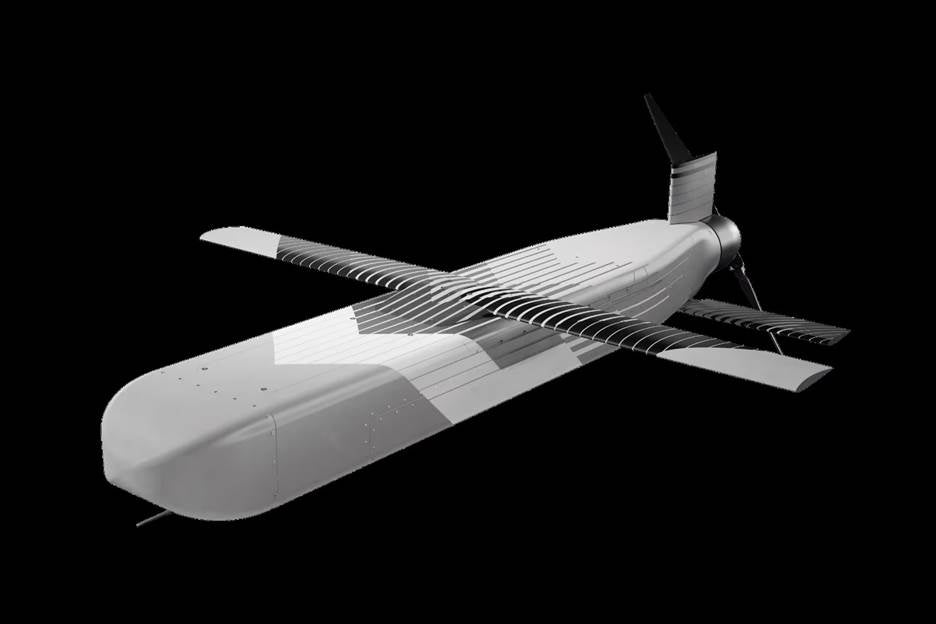
“The interceptor itself is only one part of the capability,” the company press release reads. “Ship integration, logistics, operator requirements, support and operating procedures” all come through collaboration with the user to inform the design from the outset.
Destinus will need to tackle several environmental factors such as ship vibration, electromagnetic interference and absorption of the elements among others.
For that reason, the Ministry of Defence has secured what it describes as a “short-term” concept development and evaluation phase, in which it will acquire an unspecified number of Hornet B2s and associated equipment, as the programme is scheduled to conclude in the second quarter of 2027.
But the Royal Netherlands Navy is not the first to test the system at sea. Earlier this year, Destinus collaborated with the Spanish Navy to deploy the B1 baseline on board F-81 Santa María. Moreover, the company recently approached Danish suppliers, OMT Group and CUBEDIN, to support B2 design development.
Drone threat at sea
In 2023-2024, the asymmetric drone threat created an apparent problem for navies seeking to protect merchant shipping in the Red Sea from attack drones launched by Iran-backed Houthi rebels.
The crisis saw a UK Royal Navy Type 45 destroyer use Sea Viper missiles to take down cheap effects. Not only did this highlight a major cost imbalance but also forced the German Navy frigate Baden-Württemberg to bypass the Suez Canal. Returning from an Indo-Pacific deployment, the warship routed around the Cape of Good Hope to avoid the contested waters.
Currently, European warships use a combination of exquisite missile defence systems and close-in weapon systems (CIWS) such as Rolling Air Missile systems.
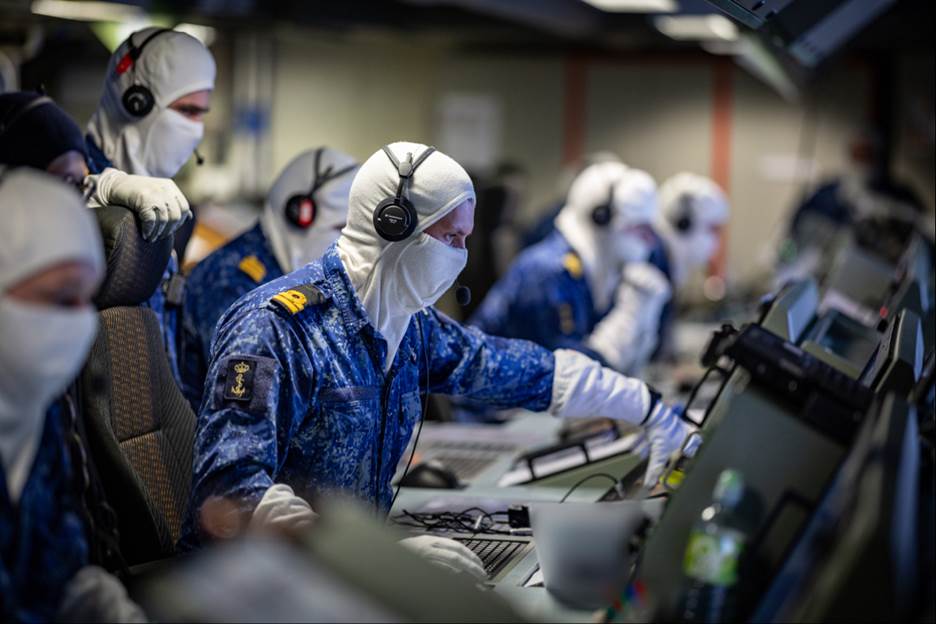
Dutch warships use inner layer CIWS such as the seven-barrel, 30mm Goalkeeper Gatling gun. But this system is also limited somewhat in its counter-drone effects. It is ultimately a last-ditch system intended for aircraft, anti-ship missiles and manoeuvring vessels.
The RNLN’s dedicated air defence and command frigate, Zr.Ms. Evertsen, shot down drones using an anti-aircraft missile and rapid-fire Goalkeeper during a live-fire exercise in March 2026.
Instead, the B2 will include a base station and a launch platform from which a drone interceptor can be fired. The system is being further developed through test tracks. By converting a land-based counter-drone system into a variant for operational deployment at sea, Dutch “Defence is taking a step forward,” read the government release.


