

In mid-June, the UK formally acceded to the Comprehensive Security Integration and Prosperity Agreement (C-SIPA), a framework aimed at fostering cooperation in the Middle East, with defence and security its first-listed priority.
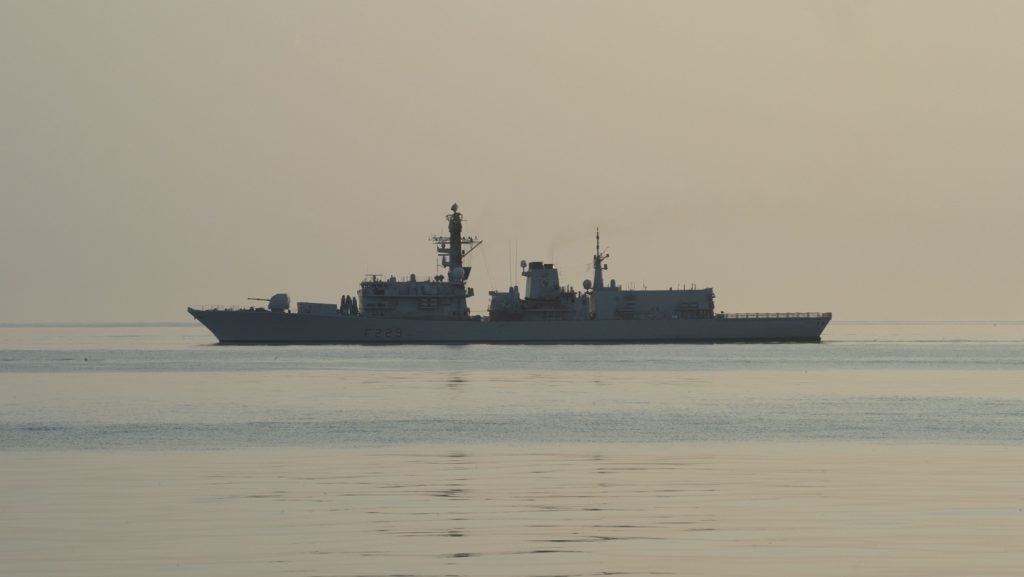
However, reports, including recently by The Telegraph, persist in claiming that the Royal Navy’s current forward-deployed Type 23 frigate in Bahrain, HMS Lancaster, will head back to UK waters following the completion of its deployment, without replacement.
Would this be the case, it would bring to an end a decades-long presence of a major UK surface combatant in the region, first through the Armilla Patrol and latterly via Operation Kipion.
In that eventuality, the UK Royal Navy’s presence in Bahrain and its function in the region, would have all but ended in a practical sense.

The 2024 collision of two Royal Navy mine countermeasures vessels (MCMV) and subsequent withdrawal from Bahrain, and the departure of the landing platform dock RFA Cardigan Bay, has left the UK with a single vessel, the Hunt-class MCMV HMS Middleton, alongside at UK Maritime Component Command, the UK’s naval headquarters in the region.
On the reported departure of HMS Lancaster from the region without replacement, a UK Ministry of Defence (MoD) spokesperson told Naval Technology that Operation Kipion was the country’s “long standing presence in the Gulf”.
In addition, the UKMCC “continues to be central” to UK military operations across the Middle East.
“We remain steadfast in our commitment to promoting stability and peace in the Middle East by working closely with our allies and partners to strengthen regional security through enhanced defence integration and interoperability,” the MoD spokesperson said.
What did UK warships do in the Middle East?
Usually a general-purpose variant, the deployment of a Type 23 frigate to the Middle East offered the UK the opportunity to interoperate with the US Fifth Fleet, also based in Bahrain, where the Royal Navy’s MCMV force was also highly valued by US commanders.
Indeed, while it was accepted the US did not require the presence of a UK surface combatant in the region, the capability of the Royal Navy’s mine hunting force would see it take the lead in countering any action by Iran to close the strategic Strait of Hormuz via such means.

Rather, the Type 23 served as a contributor for the Combined Maritime Forces in the region, a multinational structure performing a range of missions in the Gulf, Arabian Sea, and Indian Ocean. This includes drug busts, with HMS Lancaster performing two such intercepts during its deployment, destroying tens of millions of pounds worth of narcotics bound for the global market.
A secondary benefit was the frigate’s ability to conduct port visits in friendly GCC countries such as Oman, entertaining diplomatic guests on regular port visits.
Should HMS Lancaster return to UK waters without replacement, these combined hard and soft powers will be gone.
What is the C-SIPA?
According to the US State Department, the C-SIPA is intended to form a framework to bolster mutual deterrence against “external threats” and expand cooperation to advance security and stability in the region.
Originally signed by the US and Bahrain in September 2023, C-SIPA provided the ability to add in new signatories, of which the UK became a party in June 2025.
The US State Department, in a 17 July media note, stated the three parties of C-SIPA “reaffirmed their desire” to strengthen strategic cooperation under the agreement’s three pillars: defence and security; economic, commercial, and trade; and science, technology, and network security.
The US, UK, and Bahrain would begin to form working groups to determine how best to fulfil the goals of the agreement. Sans a regional naval component, the UK could struggle to offer anything meaningful when it comes to maritime security.
If the ending of major UK naval presence in the Middle East has been long planned, then the UK government's December 2024 statement claiming to be a "reliable partner standing with the US and Bahrain" appears less than credulous.
Is the UK's global influence finished?
However, the signing of C-SIPA by the UK comes at a time of diminishing military presence overseas and at home. The UK Armed Forces are at their smallest for hundreds of years, with the Royal Navy below the threshold for what was previously considered the minimum viable force.
The British Army is similarly reduced, and recently revealed to have given up its entire AS90 155mm artillery force. Hundreds, potentially thousands, of military vehicles, including tanks, have also been gifted to Ukraine.
Clearly, the UK’s defence and security contribution to C-SIPA, while only one part of the wider mission, has nearly vanished in the naval domain as vessels are called back to home waters for disposal or to prioritise homeland security tasks.
Absent a clear indication from the UK about the future of composition of its naval deployment to the Middle East, London’s position as a viable partner for regional countries and US forces may well be called into question.