
“Belief”, “appetite”, and “ambition”.
These are words that leading members of the UK’s subsurface defence ecosystem used to explain how China has been able to steal a march on Western countries in the production of submarines.
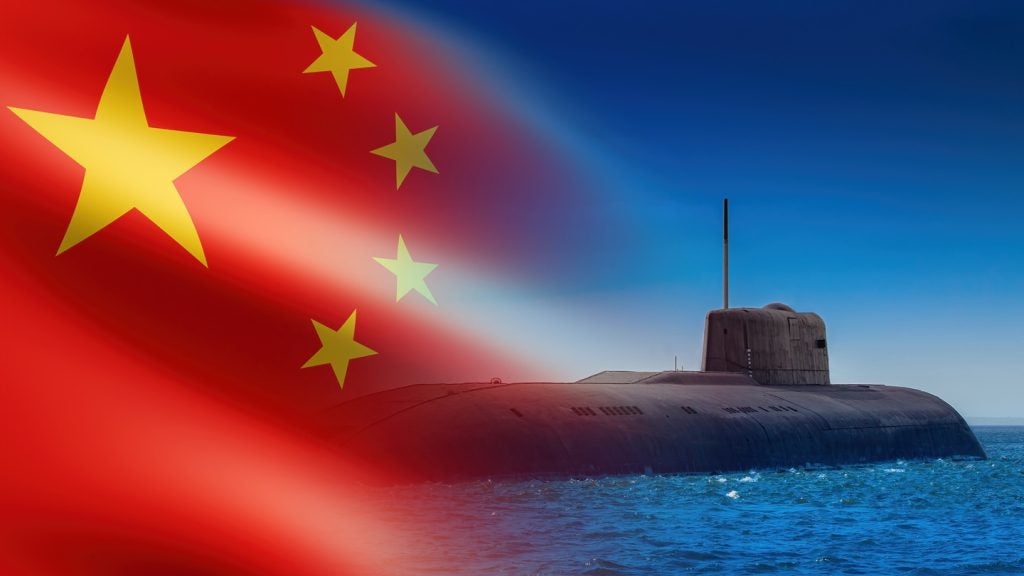
China’s industrial base has, for several years, been far outstripping the productive capacity of the West, delivering four submarines in the past year. Such a rate is wishful thinking for Europe and the United States, with the US struggling to produce two nuclear submarines over a 12-month period, and the UK and France still further behind.
According to a 2023 report from the then US Department of Defense, subsequently rebranded to the Department of War, China was planning to increase its submarine force to 80 units by 2035, while working to retire older, less capable models.
UK Parliamentarian Fred Thomas, Labour MP for Plymouth Moor View, during a defence committee session on 21 October 2025, spoke of assessments that China would seek to deliver 80 submarines over the next decade, albeit the majority would still be conventionally powered.
Addressing a panel of senior executives from BAE Systems, Babcock, and Rolls-Royce, Thomas said that the UK’s enemies were building submarines “a lot quicker” than was currently possible in the West.
“There are some assessments of [China] building 80 boats over the next decade, which is going to be considerably more than we will be able to do. What is different that they are able to build so quickly?” Thomas asked the panel.
Steve Timms, managing director of BAE Systems Submarines, said China had not been “constrained by history” as the UK had been in recent years, possibly in reference to the near-loss of nuclear submarine skills prior to the start of the Astute-class boats currently entering service.
“A lot of it is belief and appetite,” Timms said.
Sitting alongside Timms was Harry Holt, chief executive nuclear at Babcock International, who said China had “scale” and “ambition” as key drivers of its industrial success.
Providing his thoughts, Steve Carlier, president of Rolls-Royce Submarines, said that having a committed long-term plan was “the best way” of building nuclear submarines.
“That just lends itself to the way that China operates its economy, they set a long-term plan and stick to it,” Carlier said.
Bigger is better: China’s quantitative edge
According to analysis conducted by GlobalData in 2024, China’s defence spending is reshaping global security with Beijing set on creating a multi-polar world order, balancing the previous domination of the United States. In terms of sheer numbers, China’s People’s Liberation Army Navy (PLAN) is the largest navy in the world.
The US Office for Naval Intelligence (ONI) predicts that by 2030 China will have more than 400 battle force warships, providing a clear quantitative advantage over the United States, with the qualitative gap closing rapidly. More recent PLAN warships are considered to be comparable in terms of capability to their US Navy counterparts.
Beijing’s spending on nuclear-powered attack (SSN) and nuclear-powered ballistic missile (SSBN) submarines was projected to be in excess of $36bn through to 2034, with an annual spend in 2034 forecast to more than $4.3bn, from $2.6bn in 2024.
China’s PLAN is historically a prolific operator of diesel electric submarines, but since the turn of the millennium has sought to further develop its nuclear propulsion capabilities, with the introduction of two Type-093 SSNs between 2006-2007 and four Type-093A variants from 2012-2017.
The PLAN also operates SSBNs, bringing four Type-094 into service between 2007-2021 and two Type-094A in 2020. In addition, the PLAN has a single 1980s-era Type-092 SSBN in its inventory.
China is also working on the new Type-096 class of SSBNs with two boats under construction and many more likely planned as part of a general shift to nuclear propulsion for its subsurface fleet. In addition, an unknown number of boats of the Type-095 SSN design are in development, with Bohai Shipyard (China Shipbuilding Industry) a candidate for the manufacturing stage.
The ONI considers that by 2030 the PLAN will be operating 13 SSNs and up to eight SSBNs, caveating that current expansion at submarine yards could allow for far higher production.
China also has a huge advantage in the sophistication and number of commercial shipyards that can be tasked to support the country’s defence ecosystem.
How does the UK compare?
The UK, one part of the AUKUS triumvirate alongside the US and Australia, recently revealed an ambition to build up to 12 of the planned AUKUS SSN, a design that it will share with Canberra with technical assistance from Washington.
Within this is a plan produce a drumbeat of one AUKUS SSN completed every 18 months, an unrealistic ambition that will see the UK build the entire 12-strong submarine force in less time than it takes for two current generation Astute SSNs to be manufactured and commissioned into service.
The averages are not in the UK’s favour, with an Astute-class SSN taking an average of over 128 months from first steel cut to handover to the Royal Navy.
Needless to say, the idea that the UK will be able to build a nuclear-powered submarine in less than two years is overly ambitious at best, or fanciful at worst.
Capacity at BAE Systems submarines yard in Barrow is stretched, with four boats currently in build, these being three of the four Dreadnought-class SSBNs and the last of the Astute class. The fourth of the Dreadnought class, the future HMS King George VI, will likely take up the slot of the last Astute (HMS Achilles, ex Agincourt) currently in build.
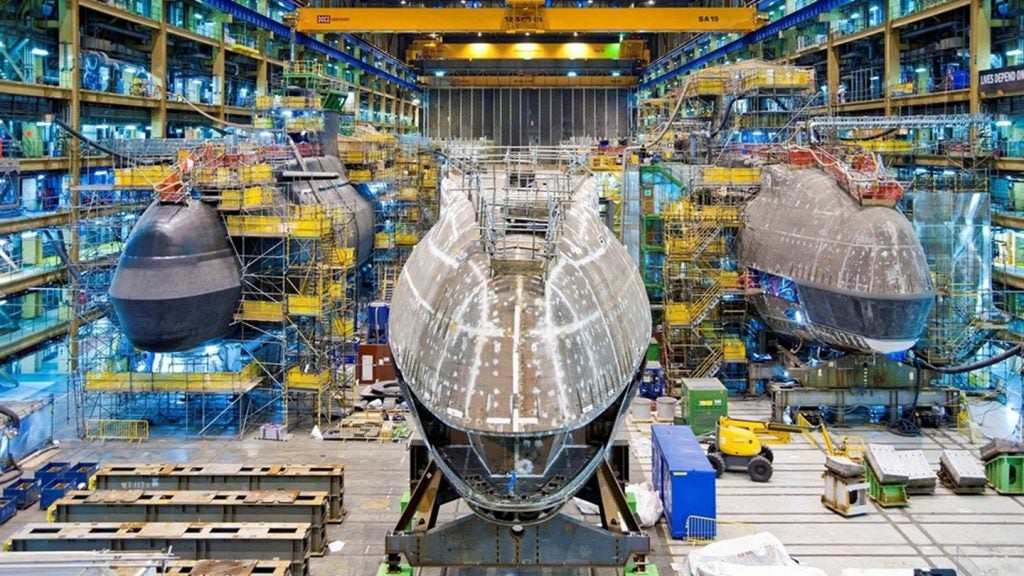
BAE Systems’ Devonshire Dock Hall (DDH), located at its site in Barrow-in-Furness, is the home of all UK submarine manufacture. At some 260 metres (m) in length, with a width of 58m and 51m height, the DDH is an immense structure.
The combined length of an Astute SSN (97m) and future Dreadnought-class SSBN (153m) is 250m, just within the confines of the DDH. Little imagery is available of the interior of the DDH, although BAE Systems did release an image of three Astute SSNs in build, more or less side-by-side.
Assuming existing Astute SSN build pace and the average time between each boat, it can be extrapolated that a 12-hull SSN AUKUS fleet would be ready by March 2068, if it got underway in 2029 in order to replace HMS Astute in the 2040 timeframe.
At the present build pace of the Astute class at BAE Systems Barrow-in-Furness site, it will take more than 39 years to build the Royal Navy’s future SSN AUKUS fleet.
Without expansion of DDH or BAE Systems’ facilities at Barrow, much will depend on the delivery of the Dreadnought SSBNs, which look likely to take around 15 years to complete. The build of HMS Dreadnought began in 2016, with the vessel expected to enter service in the early 2030s.
The gap from the start of construction of HMS Dreadnought to the second-in-class HMS Valiant was two years and 11 months, while the gap to the third-in-class HMS Warspite ran to three years and five months. Given this, it is likely that fourth-in-class HMS King George VI will begin build in late-2025 or early-2026.
This will mean that the Dreadnought programme is still ongoing as the first of the new SSN AUKUS class are built.
What about AUKUS?
Back at the defence committee session, industry was keen to stress that for AUKUS to be a success it had to start on time, avoiding corresponding delays filtering further down the programme timeline.
With the single class due to replace the UK’s Astute SSNs and Australia’s planned interim Virginia-class submarines it will obtain from the United States, this is far from guaranteed.
“It is not simply new submarine platforms, it is an ecosystem,” said Holt, referring to the need to help Australia sustain its future nuclear submarines, not just deliver platforms.
“There is a challenge in terms of scale and pace and decision making,” Holt added.
The Australian timeline will see it required to be ready to sustain US and UK SSNs that will rotate through HMAS Stirling naval base in Western Australia from 2027, with the firs of the US-origin Virginia’s arriving by 2033.
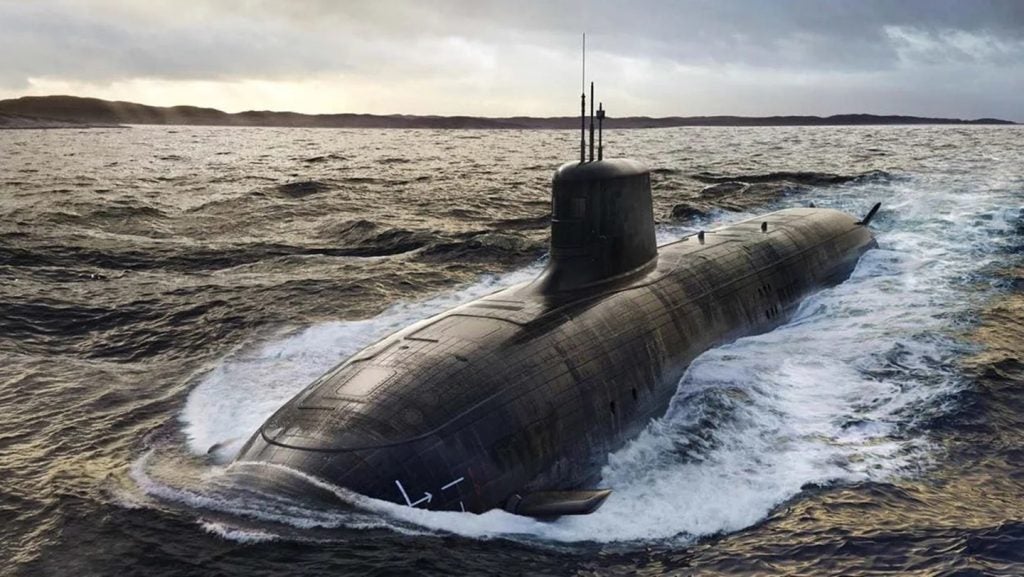
Rolls-Royce, which has six boat sets of nuclear reactors in the supply chain, including four of which in the company’s Raynesway site, said the concern was that each step of the UK’s nuclear recapitalisation process would start on time.
“This is the kind of industry that doesn’t respond well to frequent changes in tempo,” Carlier warned.
Timms said it was “clearly a challenge” in “securing alignment” and the need to make decision on a timely basis.
However, despite an upcoming deadline for the next series of UK funding decisions due to be approved by the end of the year, the Government’s Autumn Budget – expected to include significant cuts in public spending amid a huge financial black hole – presents a clear danger to the AUKUS aspirations and its near-term timelines.