
- China’s new Type 076 amphibious assault ships are comparable in scale to modern US designs
- The lead ship in class, Sichuan, has completed initial trials, with an expected service entry of 2026
- The warship is thought to have been designed to accommodate combat drones such as the GJ-11
Earlier in November 2025, China’s Ministry of National Defense (MND) announced that the Type 076 amphibious assault ship Sichuan had completed initial sea trials, a significant landmark in a programme closely monitored by naval analysts.
Setting sail from the Hudong-Zhonghua Shipyard in Shanghai, Sichuan (Hull 51) performed well, according to the MND, undertaking a “a three-day exercise to test key navigation and ship systems”, before returning to port.
The outcome of the exercise achieved the “expected results” – ‘twas ever thus with the CCP – as tests were carried out on power and electrical systems and otherwise running the rule over a design that could revolutionize naval aviation and power projection.
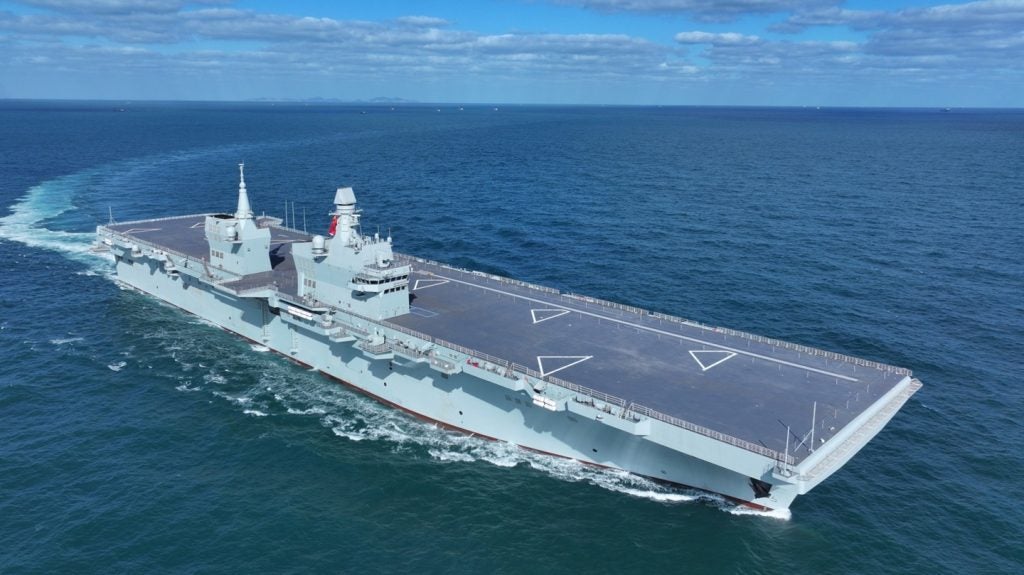
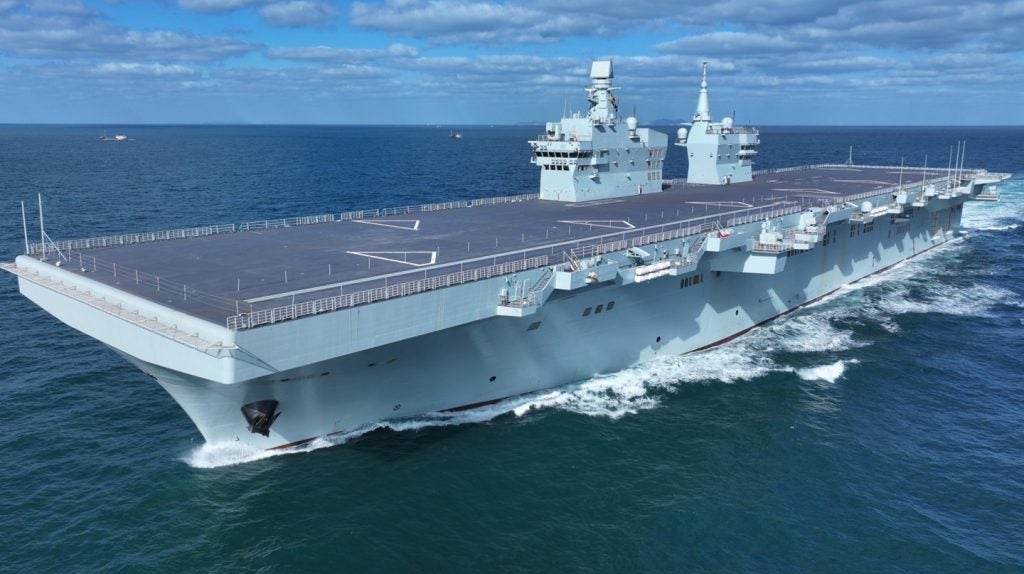
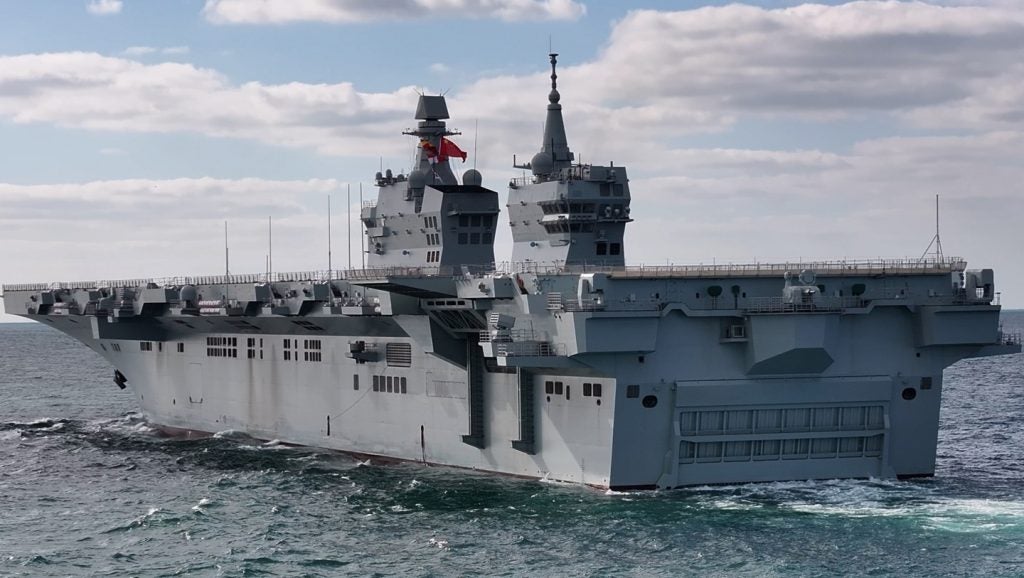
China’s MND describes Sichuan - first of the Type 076 amphibious assault ships - as having a full load displacement of more than 40,000 tonnes and featuring a dual-island superstructure, as seen with the UK’s Queen Elizabeth-class aircraft carriers, along with a full-length flight deck.
In displacement terms, this is comparable to the US Navy’s Wasp-class amphibious assault ships and only slightly less than the new America-class assault ships being introduced into service. However, some estimates have the Type 076 class as displacing up to 50,000 tonnes.
Previous estimates from the US Office of Naval Intelligence put the Type 076 at around 260 metres in length, although caveating that this was by no means certain.
The integration of an electromagnetic catapult and aircraft arrestors enable Sichuan to carry “fixed-wing aircraft, helicopters, and amphibious equipment”, the MND states.
However, it is widely thought as being intended to operate a mixed crewed-uncrewed air wing, offering a significant assault capability for regional operations.
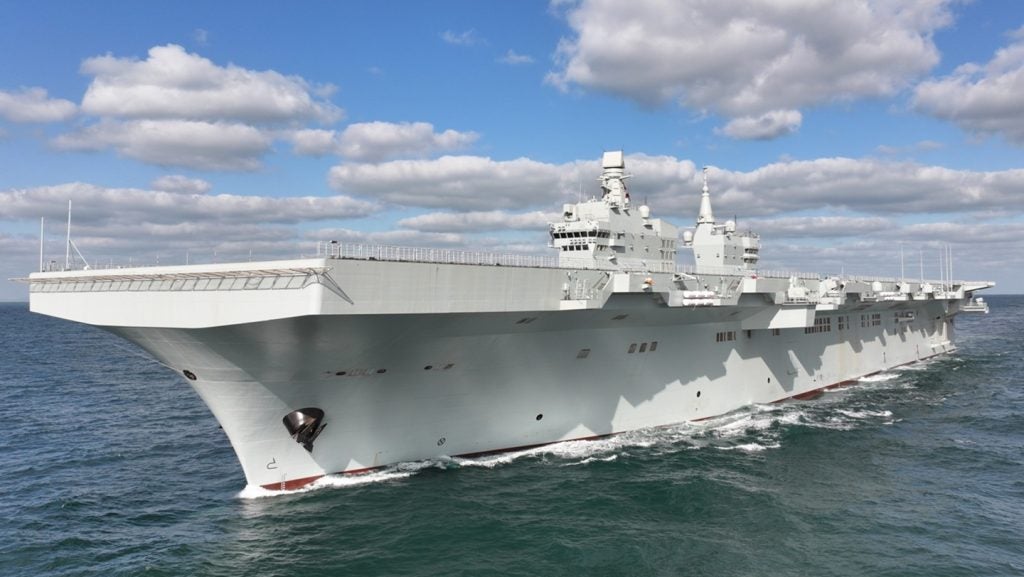

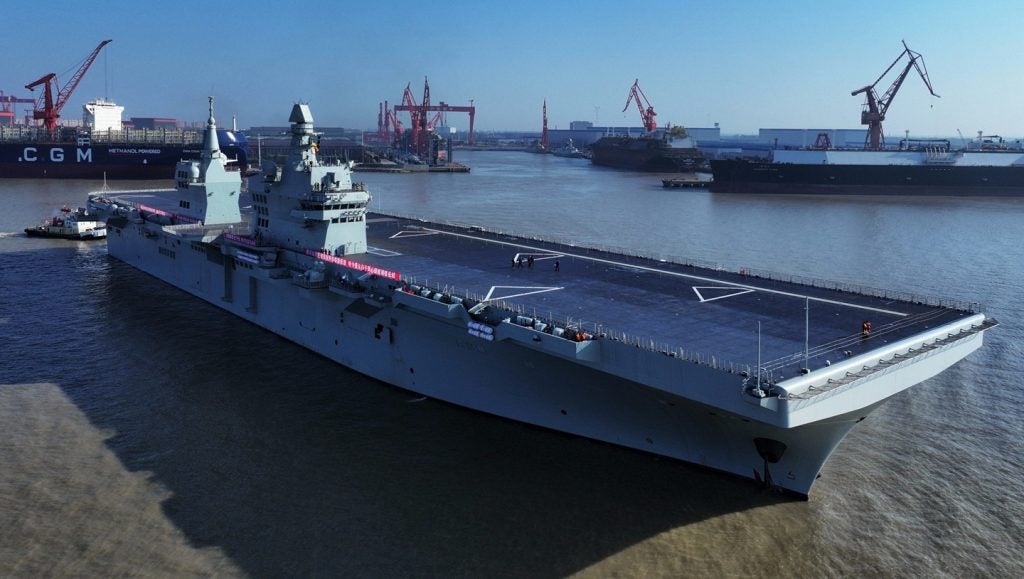
The ability of the class to support large-scale UAV operations, alongside traditional amphibious assault ship roles, was a key capability, according to Kandlikar Venkatesh, defence analyst at GlobalData.
“With the reported electromagnetically powered catapult to support an air wing, the 076 could handle heavier UCAVs such as those used for ISR, strike support, and electronic warfare,” Venkatesh stated.
This function would provide an amphibious assault group “its own aviation layer”, instead of having to solely rely on a nearby carrier air wing, such as carried by the PLAN’s Fujian, or aircraft from the mainland.
“Type 076 also complicates Taiwan’s defensive plan. It gives China a way to keep ISR and targeting coverage over the strait and around potential landing zones even if access to carriers or mainland aviation is disrupted,” Venkatesh said.
This tighter, self-contained reconnaissance and EW bubble reduces early detection time for defenders and improves the PLAN’s ability to coordinate the opening stages of an operation, Venkatesh maintained.
Taiwan seizure requires amphibious assault
The PLAN operates a significant amphibious assault fleet, unsurprising as Biejing maintains its claim over Taiwan, located 180km away across the Taiwan Strait. An amphibious assault is the only way that China could successfully seize the island by force.
At the largest end of the amphibious spectrum, the PLAN operates three Type 075 Yushen-class amphibious assault ships (LHA), measuring 240m in length and displacing up to 40,000 tonnes.
The addition of the Type 076 Sichuan, initially dubbed the ‘Yulan class’ by the US ONI in 2024, will provide a significant boost in capability to the PLAN and China’s aspirations in the region. It is unknown how many vessels will be built, but given China’s usually fast iteration of classes it is unlikely to run beyond 2-4 vessels.
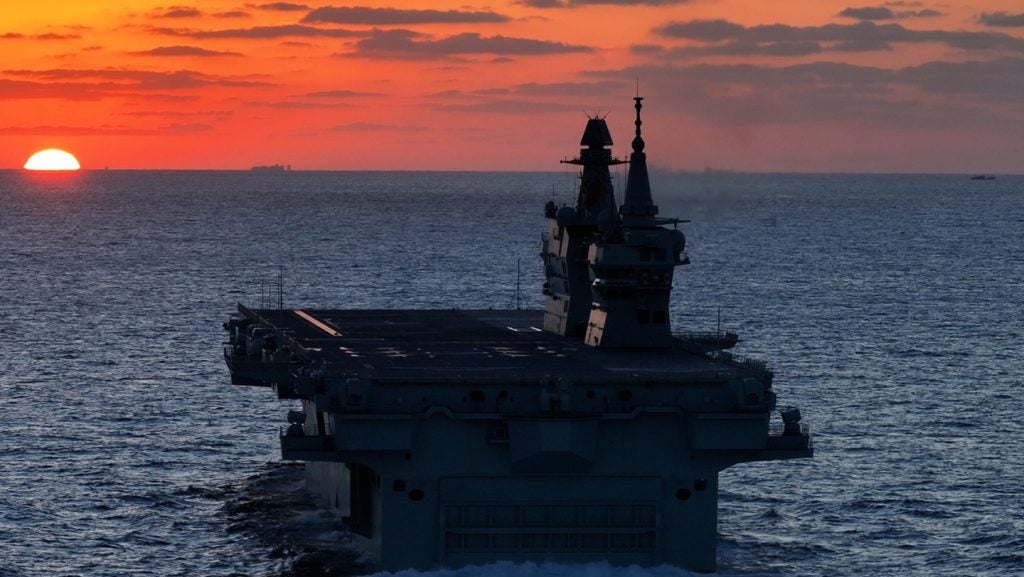
With the integration of a floodable well deck, Sichuan is able to accommodate, if assuming a similar force embarkation as US Navy counterparts, around 1,500 soldiers or marines.
Analysis of imagery released by the MND shows clearly that the vessel is intended to operate in the littorals in its amphibious assault role, with three Type 1130 CIWS and three HHQ-10 short range anti-air missile systems. Up to four multi-cell countermeasure launchers, shared between the port and starboard, are also visible.
The Sichuan has two aircraft lifts – one installed between the split bridge on the starboard side, the other towards the aft starboard section – to serve the likely embarked air wing of around 30 aircraft, including helicopters and potentially the GJ-11 combat drone.
The vessel will be commissioned into PLAN service in 2026.