

- The Swedish Navy has begun training Polish submariners; the two nations are procuring the same A26 diesel-electric submarines, scheduled for delivery in the 2030s
- In the meantime, Swedish personnel will teach the Polish crew in Karlskrona, preparing them to operate the ageing HSwMS Södermanland, which Poland will lease from 2028 until it transitions to the A26
- Poland’s only current submarine is an older Russian Kilo-class submarine, which makes the technological leap very large
Polish submariners have started training under the Swedish Navy at Karlskrona naval base on 19 August as the crew learn to operate a modern diesel-electric submarine (SSK) for the first time.
The 18-month course will prepare 30 Polish personnel to operate HSwMS Södermanland, Sweden’s only remaining A17 submarine—originally built in the 1980s but upgraded several times with features such as air-independent propulsion (AIP).

Discover B2B Marketing That Performs
Combine business intelligence and editorial excellence to reach engaged professionals across 36 leading media platforms.
Warsaw will lease the ageing SSK from 2028 as it makes a considerable technological leap from its Cold War-era, Russian Kilo-class submarine.
in the longer term, the transition will also prepare the Polish crew to use the modern technologies on their three future submarines—Saab’s A26 SSKs. Sweden will also procure two of the same boats, which it has designated the Bleckinge-class, expected for delivery in 2031 and 2033 respectively.
A17 to A26
“The A17 shares the same design philosophy and many technical systems with the A26 submarines,” said a Swedish Navy spokesperson responding to questions from Naval Technology.
They affirmed: “As part of the contract we will train the Polish submarine crew on just the A17 submarine HSwMS Södermanland, but it is likely that the cooperation will extend to the A26 submarines as well.”
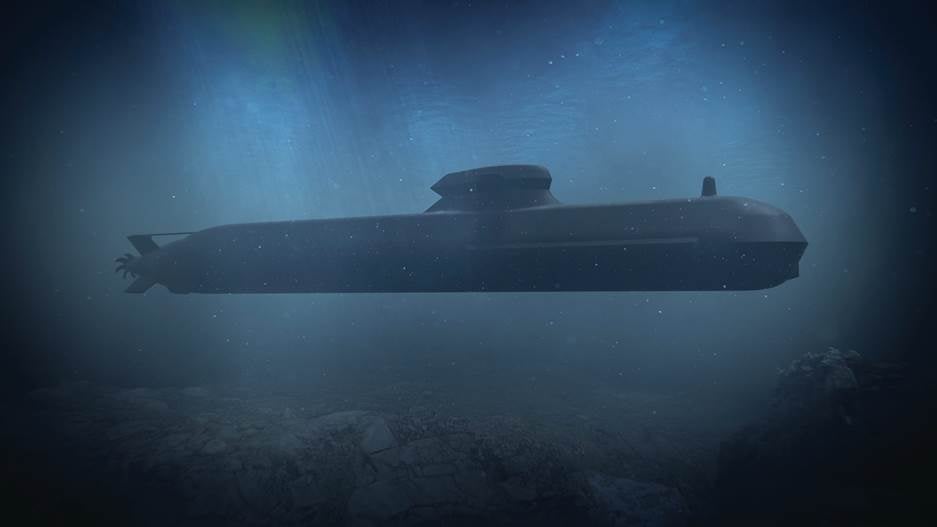
Both types are optimised for the shallow, brackish waters of the Baltic Sea. They share the Kockums Stirling AIP, a quiet and vibration-free engine that increases submerging endurance from days to weeks, and an X-rudder with four independently controlled surfaces for manoeuvrability.
However, the larger A26 introduces advanced materials, digital networking and automated payload modularity.
But the significant architectural difference is in the bow. This section hosts the 6m-long Multi-Mission Portal for the launch and recovery of up to eight divers, Swimmer Delivery Vehicles and large autonomous underwater vehicles. These capabilities can swim straight out of the horizontal bow portal while the submarine is moving or bottomed.
Training
It is understood that the Polish submarine crew will receive the same training that is taught to Swedish submarine crews. This will include everything related to operating the submarine, weapons, sensors and tactics.
Lieutenant Commander Joakim Sjöström serves as the project manager for the training of Polish personnel at Karlskrona.
“This is a highly compelling project with a compressed timeline,” he acknowledged ahead of the arrival of Polish submariners in June. “This programme will lay the foundation for future exchanges and the development of submarine warfare capabilities in our immediate vicinity.”
But this is not the first time that Swedish submariners have taught foreign navies.
Previously, training has been carried out with four Australian crews, four Singaporean crews and a Danish crew as they adapted to the Collins-class, Sjöormen-class and with the lease of the submarine Näcken respectively.
The most recent training involved two Singaporean submarine crews followed by the sale of two other A17 submarines, Västergötland and Hälsingland, to Singapore.


