

NH Industries will take back nine NH90 helicopters it built for Norway besides paying the government €305m ($351m), on top of another €70m already paid, in a settlement that has been described by both parties as an “amicable” solution.
This is slightly less than the full amount – Nkr5bn (€428.4m) – the Norwegian Defence Material Agency originally paid for the fleet.

Discover B2B Marketing That Performs
Combine business intelligence and editorial excellence to reach engaged professionals across 36 leading media platforms.
The final decision, announced today (3 November 2025), comes after Norway cancelled its procurement of the fleet of maritime helicopters in 2022, having placed an order for 14 units with the Airbus-led joint venture in 2001.
Delivery took too long – scheduled to arrive in 2008, but only eight fully operating rotorcraft were delivered – and the user experienced technical issues. Fourteen helicopters were intended for the Coast Guard and for other anti-submarine warfare (ASW) missions.
The fleet was required to provide 3,900 flight hours annually but it had only averaged about 700 hours in service.
What to do with them?
Three years ago, when Norway cancelled the programme, the Ministry of Defence stated that “no matter how many hours our technicians work, and how many parts we order, it will never make the NH90 capable of meeting the requirements.”
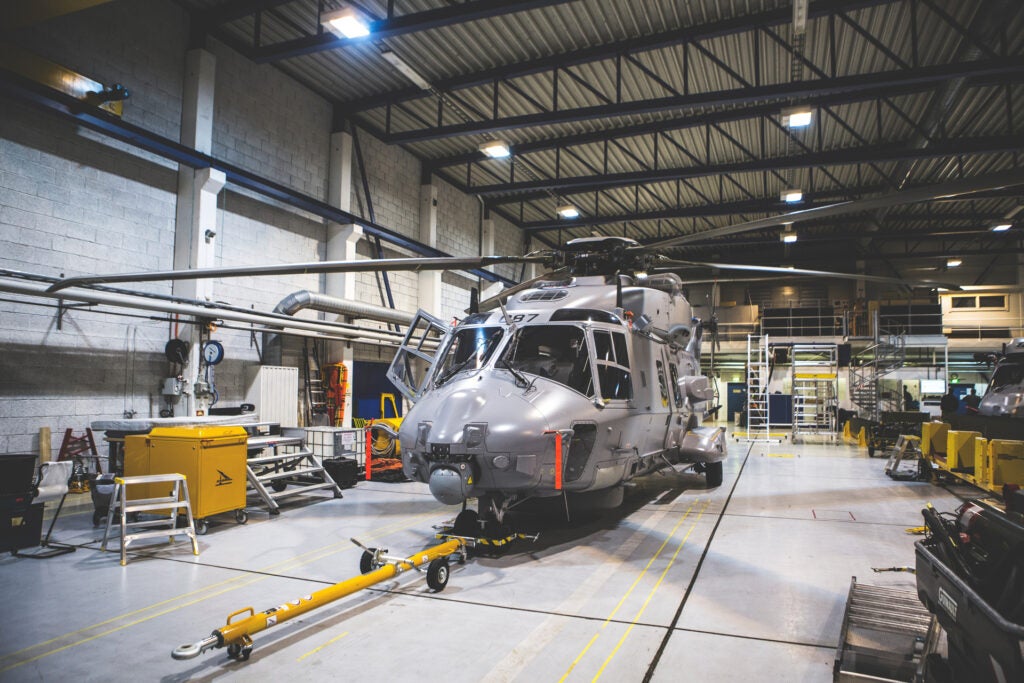
Now, the problematic fleet will reintegrate within the NH90 programme, making in-demand parts and equipment available to other users of the helicopter. This includes 14 countries including France, Germany, Italy, Spain, and Qatar, among others.
In March 2023, the agency announced plans to replace NH90 with six American-made MH-60R Seahawks in a deal worth $1.18bn. Denmark has operated the helicopter since 2016.
ASW in the North Atlantic
Norway has made its defence priorities clear following the acquisition of British Type 26 frigates in a £10bn contract at the end of August, marking a major strategic partnership with the UK to cohere and conduct ASW missions in the North Atlantic.
The Russian Navy commands one of the largest submarine fleets in the world with an estimated 64 vessels, according to the Nuclear Threat Initiative, 16 of which are nuclear-powered ballistic missile submarines.
There are concerns that they could be used to strike vital infrastructure in the North Atlantic, including unconfirmed reports that Russia used its submarines to attack the Nord Stream pipeline and caused significant damage.
In response, the UK outlined its Atlantic Bastion policy enshrined in the Strategic Defence Review. The concept envisions a layered and integrated sensor network that spans surface, subsurface, and aerial domains and is coordinated across multiple stakeholders, which will now likely include Norway.
It is worth noting the possibility that the Royal Norwegian Navy, with its intention to emulate the British frigate fleet, may extend their familiarity to their maritime helicopters which currently operate from the UK vessels, namely Merlin and Wildcat. On the other hand, it will not be lost on the agency that these platforms are built by Leonardo, one of the three stakeholders (32%) of NH Industries.


