

- New US supercarrier heads out for initial builder’s trials to test ship’s system, ahead of handover expected in 2027
- The USS John F Kennedy is the second of a planned ten Ford-class aircraft carriers, forming the centrepiece of the US Navy
- The ongoing manufacture of the Ford class has been delayed due to costs and shipyard capacity
The US Navy’s newest aircraft carrier, the USS John F Kennedy (CVN79), departed the Newport News shipyard in Virginia on 28 January to begin builder’s sea trials, a key milestone that will test ship systems and components at sea for the first time.



Displacing around 100,000 tonnes, the USS John F Kennedy is the second of a planned ten-strong fleet of Ford-class supercarriers, which will gradually replace the in-service Nimitz-class carriers over the coming decades.
Builder’s sea trials are a standard part of naval manufacturing, taking place before handover of the vessel to the service, is this case, the US Navy.
For USS John F Kennedy, the build time has been a complex undertaking, in keeping with the demands of building the largest vessels in any of the world’s navies. With the first steel cut taking place in 2011, the 15-year manufacturing span saw previous US administrations extend the timeline due to cost concerns.
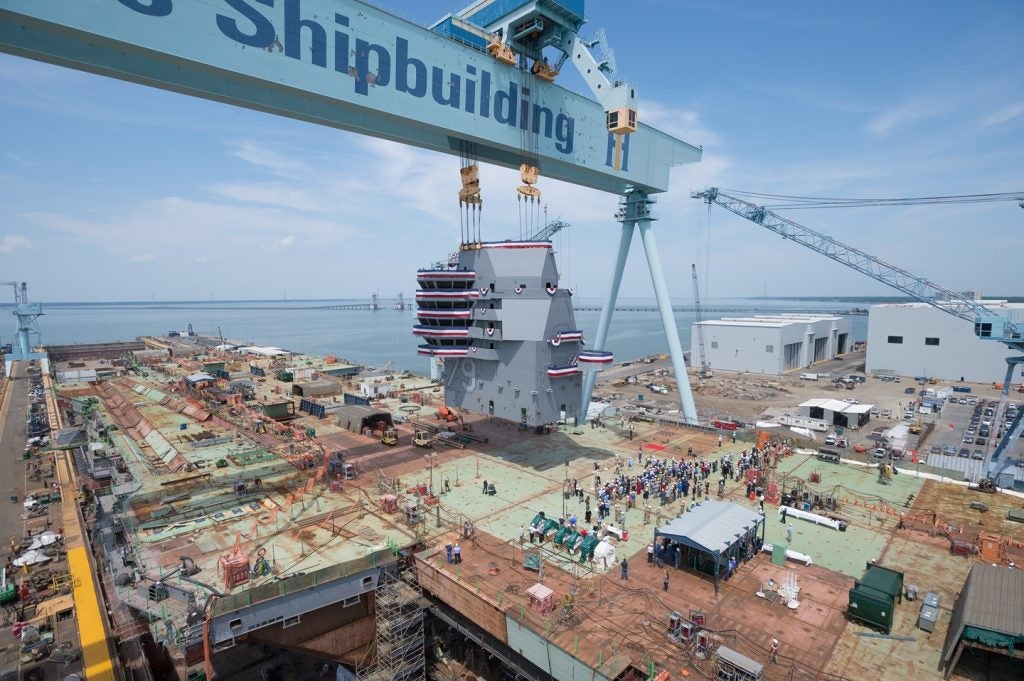
It is thought USS John F Kennedy will be handed over to the US Navy in 2027 for commissioning, joining the first-in-class USS Gerald R Ford in service.
The slow pace of manufacture of the Ford-class carriers, arising from issues like costs as well as shipyard capacity, is placing pressure on the current Nimitz class to be retained in service for longer than originally planned in order to maintain US Navy flattop numbers.
It is expected that USS Nimitz, originally commissioned in 1975, will begin defueling its nuclear reactor in 2026 ahead of decommissioning.
Notably, President Trump has suggested that the Ford class’ electromagnetic launch system (EMLAS) used to launch fighters will be replaced with the conventional steam-powered system active on Nimitz-class carriers.
This change, first mooted in 2025, was theorised to include USS John F Kennedy and future sister ships, leaving USS Gerald R Ford as the sole EMALS carrier in US Navy service.
China’s latest carrier, the Fujian, is equipped with an EMALS system.
US Navy: BBG(X), FF(X), and a force in flux
Meanwhile, the US Navy is undergoing a shift in its force structure under President Donald Trump, who axed the planned Constellation-class guided missile frigates in favour of a new class of smaller warship under the FF(X) programme.
In addition, Trump announced the development of the Trump-class battleships (BBG(X)), which could result in the suspension of work on the planned next-generation DDG(X) guided missile destroyers.
With the ongoing introduction of the Flight III Arleigh Burke-class destroyers and future Trump class, the requirement for the DDG(X), in replacing the in-service but ageing Ticonderoga-class guided missile frigates, could be subsumed within the new programmes.



