

- German Defence Minister visited Montreal, where he engaged with local defence suppliers
- While there, Pistorius urged for “strategic” cooperation on the 212CD right before Canada is due to make a decision on its future submarine design
- His comments come shortly after Hanhwa, the South Korean competitor, made its last play for the KSS-III design
German Defence Minister Boris Pistorius visited Montreal to form new industrial ties with Canadian defence firms, amid a contest between Europe and the Asia-Pacific to secure a key North American submarine deal.
While Quebec province is known for its aerospace industry – one of the largest global hubs in the sector – and as the visit focused heavily on training systems with local supplier CAE, Pistorius did not miss an opportunity to reinforce the Norwegian-German bid for Canada’s future submarine:

Discover B2B Marketing That Performs
Combine business intelligence and editorial excellence to reach engaged professionals across 36 leading media platforms.
“German cutting-edge technology in submarine construction and leadership in training and simulation are coming together here [in Canada].”
Pistorius’ comments on the contract are timely given the Ministry of National Defence must decide on a design for the Canadian Patrol Submarine Project (CPSP) to replace its legacy Victoria-class diesel-electric (SSK) boats as early as the summer. The competition will see the Ministry of National Defence pit the Northern European 212CD (Common Design) against South Korea’s KSS-III.
Vying for the final time
Pistorius’ visit to Canada comes just after a Republic of Korea (ROK) Navy KSS-III submarine traversed 14,000 kilometres to British Colombia on the other side of Canada, over the course of two months, whereupon the crew operated in exercises with the Royal Canadian Navy (RCN) and other Nato allies.
Hanwha Ocean, the original equipment manufacturer of the SSK, has struck numerous industrial agreements with Canadian suppliers involved in sonar systems, underwater sensors, naval combat systems, and submarine support technologies, including Geospectrum Technologies, Ultra Maritime, OSI Maritime Systems and Curtiss-Wright INDAL Technologies.
Two different sets of offerings
The rivalry represents two different strategic directions the RCN must consider.
At the political level, the 212CD would have a strong supply ecosystem centred around Northern Europe with two fellow Nato partners. This means that virtually every operational, communicative and sensor-based component of the submarine is engineered to integrate easily with alliance systems.
On the contrary, the KSS-III was originally built with South Korea security issues in mind. Hanwha prioritise firepower, including submarine-launched ballistic missiles, as evidenced by the boat’s vertical launch system (VLS) capability.
Whereas, European navies prize stealth under the common Atlantic Sentry doctrine. To this end, the Common Design has a smaller, signature-reducing diamond-shape.
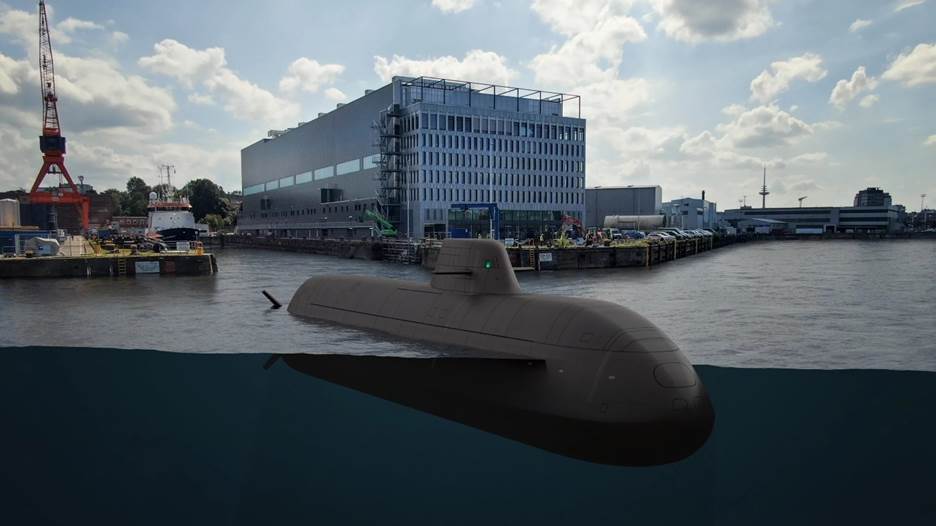
Likewise, there are certain aspects of the KSS-III that are out of sync with Nato requirements, such as the ultra secure tactical data links needed in the Arctic and North Atlantic. Hanwha and Canada would need to perform substantial technical alterations to the software while navigating US and European export controls.
Equally, however, the RCN would be locked into a fixed model if it selects the 212CD.
German and Norwegian naval officers expressly rejected any design alterations during the Undersea Defence Technology conference in Oslo last year. The type is already in production with plans to produce ten units, and the first boat is expected to enter service from 2029.
There are also plans to build numerous 212CD maintenance hubs dotted along the North Atlantic. Crucially, these yards are not exclusive to the Baltic Sea, but are also being built along Norway’s Western coastline, namely Bergen, where the RCN have easy access.
Meanwhile, Hanwha’s tender is extensive and provides greater room for customisation.
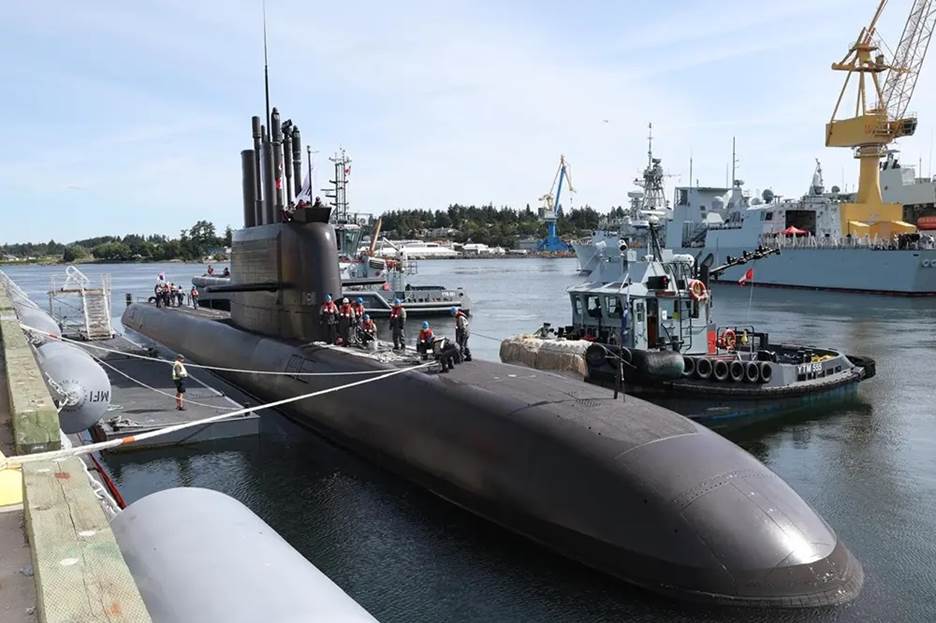
Its economic proposal to Canada has increasingly emphasised the localisation of key underwater warfare and sustainment capabilities in Canada, including the creation of what it calls the Hanwha Arctic and Defence Innovation Centre (HADIC). This is essentially a local research centre exploring future defence technologies, such as AI-enabled systems and digital engineering.
Notably, Hanwha also has the fastest delivery schedule for CPSP, able to deliver four KSS-III submarines before 2035 if a contract is formalised this year.
The additional eight boats will be delivered at a rate of one per year, meaning the entire fleet of 12 would be delivered to Canada by 2043.


