

- Trump memo launches a major push to revive US naval shipbuilding, boosting capacity and competition
- Orders a 60-day plan to swap CVN‑81’s EMALS/AWEs for steam/hydraulics
- Expands “Finland Model” foreign yard buy-ins/US builds, tightens design-change rules, and explores a fifth public shipyard
US President Donald Trump has initiated a far-reaching programme to boost naval shipbuilding and sustainment across the US defence industrial base, including offering foreign companies the prospect of joint builds of future surface combatant classes.



In a 13 August Presidential Memoranda, President Trump outlined a multi-part plan intended to break the cycle of supply chain difficulties, maintenance issues, and shipbuilding delays which have long-since plagued the country’s defence sector.
Citing a “lack of capacity and competition among shipbuilders”, the Presidential Memoranda claimed there were “large backlogs” of orders across six major US Navy shipbuilding programmes, and a commercial shipbuilding sector that was “not globally competitive”.
In addition, an “atrophied shipbuilding industrial base” and “diminished supplier bases” had served to expand delays and increase costs. To this end, the US Department of War (née Defense) is to be charged to “restore” capacity and competition to the maritime industrial base.
Key to this is a focus on “proven, reliable, and affordable technologies and ship designs”, and to award contracts that enable purchases of foreign suppliers in the near term while incentivising investment in the US shipbuilding sector.
Highlights of the multi-part plan include:
Restoring steam and hydraulic systems to carriers
The Presidential Memoranda stated that within 60 days of its publication, the Department of War (DoW) is to draw up a plan to replace the Electromagnetic Aircraft Launch System (EMALS) and Advanced Weapons Elevators with steam and hydraulic systems for the construction of CVN-81 (USS Dorris Miller), including timelines and resourcing requirements.
The EMALS aircraft launch system was intended to be a signature technology fitted to the Ford-class aircraft carrier, although early vessels have been installed with conventional steam and hydraulic launch catapults, as fitted to the in-service Nimitz-class carriers.
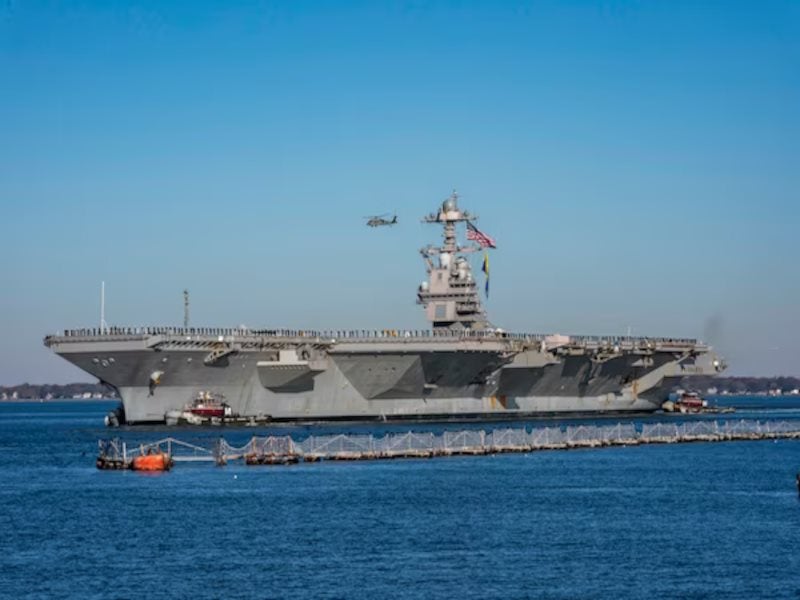
It is not known what impact such a move could have on CVN-81, which is currently in build and could require significant structural and subsystem alteration.
Long EMALS long-lead items acquired for future Ford-class carriers may now not be required, and the wider implications to the US Navy’s future carrier fleet is still to be determined.
Expanding investment and competition in US yards
Expanding on the 2025 agreement with Finland to produce an icebreaker for US Navy service, the evolved ‘Finland Model’ will now be used for up to three ship classes, providing that the foreign supplier builds a new shipyard in the United States or assumes ownership of a majority equity position in an existing US-based shipyard.
Should this requirement be met, then warship programmes would permit the first two ships in class to be built outside of the US with remaining vessels being manufactured in the United States.
Such foreign-owned US yards would have to hire and train an American workforce, and licence “proprietary shipbuilding techniques and technologies” used at the parent foreign shipyard to the United States shipyards.
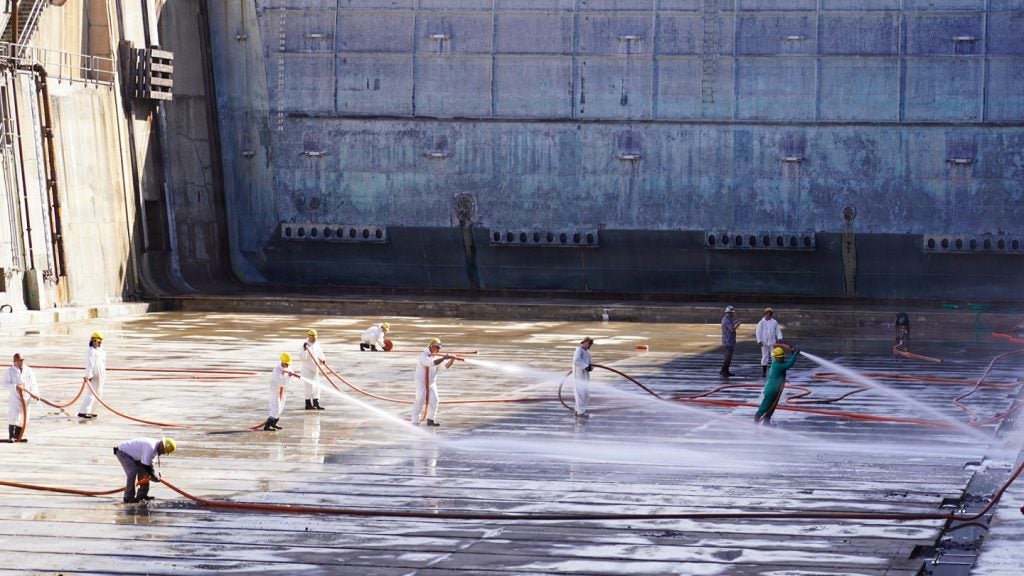
A US supply chain would also have to be created for the construction and maintenance of all ships built at US sites.
South Korea’s Hanwha recently submitted a conditional bid for the operations of Austal’s US division, with Seoul looking to secure US naval shipbuilding orders.
The recently announced GMF 140 frigate concept from Rheinmetall, which cites an unspecified “North American” opportunity, could also be directed towards this revamped shipbuilding plan, having acquired NVL, the military part of the Lürssen Group in March 2026, as the European land defence prime moves into the naval domain.
A new “competitive acquisition approach” is also planned for surface combatants, centred around anti‑submarine warfare, surface warfare, and convoy escort duties.
Prohibition on iterative and concurrent design
An implicit stinging criticism of previous programme failures like the Constellation-class guided missile frigates could also be discerned in the document, which called for the cessation of the US Navy “imposing iterative design changes” upon original mature parent designs.
Any changes would have to be with the permission of the Secretary of War, in consultation with the Secretary of the Navy, and other senior administration officials.
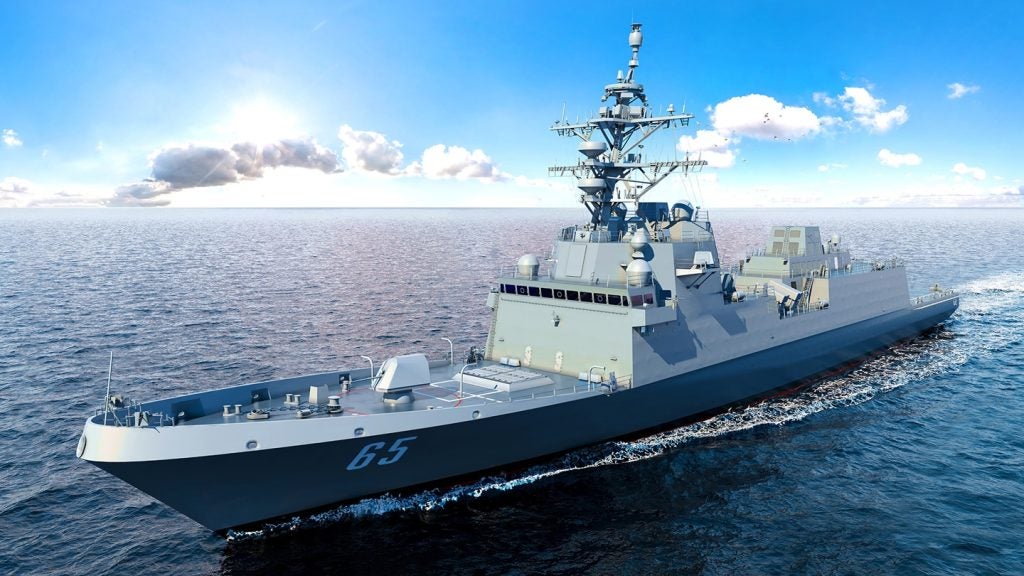
This was a particular issue with the Constellation class, which was based on the mature European FREMM design but underwent a vast range of changes at the behest of the US Navy, which sought to put its own imprint on the programme.
Over budget and late, the Constellation class, which could have introduced by to 20 new frigates into service, was reduced to just the first two vessels. The US subsequently initiated a new light frigate programme, dubbed FF(X), to deliver a small surface combatant into US Navy service based on the US Coast Guard’s Legend-class cutters.
A fifth public navy shipyard
US defence officials have also been charged with developing a plan to create a fifth public shipyard, required partly in order to increase nuclear-powered submarine and aircraft carrier readiness levels.
Notable was the need for sufficient drydock capacity to facilitate the growth of the fast attack submarine fleet over the next two decades, with locations proximate to the US Pacific Fleet, including “in the continental United States, Alaska, Hawaii, and the United States territories”.
Site options should include up to three new drydocks designed and built to hold the range of every current and projected class of submarine, the memoranda stated.


