
Lockheed Martin has successfully completed first flight test of an anti-ship missile prototype, as part of the joint US Defense Advanced Research Projects Agency (DARPA) and the US Office of Naval Research (ONR) long-range anti-ship missile (LRASM) programme.



During the test, a prototype LRASM has been launched from B-1 aircraft and followed a pre-planned route towards the target over the Point Mugu test range off southern California.
The missile swapped from a pre-planned route to autonomous guidance, when approximately halfway to its target, and autonomously detected the moving unmanned 260ft mobile ship target (MST) and successfully hit it with an inert warhead.
DARPA LRASM programme manager Artie Mabbett said that the fully functional test has marked a significant step in providing next-generation anti-ship missile capability for the US Navy and US Air Force.
"This test is the culmination of the five-year development and integration of advanced sensors in an all-up-round (AUR) missile," Mabbett said.
In addition, the free-flight LRASM transition test validated flight characteristics and assessed key subsystems and sensors.
Developed by Lockheed and based on joint air-to-surface standoff missile-extended range J (ASSM-ER), the LRASM programme aims to reduce dependence on intelligence, surveillance and reconnaissance (ISR) platforms, network links and GPS navigation in electronic warfare environments.
"It also represents the first time we’ve integrated advanced sensors and demonstrated the entire system, resulting in a performance that substantially exceeds our current capabilities," Mabbett continued.
Designed for both surface and air launch, the LRASM features sensors and systems to create a stealthy and survivable subsonic cruise missile.
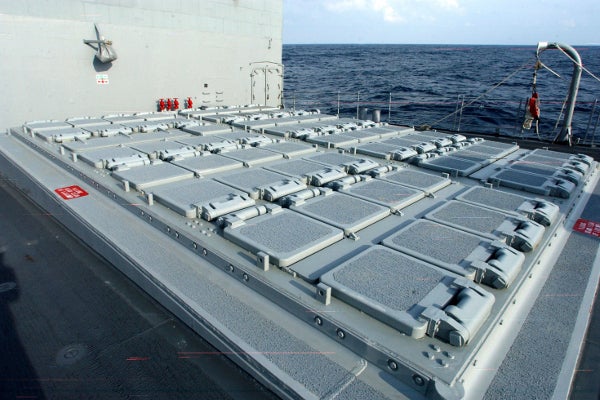
Image: LRASM can be launched from the US Navy’s Mk 41 vertical launch systems. Photo: file image.




