

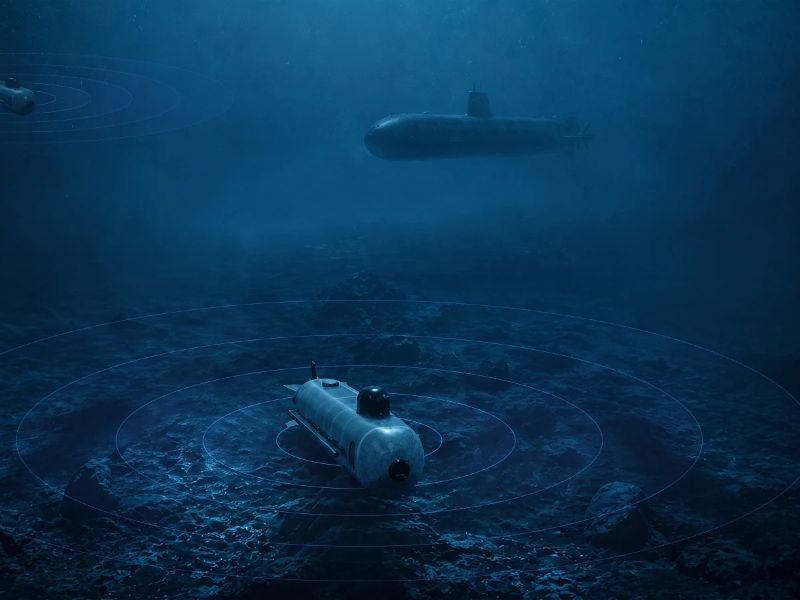
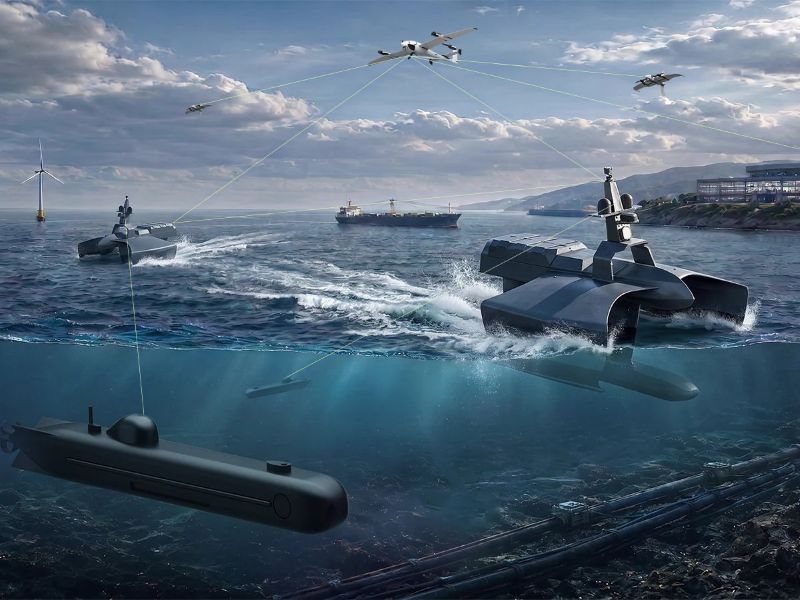
Subvex is an AI-supported unmanned underwater vehicle (UUV) developed by Quantum Systems for maritime situational awareness and subsea operations.
The vessel is intended to operate as a networked sensor and data node within distributed maritime systems.
Recommended White Papers

Recommended Buyers Guides

Quantum Systems launched Subvex UUV, along with the Seavex USV, in Portugal in September 2026 during an exercise organised jointly by the Portuguese Navy, Faculdade de Engenharia da Universidade do Porto, the Nato Centre for Maritime Research and Experimentation, the Nato Joint Capability Group for Maritime Unmanned Systems and the European Defence Agency.
Subvex, along with Seavex, represents Quantum System’s expansion of its unmanned systems portfolio from air and land to sea.
The platform is designed for autonomous deployments lasting several days and can connect directly with Seavex surface vessels or operate with other Subvex units in an autonomous mesh configuration.
Subvex design and features
The Subvex UUV features a pressure-tolerant flooded-frame design, measuring 4.2m (13.7ft) in length and 533mm in diameter. Its dimensions align with standard Nato torpedo tube specifications, allowing for submarine launch and recovery. The UUV weighs approximately 400kg.
An Nvidia Jetson Thor computing module provides on-board edge processing and AI functions. Its machine-learning software supports real-time object detection, classification and identification, reducing dependence on external communications links.
The navigation system combines data from several sensors to operate in environments where global navigation satellite system signals are unavailable.
The vehicle can dock autonomously with the Seavex USV for recharging, secure data transfer and redeployment. This arrangement is intended to support sustained underwater surveillance while maintaining links to a wider intelligence, surveillance and reconnaissance network.
Subvex performance
Subvex is designed to operate at depths of up to 6,000m and its 42kW-hour battery provides an endurance of up to four days. The UUV offers a surveillance speed of three knots with a maximum speed of eight knots.
A variable buoyancy system allows the vehicle to hover quietly or remain on the seabed for extended periods. It can carry payloads of up to 20kg and recharge in conditions of up to Sea State 3.
Subvex sensors
The Subvex UUV includes an ultra-short baseline navigation and modem system with a 6,000m range, alongside a Doppler velocity log rated for operation at depths of up to 6,000m.
Its sensor suite also includes a side-scan sonar with a 1,000m range, a hydrophone array for positioning and identification, and a forward-looking imaging sonar designed for 6,000m depth.
Computer-vision processing supports the real-time interpretation of sonar and acoustic data, while Advanced Encryption Standard 256-bit cryptography protects transmitted and stored data.
Control and communication
Subvex supports several communications methods including local wireless networks, inductive coupling, Silvus tactical radios, 5G cellular networks and Iridium satellite communications.
The platform uses low-bandwidth acoustic modems for underwater communications for swarm operations. These support the exchange of track data and coordinated activity between multiple UUVs in complex or signal-denied operating environments.
The UUV is integrated with the MOSAIC UXS software suite for mission management and multi-domain command-and-control.
MOSIAC UXS software suite details
MOSAIC UXS is a modular software architecture that is not subject to International Traffic in Arms Regulations restrictions. It is designed to support the planning, coordination and command of uncrewed systems across maritime, land and air domains.
The software incorporates multi-sensor data fusion, autonomous swarm management and AI-supported functions while retaining human oversight during missions. It brings together surveillance data, target recognition, operational execution and post-strike damage assessment within a single user interface to support decision-making in complex operating environments.
