

- Royal Navy Arctic under-ice capability gap: HMS Trenchant broke through metre-thick ice during ICEX 2018, with the UK reaching an eight-year pause in polar submarine operations
- Astute-class availability crisis hits UK submarine readiness: With multiple boats inactive and only limited operational capacity, questions grow over the Royal Navy’s ability to conduct Arctic patrols
- UK vs US Navy Arctic dominance: While the US fields ice-capable Virginia and Improved Los Angeles-class submarines and continues ICEX serials, the UK’s next under-ice exercise timeline remains unclear
It was 2018 and the heady days of a Royal Navy when it maintained a presence in the Middle East, had a double-digit number of frigates in its fleet, and its submarines were capable of operating in the most demanding environment of them all: the northern polar region.


HMS Trenchant, one of the capable Trafalgar-class attack submarines, had broken through the “metre-thick ice” of the Arctic Ocean to join two US Navy boats on Ice Exercise 18.
In the exercise, HMS Trenchant joined the USS Connecticut and USS Hartford for the drills, co-ordinated by the US Navy’s Arctic Submarine Laboratory and run from an ice camp established on an ice floe in the Arctic Ocean, north of Alaska, the Royal Navy said at the time.
Benefits included the ability to test “a series of equipment, notably sonar, against ‘live’ targets” and practice tracking and simulating attacks against other submarines.
“Exercises such as this are vital in maintaining the operational readiness of the Royal Navy’s submarine fleet and in maintaining the security of the North Atlantic and Arctic oceans,” the Royal Navy release, published on 15 March 2018, stated.
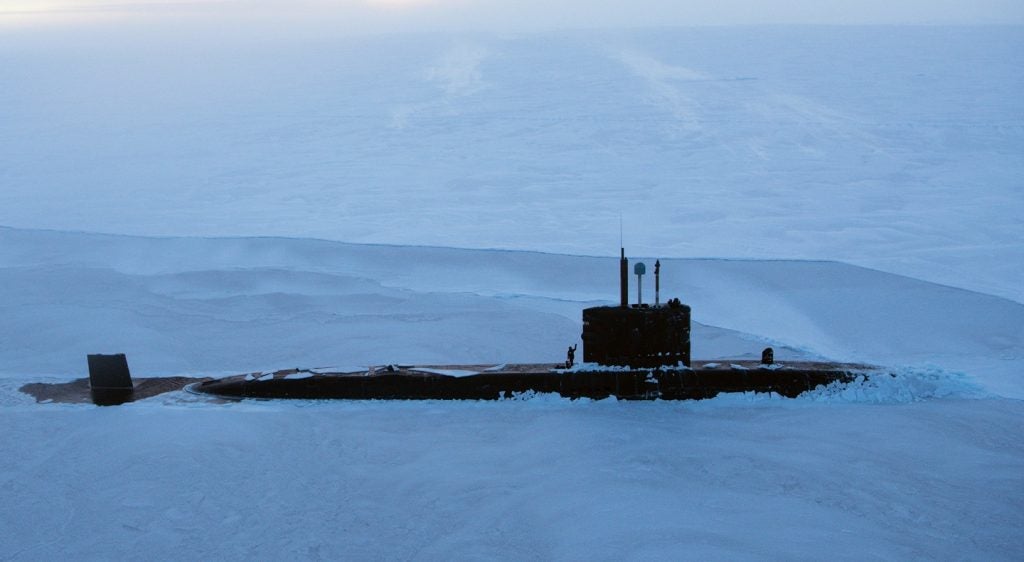
Indeed, Gavin Williamson, speaking on 11 June 2018 – during his quick 18-month stint as Secretary of State for Defence – told Parliament the UK had seen “considerable increase in Russian activity in the High North”, which had brought about a corresponding increase in UK presence in the polar region, such as seen with ICEX 18.
“This is all about how we invest to keep ourselves safe and the North Atlantic free from threats,” Williamson said.
Prior to that, it was HMS Tireless on ICEX in 2014.
That was then. This is now.
It is a full eight years since such a capability was performed by the Royal Navy, once described as “vital” to maintaining readiness in a region of critical geostrategic importance.
UK submarine fleet in readiness crisis
The UK Ministry of Defence still talks a good game, stating as recently as early-March that the Royal Navy had “maintained an under‑ice capability centred on the Submarine Service through Swiftsure and Trafalgar class submarines” and the service was “certifying the new [sic] Astute class to uphold this capability”.
As ever, the detail is in the analysis of the language used, which implies capability was being maintained through the simple certification of the ‘new’ Astute submarines. For new, read a class that first began to be introduced into service in 2010, eight years before HMS Trenchant broke through the ice.
However, the words of Luke Pollard, UK Minister for Defence Readiness and Industry, in the 4 March written parliamentary answer, are crystal clear.
“HMS Trenchant conducted the last ice exercise in 2018,” he admitted, confirming the current eight-year gap.
The next sentence borders on the bizarre.
“The Strategic Defence Review highlighted the High North and Arctic as an increasing area of competition for the UK, and the Defence Investment Plan is considering a range of options to meet this threat,” Pollard stated.
Comforting as it is to know that whichever AI built into the SDR submission process deemed the High North and Arctic as important to the UK, it is notable that no timeline has been given as to when the UK might next break the ice.
“It is the longstanding policy of this Department not to comment on future submarine operations,” Pollard said.
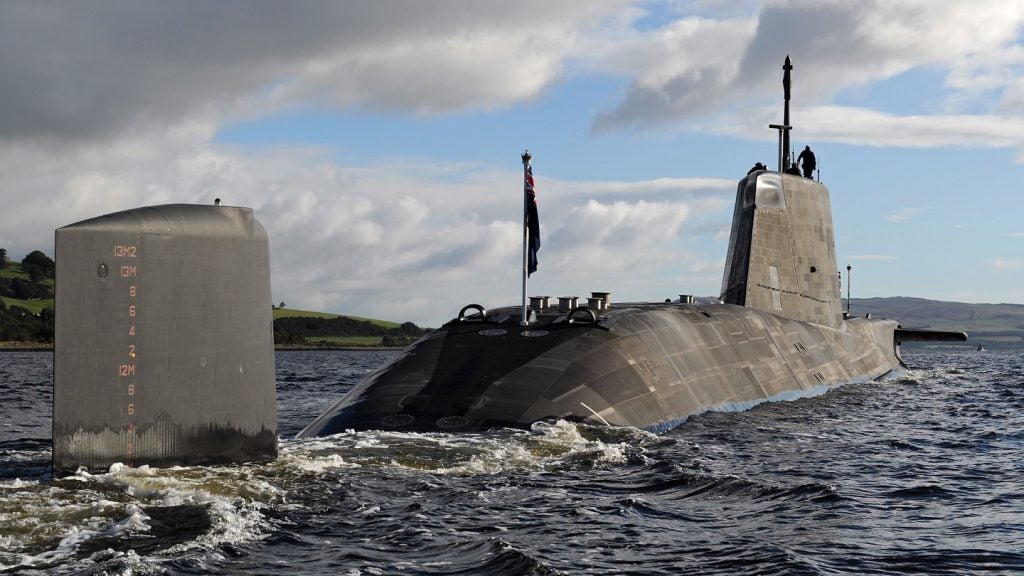
Probably just as well, because it is not going to happen anytime soon. It is difficult to conduct ice exercises for a Royal Navy that has a single functioning attack submarine, with HMS Anson committed to economic rather than security missions in Australia as part of AUKUS.
The other four in-service Astute-class boats at various stages of ‘not-being-open-for-business’, while the newest, HMS Agamemnon, is still undergoing basin trials. Three of the boats (Ambush, Artful, Audacious) have not been to sea for three years, with HMS Ambush the worst offender having been inactive for the past 42 months.
Part of the maintenance problem has been down to lack of available SSN-ready docks at Devonport Naval Base, which will be alleviated to some extent when 15 Dock is finally converted.
Questions remain over the Astute-class’s suitability to perform ice breaching evolutions, which require specifically hardened sail structure as seen with the US Navy’s Los Angeles and Virginia boats.
All US Navy Virginia-class SSNs and the remaining Improved Los Angeles class are ice-capable, with the Pentagon placing significant emphasis on its boats being able to operate in all environments.
In addition, even if the UK were in the business of under-ice operations with its few (or indeed sole) available attack submarines, it would only perform then with the US Navy, which this month conducted an ICEX, kindly allowing some UK, French, and Japanese sailors along for the ride to see a full spectrum navy in action.
It could be many, many years before the UK takes a crewed submarine back through the icy north. If ever.
When contacted, the UK MoD declined to comment on the Royal Navy’s submarine operations.


