

- References in recent UK-Norwegian defence agreements and parliamentary responses indicate a potential joint force
- The UK could delay some of its Type 26 build slots to accommodate Norway’s procurement of the Type 26 design
- Any move to joint command could be a realisation from the UK that it lacks the mass the fulfil its Nato maritime obligations
As uncertainty continues to swirl around the future composition of the UK Royal Navy surface fleet, questions regarding the Type 26 frigate programme persist, including a potential joint UK and Norway frigate force.


With Norway opting for the UK’s Type 26 frigate design, attention has turned to which production slots will be reassigned for manufacturer BAE Systems to fulfil the export order.
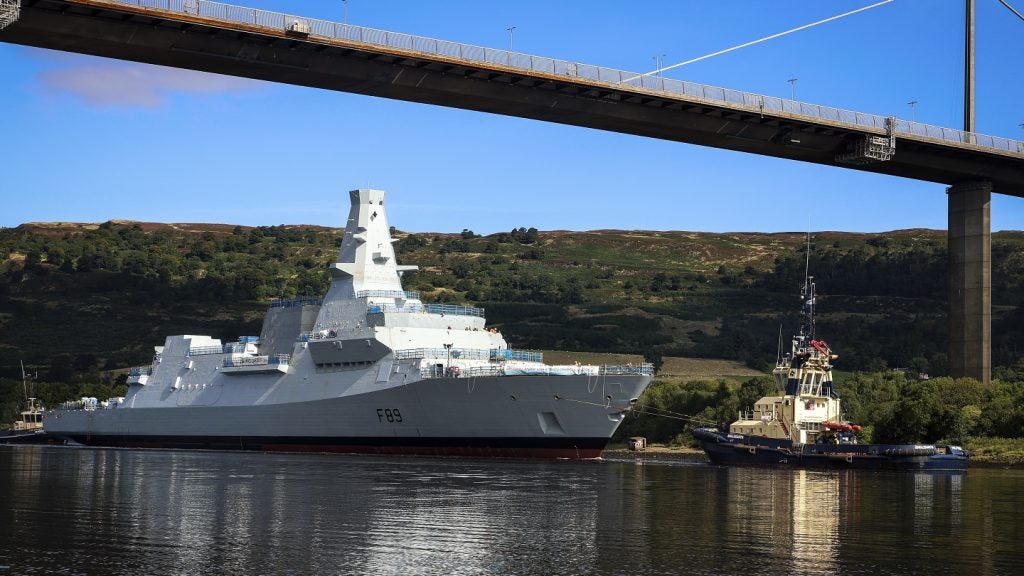
Part of the wider UK-Norway Lunna House Agreement, the deal will see Norway equipped with what has been described as an interchangeable fleet of UK-built Type 26 frigates.
Both countries share geographical interests and maritime domains with the GIUK Gap, the North Sea, and the North Atlantic.
The UK’s own Type 26 frigate fleet, originally intended to number 13 hulls but later cut to just eight on cost grounds, will replace the Royal Navy’s anti-submarine warfare configured Type 23 frigates.
However, the Type 23 frigates are being withdrawn at pace, having been asked to operate far beyond their originally intended service life. This leaves the Royal Navy with too few surface warships to fulfil required taskings.
Indeed, some missions, such as the deployment of a frigate ‘East of Suez’, have ended. The lack of a Fleet Ready Escort to protect the UK’s home waters, often relying on old, overmatched OPVs to perform the role, is also a result of the cuts to hull numbers.
When contacted, a UK Ministry of Defence (MoD) spokesperson said the Norwegian Type 26 frigate deal was a “significant economic boost” to the UK, delivering jobs and growth.
The spokesperson commented: “We are working closely with our Norwegian allies to progress the new partnership. This includes assessing options for offering Type 26 build slots currently allocated to the Royal Navy to the Royal Norwegian Navy.”
The timeline for the introduction of the UK Type 26 frigates was described on 4 February by defence readiness minister Luke Pollard as “during the late 2020s and 2030s as planned”.
Crucially, Pollard’s subsequent comments indicated the potential for a joint UK-Norway force of Type 26 frigates, operating in the North Sea and North Atlantic.
He said: “Norway’s biggest ever defence procurement deal will see a combined fleet of 13 anti-submarine warfare frigates – eight British and at least five Norwegian – operate jointly in Northern Europe, significantly strengthening Nato’s northern flank.”
Note the use of the term: “operate jointly”.
The UK MoD did not respond to specific questions regarding joint operations of the UK and Norwegian Type 26 fleets, including queries on co-command of forces, interchangeable crews, or whether any UK Type 26 warships currently under construction (Glasgow, Cardiff, Belfast, Birmingham, Sheffield, and Newcastle) were investigated for potential transfer to Norway upon completion.
Naval Technology contacted the Norwegian MoD regarding the procurement of the Type 26 frigates from the UK, with state secretary Marte Gerhardsen stating that there were “no plans… at this stage” of a permanent joint naval command between the two countries.
He noted: “But the two navies are planning to conduct joint training and operations in the future. In the event of joint training and operations, there will be a joint command on the lead vessel: this can be both [sic] a UK or a Norwegian frigate.”
Until the introduction of the Type 26 warships, Norway’s Nansen-class frigates are being upgraded to keep them current until eventual replacement.
Gerhardsen added: “The implementation of Type 26 in the Norwegian navy is planned to occur in the 2030s.”
UK Type 26: is reality about to bite?
In many respects, a shift in UK naval doctrine away from the generation of unilateral force in favour of multilateralism makes sense given the parlous state of the Royal Navy, which has significantly weakened in recent years, losing nearly half of its frigate fleet and entire amphibious assault capability.
Other Royal Navy warship and submarine classes such as the Type 45 destroyer and Astute-class submarines, respectively, have suffered from appalling readiness levels in recent years.
Its Queen Elizabeth-class aircraft carriers face an uncertain future, with the two vessels taking turns to enter a state of reduced readiness for periods or offer up parts of cannibalisation as the other is worked up for the UK’s occasional Carrier Strike Group deployments (2021 and 2025).
Given this, leaning into a de facto or de jure position of a combined fleet, such as the Type 26, concentrates capability where it is most needed and further recognition that the Royal Navy is no longer an independent true blue-water force.
Rather, the Royal Navy can help contribute to a wider European blue water naval capability, likely led by France and Italy, which offer larger and far more coherent fleets.


