

- HMS Agamemnon was commissioned into Royal Navy service in September, and is the sixth Astute-class submarine
- The Astute class are nuclear-powered, but conventionally armed, operating Tomahawk cruise missiles and Spearfish torpedoes
- Only seven Astute boats will enter service, a significant drop in numbers compared to previous generation fleets
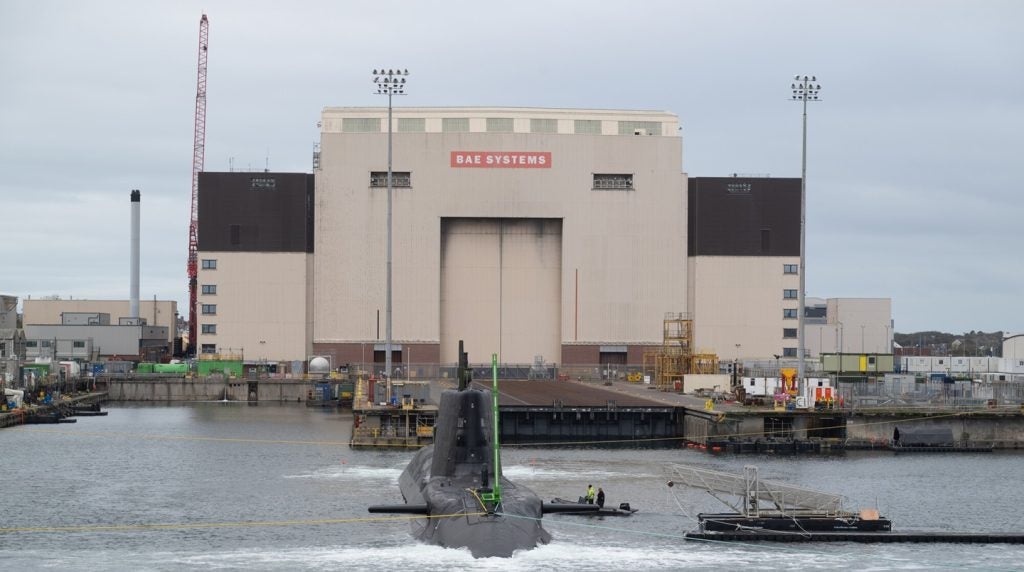
The UK’s newest Astute-class nuclear powered hunter killer submarine, HMS Agamemnon, has submerged for the first time at the BAE Systems yard at Barrow-in-Furness, conducting a ‘trim dive’ during a three-day period of testing.



Coming shortly after HMS Agamemnon was commissioned into service with the Royal Navy, the dive is a key milestone to prove the 7,400-tonne, 97-metre-long submarine’s capabilities, ahead of its departure to the home of the UK’s submarine force at the Clyde Naval Base.
Commander David Crosby, commanding officer of HMS Agamemnon, said: “The trim and basin dive is a key step in the commissioning of HMS Agamemnon. This period enables us to set the boat’s internal weight, prove her water-tight integrity, test sensors and put some of our systems through their paces ahead of sailing for the first time.”
However, with a total of seven Astute boats entering service, subsurface capability for the Royal Navy will be scarce. A total of 13 submarines of the Swiftsure and Trafalgar SSNs were manufactured, representing a significant drop in boat numbers.
The commissioning of HMS Agamemnon in September came nearly a year to the day since it was launched into the water in 2024. The same year a fire broke out at site’s Devonshire Dock Hall, where the Astute and Dreadnought submarines are being built.
The UK government recently announced a plan to increase the number of nuclear submarines in the Royal Navy, but detailed analysis conducted by Naval Technology has revealed significant flaws in the programme.
Dreadnought and Astute: the UK’s submarine future
Nuclear-powered but conventionally armed, the Astute SSNs weigh around 7,400 tonnes, and at 97m in length are the largest attack submarines commissioned into Royal Navy service. Duties will include covert operations, monitoring of maritime infrastructure, and tracking Russian and other non-allied naval vessels.
Conversely, the Dreadnought-class SSBNs are both nuclear-powered and nuclear armed, and will replace the current Vanguard class, which house the Trident II D5 ballistic missiles fitted with the Mk4/A Holbrook nuclear warhead.
The current Vanguard class are undergoing multi-year life-extension programmes in a bid to keep the SSBNs operational until the arrival of the Dreadnought boats, due in the early 2030s.
Once in service from the late-2030s, HMS Dreadnought, HMS Valiant, HMS Warspite and HMS King George VI will carry the UK’s nuclear deterrent.


