

HMS Scott, the largest ocean survey vessel in Western Europe, will continue to serve in the Royal Navy fleet until 2033.
This comes as some surprise given that it had previously been listed for sale by the UK Defence Equipment Sales Authority in March last year. At the time, the Navy confirmed they received a lot of interest in the ship.
Go deeper with GlobalData


Discover B2B Marketing That Performs
Combine business intelligence and editorial excellence to reach engaged professionals across 36 leading media platforms.
Whereas now, Scott will undergo an extensive overhaul at A&P Falmouth, a shipyard in Southwest England, undertaken by APCL Group, a British defence partner for more than a decade.
The hydrographic ship, which also has an auxiliary role as a mine countermeasures vessel, has been in service for 26 years, and “over the course of her life so far she has probably surveyed a greater area of the seabed than any other vessel in history,” speculated commanding officer Samuel Nightingale.
Nevertheless, “a major docking period is required to keep her performance and availability at the highest level.”
The overhaul will include a docking period in No. 3 Dock, a full hull blast and recoat, and the replacement of several onboard systems.
She will also receive upgrades including new water management systems, sewage treatment plants, thermal oil boilers and LED lighting installations. The project also involves the removal and overhaul of key components, such as four Cummins generators through the hull, replacement of internal doors and lifeboat davits.
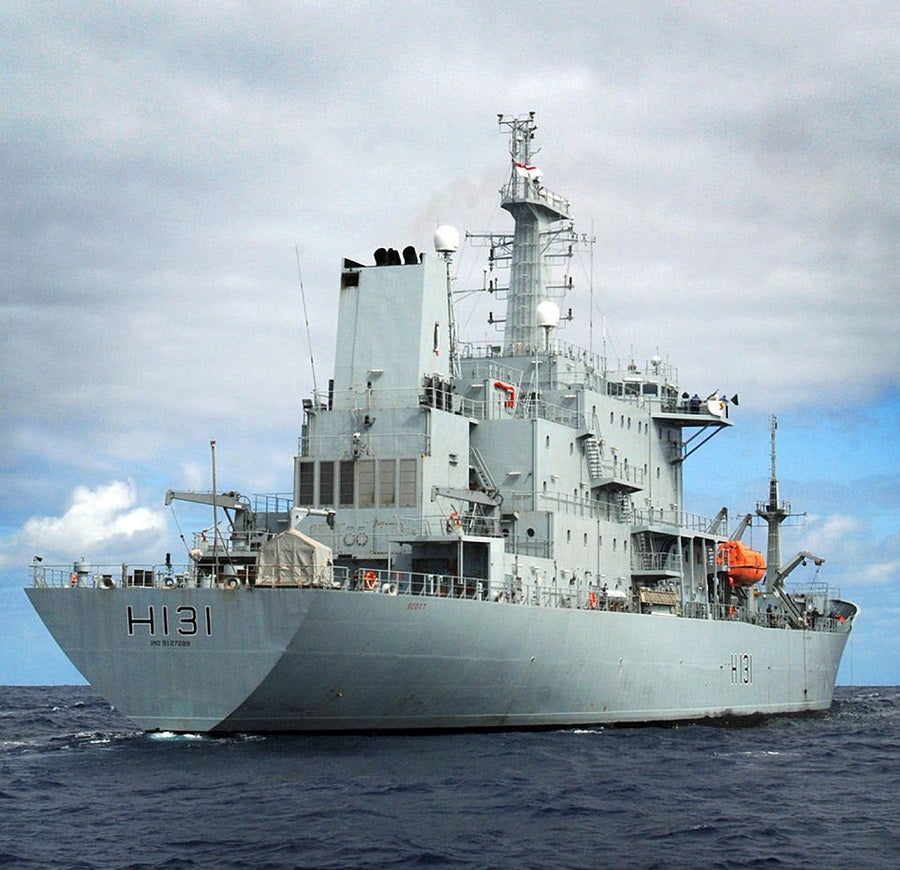
In the summer of 2023, Scott returned to Plymouth after 12 months away collating data from more than 500,000km2 of the North Atlantic. The vessel’s sonar scanned the ocean to depths of thousands of metres.
The model – which mirrors that used by the five offshore patrol ships deployed around the globe – allows Scott to remain at sea for longer, spending more time surveying and less travel time.
Subsea sabotage
As a Royal Navy vessel, Scott will continue to prove useful in an age of strategic competition when it comes to maintaining critical subsea infrastructure from sabotage.
Just as the Russians have sought to degrade Ukraine’s ground-based civil and military infrastructure with repatedly indiscriminate missile salvos, the aggressor has also targetted subsea infrastructure in the past.
Likewise, the vessel’s MCM capability will be equally useful as GlobalData intelligence indicates that global investment in underwater maritime vehicles is largely driven by MCM autonom capabilities.
Without alluding to the ship’s prospective use going forward, a Royal Navy spokesperson told Naval Technology that “we routinely review and monitor the out of service dates for all equipment and ships operating within the fleet to meet current availability and capability requirements.”


