

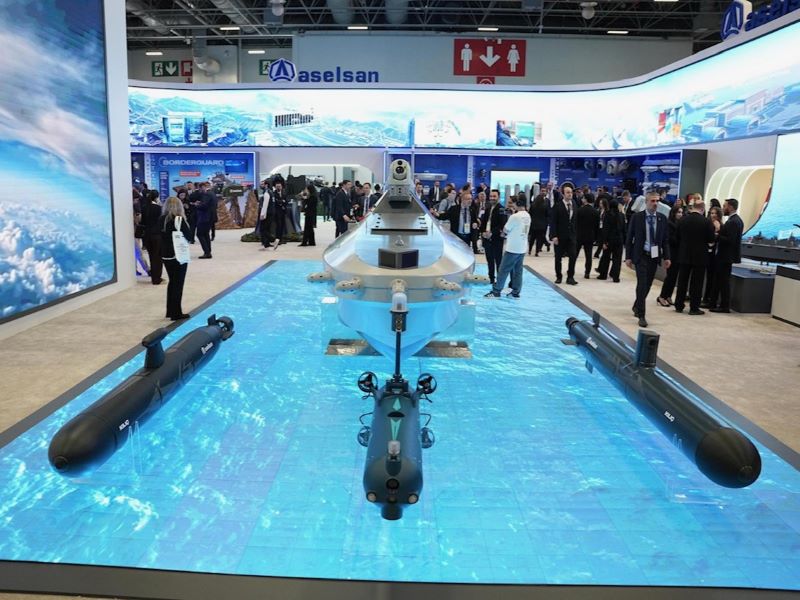
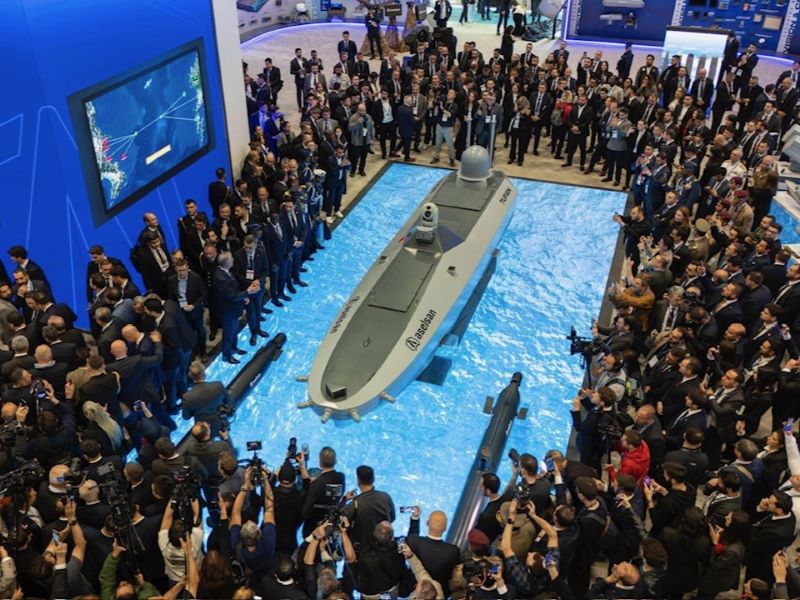
TUFAN is a kamikaze unmanned surface vehicle (USV) developed by Turkish defence electronics company Aselsan.
The USV is designed for both offensive missions and intelligence, surveillance and reconnaissance operations. It pairs high-speed and agile handling with a high level of autonomy to support operations in littoral waters and the open sea.
Recommended Buyers Guides
Aselsan unveiled TUFAN at the SAHA 2026 Exhibition held in May 2026 in Istanbul, alongside several variants from the KILIÇ family of autonomous underwater strike systems.
Together, these systems are positioned to enable autonomous, distributed, asymmetric and covert operations across both surface and subsurface maritime domains. They are part of Aselsan’s drive to strengthen naval capability in increasingly complex multi-domain operating environments.
TUFAN kamikaze USV design and features
The TUFAN kamikaze USV measures 8m in length and has a beam width of 1.8m. It can carry an insensitive high-explosive warhead.
The USV is designed to achieve high speed and manoeuvrability and features a reduced radar cross-section and thermal signature. Its flexible and scalable swarm architecture is compatible with Nato’s Standardisation Agreement 4817.
TUFAN USV’s autonomy suite supports independent mission planning and task distribution across various onboard systems, with sensor fusion improving situational awareness.
The kamikaze USV navigation package is capable of detecting both stationary and moving obstacles to support real-time route adjustment.
The platform is intended for round-the-clock use, with day and night capability, and is designed to keep operating in global navigation satellite system and communications-denied environments.
The TUFAN USV platform also incorporates AI and image-based functionality to support target engagement and attack.
According to GlobalData’s report, the adoption of modular architectures and advanced autonomy suites in new USVs, like TUFAN, reflects a broader industry move. More than 60% of newly launched military USVs since 2023 now feature mission modularity and AI-supported navigation.
Propulsion and performance
The TUFAN kamikaze USV is powered by a gasoline engine driving a water jet system, which offers a stated maximum speed of up to 50 knots and an operational range of 200 nautical miles.
TUFAN USV communication and control systems
The USV is equipped with communications options that include RF line-of-sight links and mesh networking, satellite connectivity for beyond line of sight operations, and 4G or long-term evolution networks.
The USV control console is designed as a portable control and display unit, enabling mission planning and execution while providing real-time image transmission and onboard data recording.
Mission capabilities
TUFAN can be deployed into the mission area from a port or launched from suitable platforms, offering operators flexibility in deployment.
It is designed to work with other manned and unmanned maritime assets during joint missions, supporting coordinated tasking and force integration, and it can be integrated with command and control systems.
TUFAN can be arranged into smaller subgroups to carry out a range of missions including asymmetric attack formations.
The platform combines advanced situational awareness with autonomous mission functions. Its swarm-enabled architecture is intended to allow coordinated actions, enabling concurrent tasks including reconnaissance, surveillance and precision engagement.
