
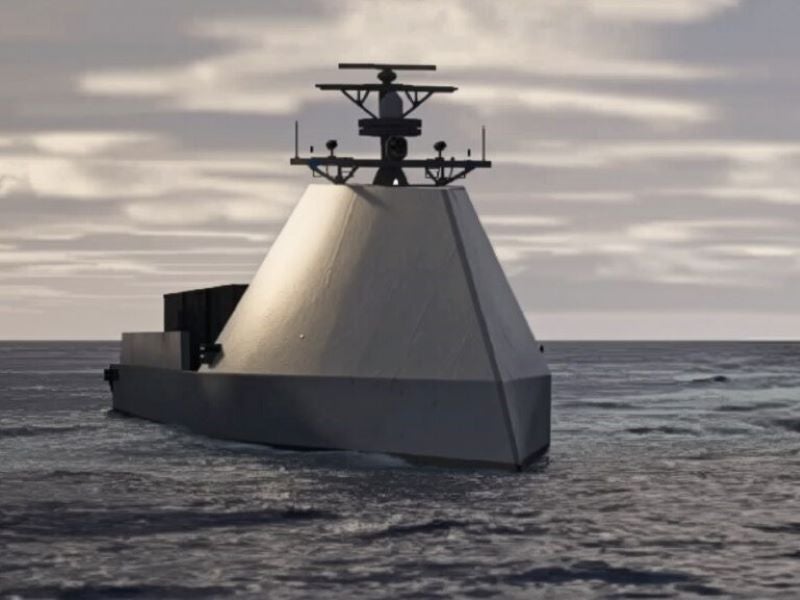
ROMULUS is a family of long-endurance unmanned surface vessels (USVs) designed for prolonged open-ocean missions.
The USVs are being developed and built by Huntington Ingalls Industries (HII), the largest shipbuilder in the US. They are designed to deliver autonomous surface capability and integrate smoothly with unmanned air and undersea systems.

Recommended Buyers Guides

The programme was disclosed in September 2025 and is being developed with support from HII’s Dark Sea Labs Advanced Technology Group.
HII is working with Incat Crowther, Breaux Brothers Enterprises and Beier Integrated Systems on ROMULUS 190, the lead vessel for the platform, which is currently under construction at Breaux Brothers Shipyard in New Iberia, Louisiana.
The vessel is expected to commence sea trials in the fourth quarter of 2026.
ROMULUS USVs design and features
The design for ROMULUS USVs focuses on performance and adaptability, using a commercial-standard hull for rapid reconfiguration and streamlined manufacturing. Its modular, reconfigurable design enhances operational capability across the US Navy, the Marine Corps and allied navies.
The vessel measures 190ft (58m) in length, with a top speed of more than 25 knots. The USV is designed to have an endurance of more than 2,500 nautical miles and space for four 40ft (12.2m) ISO containers.
The modular architecture is intended to enable the integration of different payloads, sensors and weapon fits in addition to rapid mission reconfiguration, and incorporation of future technology upgrades.
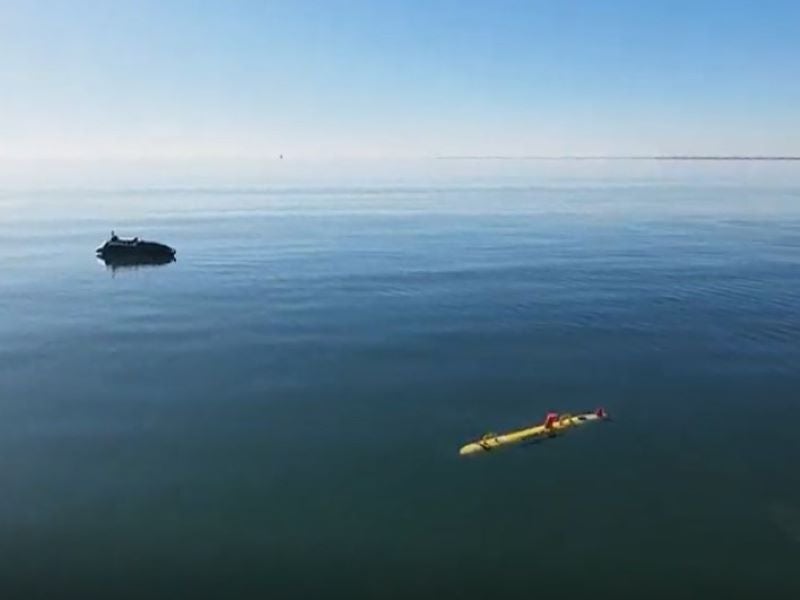
The vessel’s launch and recovery arrangements are designed to support REMUS unmanned underwater vehicles (UUV), unmanned aerial vehicles (UAVs) and smaller ROMULUS crafts.
The flagship ROMULUS 190 is set to incorporate technology from Shield AI, Applied Intuition and C3 AI, aimed at increasing autonomy, improving object recognition and supporting through-life sustainment.
ROMULUS mission capabilities
The ROMULUS USV platform is being developed for missions including intelligence, surveillance and reconnaissance, combining real-time data fusion and analytics to strengthen track classification and identification.
It is also designed for counter-unmanned aerial operations including identifying, monitoring and neutralising airborne threats using scalable effectors tailored to the mission.
Additionally, the platform is intended for mine countermeasures, strike tasks, and the deployment and recovery of unmanned underwater and aerial vehicles.
The USV platform will be able to operate autonomously as a single platform or as part of a coordinated swarm, supported by HII’s Odyssey Advanced Autonomy Solutions software for multi-domain extended operations, while reducing the need for onboard personnel.
The combination of HII’s Mission Management System and Odyssey Advanced Autonomy Solutions with ROMULUS and REMUS UUVs enables coordinated surface and subsurface operations. This integration extends detection ranges and allows other crewed platforms to remain at greater stand-off distances.
Details of HII’s Odyssey Advanced Autonomy Solutions
ROMULUS is centred on Odyssey Advanced Autonomy Solutions, HII’s AI-enabled control suite, which has logged more than 6,000 operational hours across over 35 unmanned surface vessel platforms.
Odyssey Advanced Autonomy Solutions adds autonomy at vehicle, module and algorithm levels and to support operation across different sensors, payloads and mission profiles, including cooperative behaviours among multiple vehicles, sensor fusion and improved perception.
The suite also includes emissions-control behaviours intended to reduce detectability.
Additionally, the suite’s autonomous navigation feature is designed to comply with International Regulations for Preventing Collisions at Sea by combining radar, electro-optical and infrared inputs with automatic identification system data to support safe operations without input from the operator.
The open-access feature of the suite enables industry, government and academia to trial and enhance capabilities, ensuring ROMULUS develops in line with emerging naval operational concepts.
