
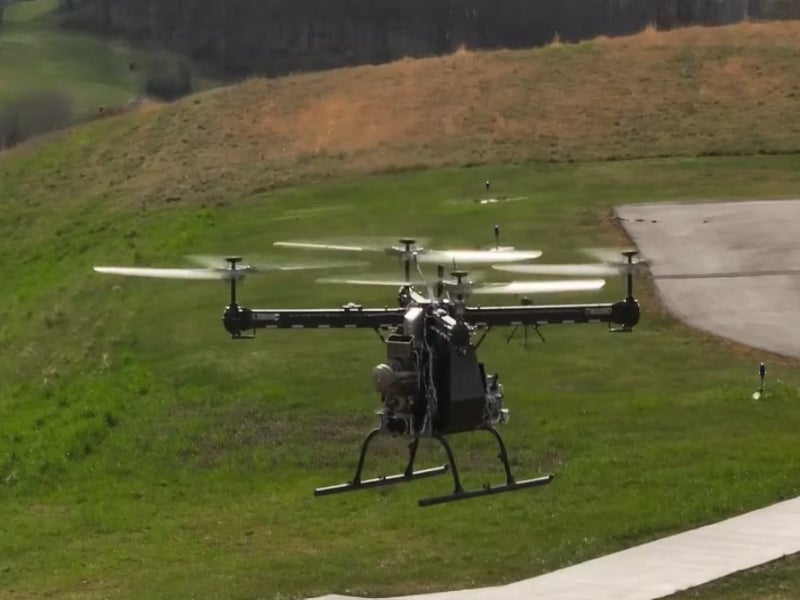
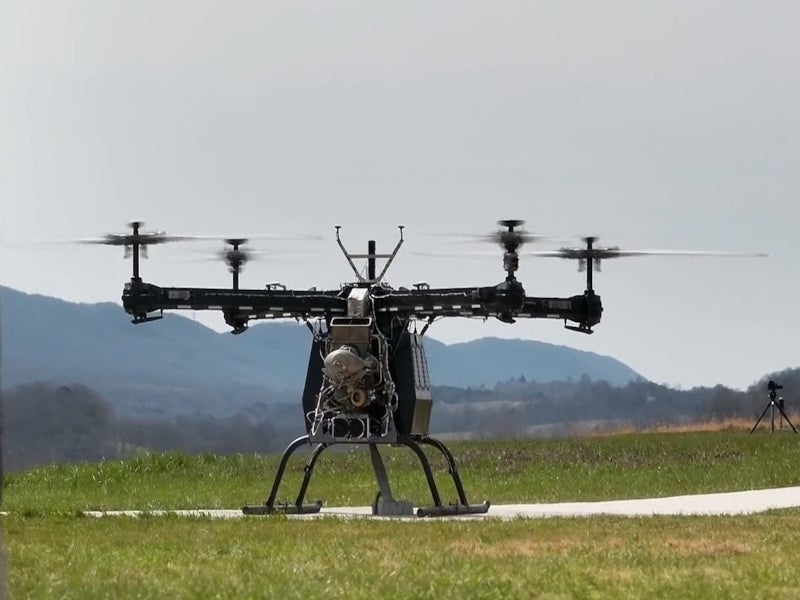
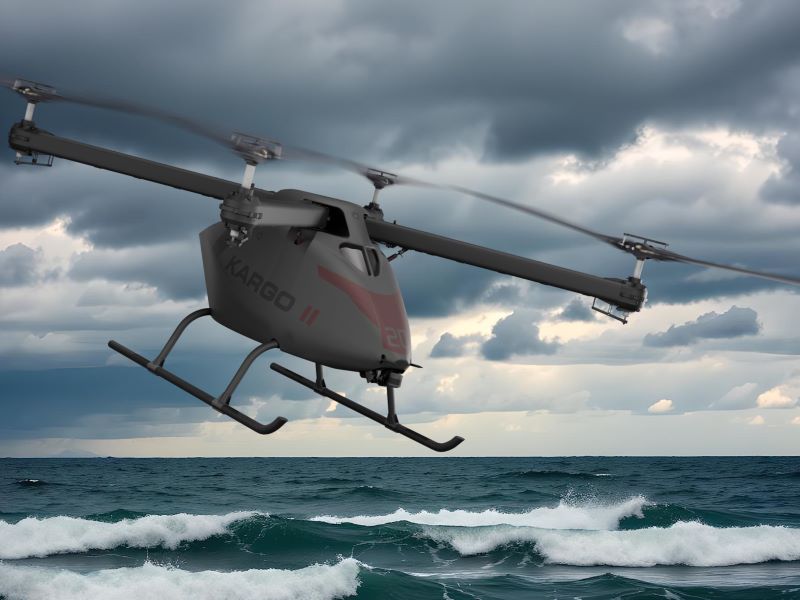
KARGO is a medium-lift unmanned aerial vehicle (UAV) developed by Kaman, an aerospace and defence company based in the US.
It is designed for expeditionary logistics, benefitting the US military, allies, partners and commercial clients.
Recommended Buyers Guides
The KARGO UAV aims to offer cost-effective, dependable and easily maintainable logistics assistance, and is capable of resupplying troops in the most austere and extreme conditions anticipated in future military operations, as well as for routine logistical tasks.
Kaman unveiled the KARGO UAV in September 2021 to meet the logistics requirements of the United States Marine Corps (USMC).
The full-scale KARGO UAV completed its maiden flight in December 2023.
In April 2025, Kaman confirmed its acquisition by Arcline Investment Management in an all-cash deal, with an enterprise value of approximately $1.8bn.
In the same month, the KARGO UAV programme was acquired by Piasecki Aircraft from Kaman Air Vehicles, a subsidiary of Kaman.
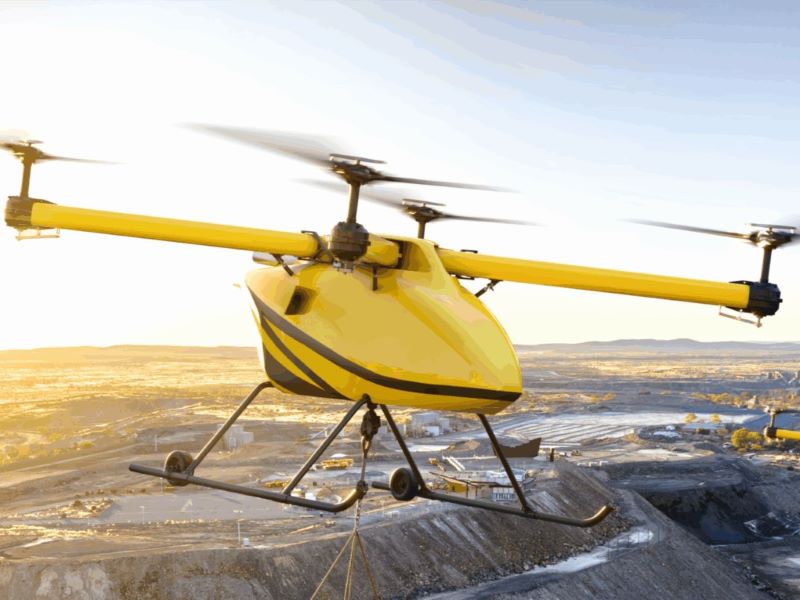
In August 2025, Piasecki Aircraft unveiled KARGO II, a higher-capacity autonomous vertical take-off and landing (VTOL) logistics UAV developed as an evolution of the KARGO UAV.
Commercial availability for KARGO II in domestic and international markets is targeted for late 2027, dependent on production and certification milestones.
Development details
In 2022, the USMC selected the UAV for the Medium Unmanned Logistics Systems – Air programme managed by Naval Air Systems Command (NAVAIR) PMA-263.
Kaman received a $12m contract from the USMC for the Medium Autonomous Resupply Vehicle – Expeditionary Logistics programme, overseen by NAVAIR PMA-263.
In October 2023, Kaman received a contract from the US Army to develop an unmanned cargo delivery demonstrator based on the KARGO UAV, capable of transporting more than 362.8kg (800lb) over 161km (100 miles).
The partnership with the US Army allowed for further development, including scaling the design for larger payloads.
The Alaska Centre for UAS Integration, part of the University of Alaska Fairbanks Geophysical Institute, played a crucial role in the KARGO UAV’s flight test operations.
KARGO II UAV
KARGO II is positioned for operations in contested and remote environments and has a compact overall design while increasing payload capacity to more than 680kg.
The upgrade is supported by design and drivetrain changes including fewer bespoke parts and an optimised shaft-driven transmission, alongside improvements to range, airspeed and mission flexibility.
KARGO II can deliver cargo with precision using a range of options including rigidly mounted pod systems such as the Joint Modular Intermodal Container, airborne drop methods, or an external long-line sling. It can be transported and launched from a standard 20ft (6.09m) freight container, converting to a flight-ready configuration within minutes.
The new variant is intended to sit alongside the existing platform to address a wider range of military and commercial mission requirements as part of a broader UAV line-up.
The programme builds on flight testing and demonstration activity carried out with the KARGO UAV under early US Army and USMC contracts, including autonomous lift operations and integration with advanced flight control systems.
KARGO UAV design and specifications
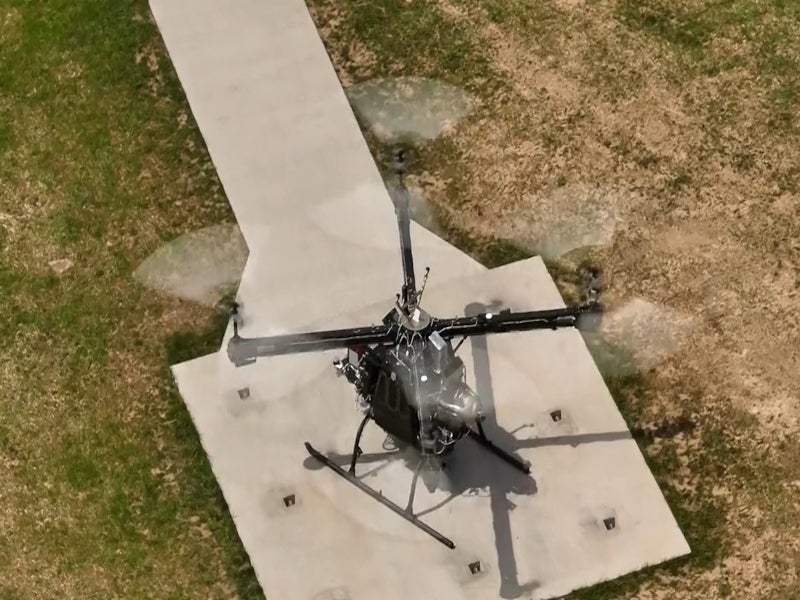
The KARGO UAV is 19.3ft long, 7.5ft high and 7.3ft wide when fully stowed. It weighs 1,340lbs (608kg). Equipped with four teetering two-bladed rotors, the UAV’s length and width expand to 24.4ft each when the rotors are extended.
The drone can hover for an extended period without transitioning to forward flight. It features self-deploying capability without a payload of more than 523nm and a maximum lifting capacity of 800lb, either in its conformal pod or via external sling load.
Featuring VTOL, the UAV operates above 10,000ft and can be housed in a standard cargo container. It requires only two personnel to prepare for flight from full stow in just 20 minutes.
The KARGO UAV’s built-in autonomy, derived from the Department of Defense’s Autonomous Aerial Cargo Utility System programme, allows it to navigate without GPS in challenging terrain. It has sense and avoid capabilities and delivers payloads with precise accuracy.
Engine and performance
The KARGO UAV is powered by a Rolls-Royce 300 HP RR300 gas turbine engine that runs on jet fuel. It can travel at a speed of 121 knots.
KARGO UAV features and mission capabilities
The KARGO UAV is a cost-effective and highly adaptable cargo transport system, designed to be easily replaceable without mission interruption.
Its durable construction is reliable and simple, with a low count of unique parts, facilitating maintenance in remote areas with limited staff. The UAV’s transportability is compatible with both tactical and strategic mobility assets.
Safety and utility are enhanced by the KARGO UAV’s high rotor clearance and the absence of a tail rotor.
The UAV’s payload flexibility is exemplified by its conformal supply pod, which minimises drag and optimises fuel efficiency, allowing for precise delivery of supplies.
Additionally, the KARGO UAV can conduct autonomous search and rescue missions and deliver to remote locations.
Contractors involved
Kaman selected Near Earth Autonomy, a US-based aviation and aerospace component manufacturer, as a partner to provide autonomy features for the pilot KARGO UAV programme.
Near Earth is supplying technologies such as obstacle avoidance, precision landing, sense and avoid, and navigation in GPS-denied environments for the project.
Kaman collaborated with Textron Systems, an aerospace and defence technologies company based in the US, through a strategic alliance agreement to work on critical technologies for the KARGO UAV in May 2024.
