
- London has reaffirmed it holds design authority for the SSN-AUKUS submarine despite US technical support
- The submarine's PWR3+ reactor leverages the US S9G design to improve safety and cut component counts
- The class will integrate a US-derived command system and vertical launch tubes for cruise missiles
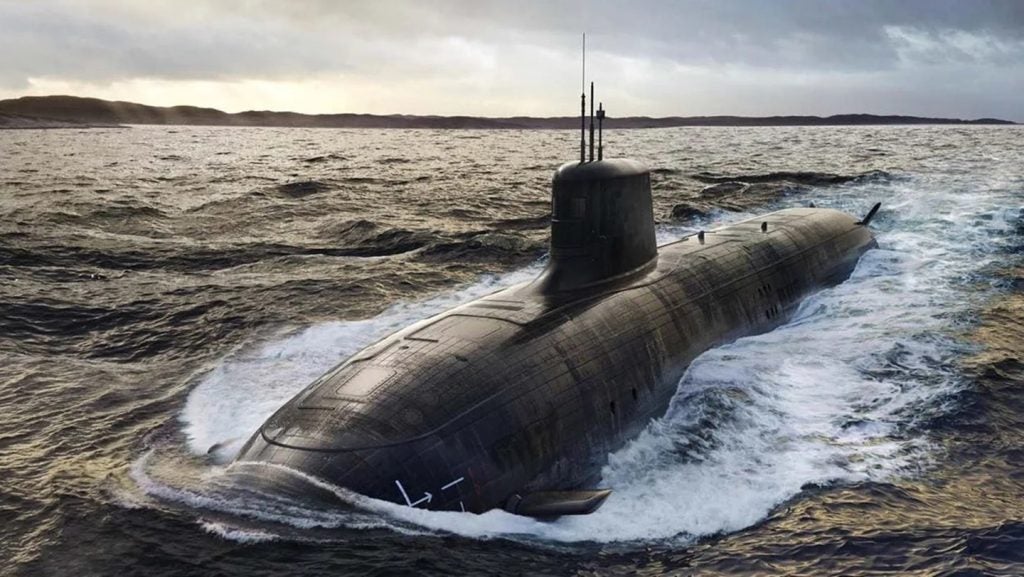
The UK has moved to clarify that design authority for the development and delivery of the future SSN-AUKUS nuclear-powered attack submarines remains with London, following queries in parliament and reports the programme leans on US engineering and design support.
It is understood that US nuclear submarine engineers are assisting the UK with the development of the SSN-AUKUS class, which also happened for the in-service Astute-class SSNs, following the loss of key sector skills within the UK industrial base and inferior UK technology.
On 3 November, UK Minister for Defence Readiness, Luke Pollard, confirmed that US-based Huntington Ingalls Industries Newport News Shipbuilding (HII-NNS) had provided “some advice and technical input” regarding US technology insertion into the SSN-AUKUS design.
“HII-NNS does not hold design authority for SSN-AUKUS, which remains with the UK,” Pollard said.
The statement follows a mid-October announcement by the US Department of War that HII secured a $56m contract from the US Navy to provide shipbuilding engineering and design services in support of the AUKUS partnership between Australia, the UK, and the US.
As detailed in the contract announcement, the agreement supported efforts to advance nuclear-powered submarine capabilities for the UK and Australia.
Should the contract option be exercised, its total value could rise to $91m.
Notably, the NNS division will lead the work, which is scheduled to continue through September 2027, and potentially until September 2028 if the option is activated.
PWR3+ reactor derived from US S9G
This points to a high degree of US assistance in nuclear propulsion systems, with the US S9G reactor used as a baseline for the proposed PWR3+ system that will power the SSN-AUKUS submarines.
Although little information is in the public domain, the PWR3+ will be a further refinement of the PWR3 reactors being developed for the larger Dreadnought-class ballistic missile submarine.
It is thought the PWR3+ reactor will require 25-30% fewer parts than the preceding PWR2 – which power the Astute SSNs and were primarily UK-designed – because of US design influence and support.
Further, the PWR3 and PWR3+ reportedly features elements of submarine reactor design that were not included on the PWR2, including passive safety systems intended to automatically inject coolant directly into the reactor vessel if power is completely lost.
Conversely, the PWR2 reactor requires manual procedural control for emergency core cooling.
It is thought that UK reactors are twice as likely to suffer a loss of cooling incident than their US counterparts.
Should a submarine experience a loss of power, such as through a reactor shutdown, the vessel is at severe risk of being unable to manage its own depth and remain stationary in the water column.
Under massive pressure, a submarine’s hull could fail if it falls past its maximum rated dive depth.
Combat and missile launch systems
Additional US technology being incorporated into the SSN-AUKUS design includes new combat systems for the UK and Australian submarines.
In November 2025 BAE Systems, Raytheon Australia, General Dynamics Mission Systems and Thales proposed to lead the design and lay the foundations for manufacture and integration of combat systems for SSN-AUKUS under agreements to be negotiated with Australia and the United Kingdom.
Under the memorandum of understanding, the parties agreed to work to design a “tri-national Command System as a shared solution for Australia and the UK”, which builds on General Dynamics’ existing AN/BYG-1 system.
In addition, it is expected that the SSN-AUKUS will feature a vertical launch system (VLS), enabling the submarines to fire cruise missiles, such as the Tomahawk (or its Maritime Strike upgrade) vertically, while submerged.
Currently, UK SSNs can launch Tomahawk cruise missiles via the bow torpedo tubes.
At the time of publishing, the UK Ministry of Defence had not responded to requests for comment.