- UK says Russian submarines operated for weeks in its EEZ near undersea cables
- UK and Norway tracked them with a frigate and P‑8 aircraft; one sub left, others unclear
- No damage reported, but the UK had no submarine available to challenge them
Russian submarines have been operating in and around UK waters near undersea cables and infrastructure for around a month, in a startling admission of the scale of Moscow’s grey-zone activities and London’s apparent inability to prevent them from taking place.
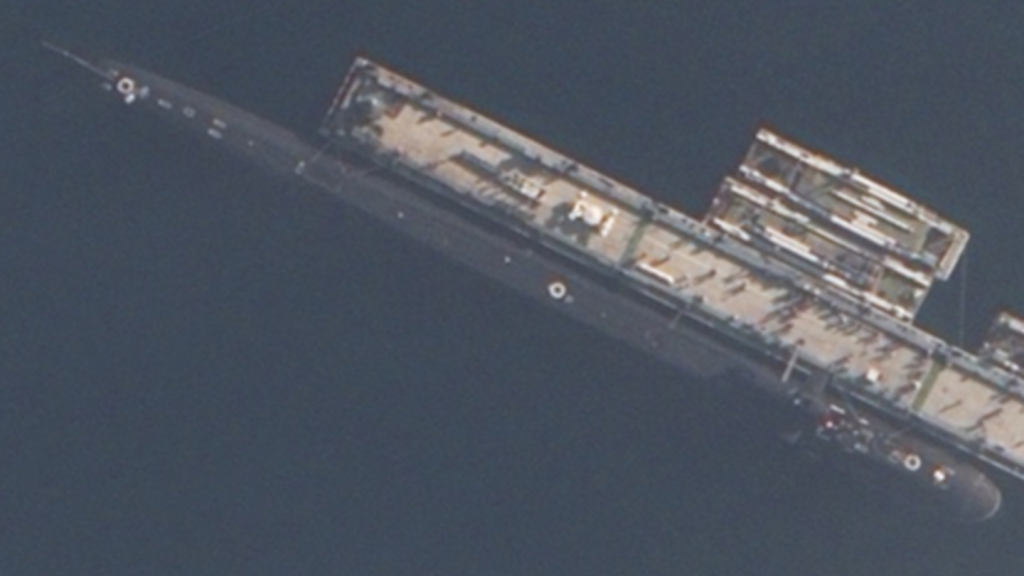
In a special media briefing on 9 April, UK Defence Secretary John Healey stated that a Russian Navy Akula-class nuclear-powered submarine and two submarines of the Main Directorate of Deep-Sea Research (GUGI), had been operating in the UK’s Exclusive Economic Zone (EEZ) for weeks, tracked – but seemingly not prevented – by what remains of the UK Armed Forces.
Revealing details of military operations undertaken by Russia, Healey said that the mission had been undertaken in collaboration with Norway, which itself released a statement the same day detailing its participation.
Deploying a warship – later described as a frigate – and P-8 maritime patrol aircraft, alongside allies, Healey said UK forces “ensured Russian subs were monitored 24/7”, adding the “Russian sub”, referring to the Akula class, subsequently left UK EEZ.
It was not clear whether the GUGI submarines had left UK EEZ waters, with Healey providing contradictory response during the initial briefing and subsequent Q&A session with the media.
“We see you,” said Healey, referring to Russian President Vladimir Putin, stating there was no evidence that Russia’s undersea operation had caused any damage to UK subsurface critical national infrastructure (CNI).
“Were there to be any damage to our cables or pipelines, we would hold him responsible,” Healey added, without explaining how this would be achieved.
The Norwegian release also added a degree of confusion to the kind of capabilities the UK actually contributed to the monitoring mission, stating that Norway had provided a “frigate and a P-8”.
The UK Government has frequently spoken of ‘joint operations’ regarding its collaboration with Norway, and likely sees the development future Type 26 frigate fleet for the two countries as a combined force.
The UK also operates the P-8 maritime patrol aircraft, as does Norway.
A subsequent UK Government release stated that the Type 23 anti-submarine warfare frigate HMS St Albans was used in the operation.
Analysis of the social media feed of HMS St Albans, which like most UK naval vessels provides regular updates as to their current operations, shows a several-week-long gap from 17 February to 28 March when the frigate was likely attempting to monitor the Russian submarines.
However, it is certain that no UK submarine was deployed to counter the three Russian boats, with the only available vessel, HMS Anson, thousands of miles away in the Indo-Pacific.
Given this, Russian forces were effectively able to operate relatively unhindered over UK CNI, with the intervention by UK forces limited to the dropping of sonobuoys by the P-8 patrol aircraft to let the submarines know that they had been detected.
What actions the Russian submarines undertook over the cables and CNI over the course of a month are unknown.
However, the GUGI submarines are able to use sophisticated manipulators deployed from the boats at huge depths, and used specifically for undersea naval intelligence gathering purposes.