
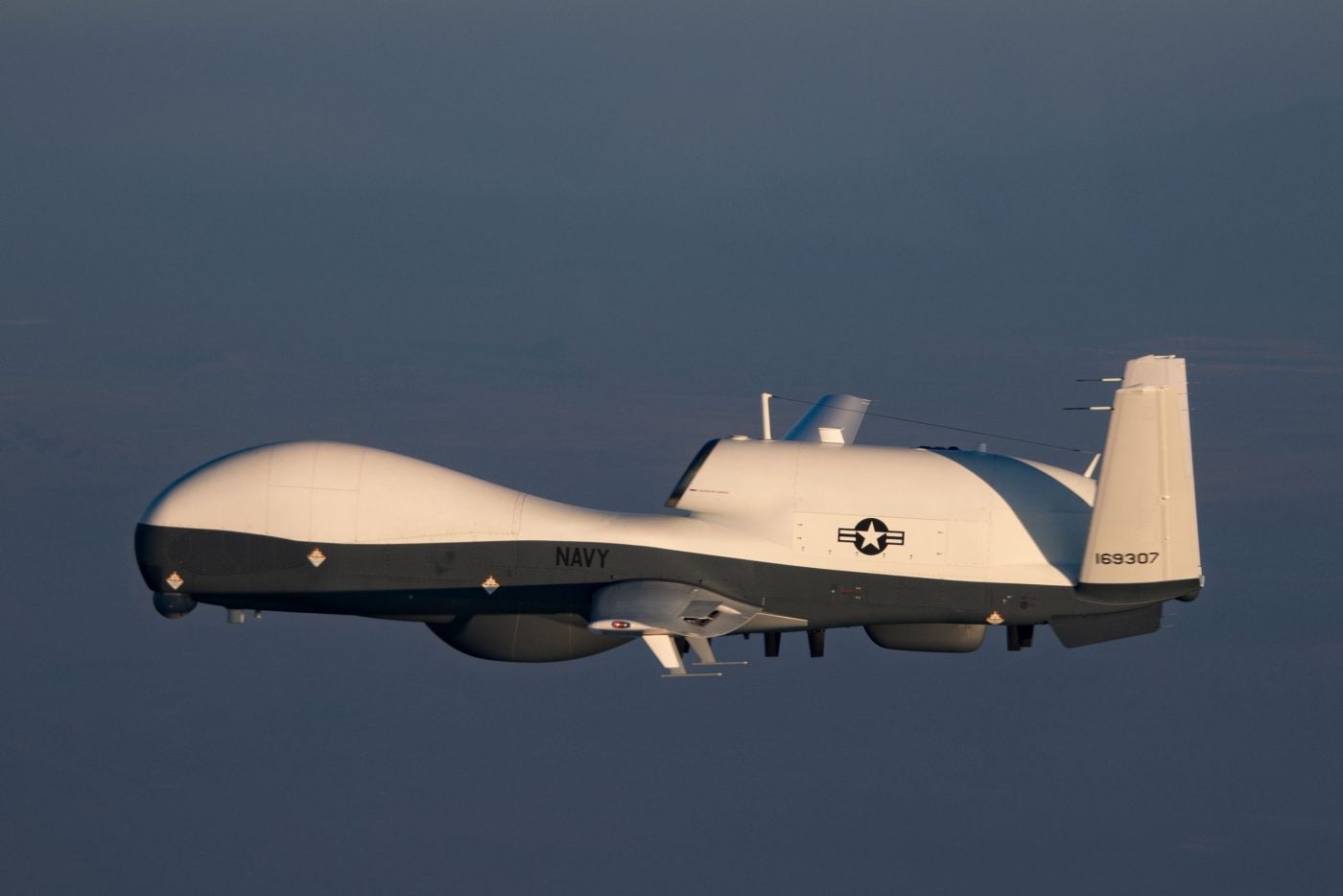
Northrop Grumman Corporation’s MQ-4C Triton, a multi-intelligence uncrewed aircraft, has achieved initial operating capability with the US Navy, marking a leap in maritime intelligence, surveillance, reconnaissance, and targeting.



Since its early operational debut in May 2020, Triton has played a role in the US Indo-Pacific command area of responsibility, and with this milestone, its capabilities are set to be fully harnessed. Northrop Grumman has already delivered five Triton aircraft to the US Navy, with the latest arrival in June 2023, further solidifying its commitment to enhancing naval operations.
Rho Cauley Bruner, director of the Triton programme at Northrop Grumman, expressed Triton’s role in maritime patrol and reconnaissance. He stated, “Triton has proven to be invaluable for the maritime patrol and reconnaissance mission in the Indo-Pacific.
Now that the system has achieved initial operating capability, commanders will be able to fully leverage Triton’s powerful sensor suite to detect and deter potential adversaries around the world.”
Capt. Josh Guerre, persistent maritime unmanned aircraft systems programme manager for the US Navy, emphasized the importance of Triton in global maritime awareness. He said, “Persistent global maritime awareness is central to deterring, or competing and winning against, our adversaries. Triton ensures we’re making informed decisions and effectively operating anywhere in the world.”
The MQ-4C Triton uncrewed aircraft capabilities include ones that provide an amount of information to support decision-making.
Designed for use by the US Navy and the Royal Australian Air Force, the Triton supports various missions, including maritime patrol, signals intelligence, search and rescue, and communications relay.
The Australian Air Force has recently announced the acquisition of four more MQ-4C Triton unmanned aerial systems. Additionally, Norway is in talks with Northrop Grumman about acquiring MQ-4C Tritons to monitor its vast arctic coastal areas for any kind of upcoming maritime and coastal threats, according to GlobalData’s “The Global Military UAV Market 2022-2032” report.
These capabilities empower commanders to maintain surveillance, predict adversary behaviour, and enhance joint military responses and operations.
With an operational altitude exceeding 50,000 feet and an endurance of 24 hours, Triton delivers a continuous communications relay, ensuring that a distributed Navy remains connected and that commanders operate with a common operational picture.
Its long-range sensors allow it to detect, classify, and track maritime targets beyond the reach of enemy ships and surface-to-air missiles.
In a single 24-hour mission, Triton can cover four million nautical miles, providing coverage and intelligence.



