
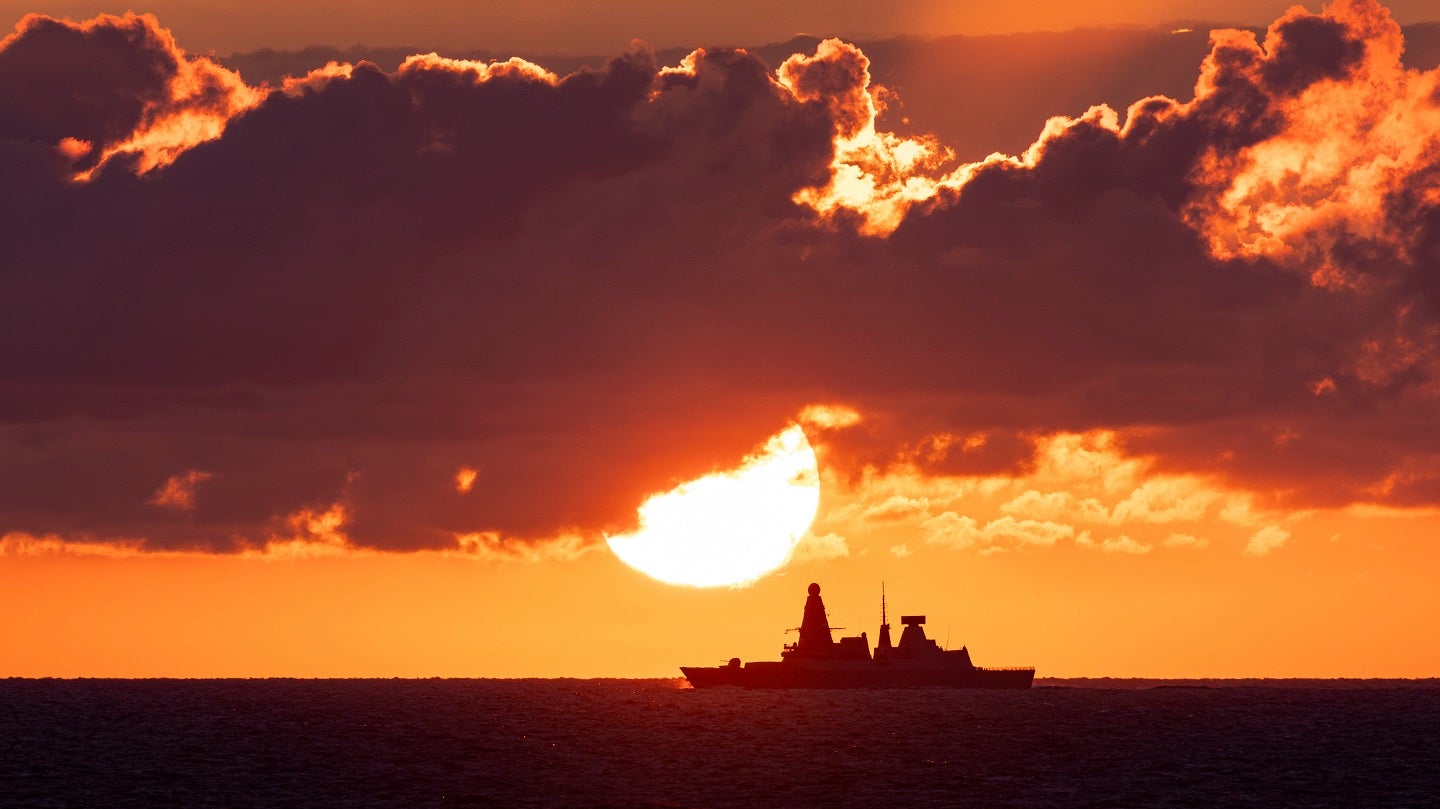
The deployment of the Royal Navy Type 45 destroyer HMS Diamond to the Gulf region is likely a short-term effort, with the vessel still on the waiting list to undergo engine upgrade work through the Power Improvement Project (PIP) to solve long-standing engine problems afflicting the class.
In a 30 November release from the UK Ministry of Defence (MoD), it was revealed that the Type 45 destroyer, one of six in the Royal Navy’s fleet, was to head East of Suez to bolster UK maritime security operations in the Gulf region.
Go deeper with GlobalData


Discover B2B Marketing That Performs
Combine business intelligence and editorial excellence to reach engaged professionals across 36 leading media platforms.
The UK already maintains a significant naval presence in the Gulf under Operation Kipion, comprising one Type 23 frigate (HMS Lancaster), three minehunters HMS Bangor, HMS Chiddingfold, and HMS Middleton), and an auxiliary landing support dock (RFA Cardigan Bay).
The MoD stated that HMS Diamond would “conduct operations to ensure freedom of navigation in the region, reassure merchant vessels and ensure the safe flow of trade”.
Utilising a novel hybrid electric drive system, the Type 45s have been hit by technical difficulties, with instances of the vessels suffering electrical problems or even loss of power, particularly when operating in hot and humid temperatures such as those found in the Middle East.
All six of the UK’s Type 45 air defence destroyers will take turns undergoing significant rectification work under the PIP, which will see the integration of three new diesel engines. The result of the work will see the vessels operate mainly using diesel propulsion, turning to the gas turbines for sprint speeds when required.

US Tariffs are shifting - will you react or anticipate?
Don’t let policy changes catch you off guard. Stay proactive with real-time data and expert analysis.
By GlobalDataHMS Diamond has operated in the Gulf previously, the first time in 2011. Currently, its sister ship HMS Defender is undergoing PIP work, with HMS Diamond the follow in late-2024.
HMS Diamond and HMS Duncan, also a pre-PIP Type 45 destroyer, have operated in the eastern Mediterranean this year, including in the summer period, which is similar to conditions experienced in a Gulf winter.
UK naval presence in the Gulf
UK Royal Navy vessels have been permanently deployed to the region since 1980 and have fallen under Operation Kipion since 2011. Under the command of the UK Maritime Component Command (UKMCC) in Bahrain, they work with allies across the region, including under the Combined Maritime Forces partnership.
The waters of the Gulf are vital routes for merchant shipping, including for tankers carrying much of the UK’s supply of liquefied natural gas. Around 50 large merchant ships each day pass through the Bab-el-Mandeb, connecting the Red Sea to the Gulf of Aden, while around 115 major merchant ships pass through the Strait of Hormuz.
The deployment of HMS Diamond looks to have been driven by recent events in the region and threats to maritime trade from actors in Yemen, which is heavily backed by Iran’s Iranian Revolutionary Guard Corps, also known as the IRGC.
UK Defence Secretary Grant Shapps said: “From joint efforts to deter escalation, following the onset of the renewed conflict in Israel and Gaza, to now the unlawful and brazen seizure of MV Galaxy Leader by the Houthis in the Red Sea – it is critical that the UK bolsters our presence in the region.”



