

- British supplier Kraken will deliver 20 medium-sized K3 Scout uncrewed surface vessels (USVs) to the Royal Navy under Project Beehive
- The system is a highly deployable, easily built system that also offers a simpler, alternative solution for British shipbuilding capacity
- But with too few crewed warships, the service risks overelying on small, autonomous vessels
The UK has started cultivating a “hybrid navy” with its first-ever order for operational USVs this week; the Royal Navy has only trialled experimental autonomous systems until now.
This doctrinal shift will divide the surface fleet between larger, conventional crewed warships such as the Type 26 and Type 31 frigates, and disaggregated, autonomous USVs.
Go deeper with GlobalData


Discover B2B Marketing That Performs
Combine business intelligence and editorial excellence to reach engaged professionals across 36 leading media platforms.
Kraken Technology Group, a UK-based race-bred engineering boat builder, will deliver 20 medium-sized K3 Scout USVs. Approximately 8.4m in length with a 1.93m beam, the vessel displaces a maximum of 2,500kg.
The autonomous surface vessel is derived from a racing hull.
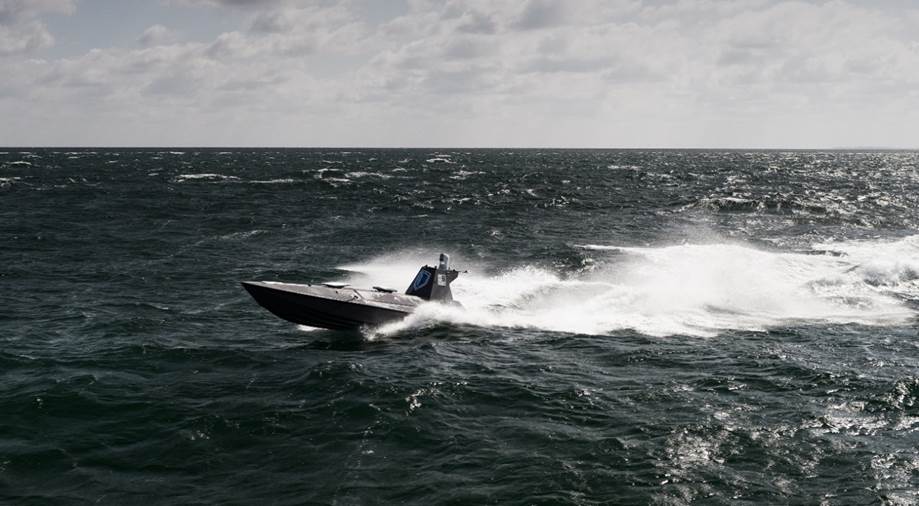
The £12.5m ($16.5m) deal – approximately £615,000 per unit – will bring the fleet into service with the Coastal Forces Squadron and 47 Commando Royal Marines. The fleet will be used for operations, training and development activities, according to a Royal Navy release issued on 11 March.
The UK are already sending a destroyer, an aircraft carrier, and numerous Wildcat helicopters to the Eastern Mediterranean amid the ongoing Middle East conflict. With limited resources that have become increasingly stretched, Scout USVs will help to fill the gap.

US Tariffs are shifting - will you react or anticipate?
Don’t let policy changes catch you off guard. Stay proactive with real-time data and expert analysis.
By GlobalDataAdditional and disaggregated capabilities will be used to bolster the minimal force posture of River-class offshore patrol vessels used to shadow encroaching Russian naval platforms in British waters, while also strengthening the Royal Marine Raiding Group in its amphibious operations.
The UK Government are eager to make the uncrewed pivot because of the relatively cheaper costs over conventional warships. One senior Ministry of Defence (MoD) official told this reporter that uncrewed vehicle orders will help to sustain shipbuilding at some shipyards such as Babcock’s Rosyth facility.
What is the K3 Scout?
Speaking to Naval Technology in mid-2025, Kraken CEO Mal Crease said Scout is essentially the naval version of an F-150, “a catalogue price truck”.
His comparison alludes to Scout’s versatile hull, which adapts to the mission-specific payload, whether it serves as a one-way kinetic effector or conducting intelligence, surveillance and reconnaissance (ISR) for up to 30 days, depending on the assignment.
The navy can operate K3 Scout with beyond visual line of sight communications systems or on local mesh networks.
This provides a flexible approach to allow independent operations or operations in company with crewed units. The craft will be operable from the mission bays of Type 31, Type 26 and other platforms, allowing choice of capability for the commander.
Supply chain and exports
Kraken are in discussions with companies eager to form joint ventures from almost every continent in the world, Crease stated, referring to a global demand to build USVs locally.
Market intelligence from GlobalData correlates with this level of demand. The USV segment leads the global military uncrewed maritime vehicles market with a 59% share value, according to the analytics company.
In this backdrop, Scout can be assembled in two to three days using semi-skilled labour: “effectively, we can provide a boat in a box,” Crease intimated.
There are components on the boat for which Kraken have had to secure the entire supply coming into the UK for the next two years to make sure that it can deliver against aspects of its order book.
“Advanced discussions” are ongoing with nations from the Baltics, the Mediterranean, the Middle East, Indo‑Pacific and the US, all about standing up parallel manufacturing facilities.
Kraken’s chief operations officer Mark Exeter said: “They need their kit now,” adding that if these customers were to enter into their backlog, they would not get their orders for a while.
Lessons from the Strait of Hormuz
At the time of writing, the Iranian regime has sought to preserve its remaining small, crewed craft for key missions amid the ongoing conflict with Israel and the United States.
Matthew Savill, director of military sciences at the Royal United Services Institute in London, observed that “the smaller craft have been kept under cover and hidden away, apart from a few attacks against tankers”.
The naval forces of the Islamic Revolutionary Guard Corps have been hit hard to reduce their ability to threaten the Strait of Hormuz, where widespread reports suggest they are laying mines to disrupt trade and the global economy.
However, the ability of US forces to easily pick off Iran’s flotilla across the region points to the limitations of a force structure that relies too heavily on a disaggregation of small boats.
When applied to the future Royal Navy force structure, which is increasingly leaning on small, albeit autonomous and deployable vessels instead of conventionally crewed warships, which the UK Government does not have the time, capacity or money to build, this reality may prove costly.
One major vulnerability of USVs is from the air, according to another Royal United Services Institute (RUSI) expert in August 2024.
Efforts have been made to address this with operators adding air defence missiles, but the more payload one adds to the vessel, the larger it will become, thus removing the asymmetric advantage of the USV’s small size and deployability.
The UK MoD declined to comment when asked about the small craft risk in the Middle East, what this means for a hybrid Royal Navy, and whether the department can afford to sustain the loss of USVs.



