

- Babcock has cut steel on HMS Bulldog, marking the start of manufacturing for the fourth of five Type 31 frigates
- On the same day, HMS Active, the second in class, rolled out of the Venturer assembly building, bringing to close the construction phase
- UK Minister hints there is a “huge opportunity coming” for future Arrowhead 140 export campaigns
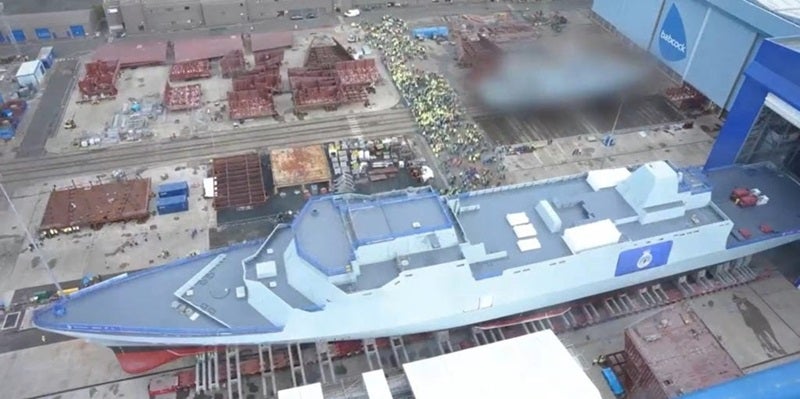
The Type 31 frigate programme advanced yesterday in a rare double milestone at Babcock’s Rosyth shipyard in Scotland, where manufacturing began on HMS Bulldog and with HMS Active rolling out of the assembly hall.
Renewed confidence was the message of the day, having overcome the problems that emerged under a dispersed engineering model during the COVID-19 pandemic and the exorbitant £90m loss from programme adjustments recorded in the shipbuilder’s 2024 financial statement.
Go deeper with GlobalData


Discover B2B Marketing That Performs
Combine business intelligence and editorial excellence to reach engaged professionals across 36 leading media platforms.
But with new investment from the government’s £65m Capability Insertion Period (CIP), chief executive David Lockwood, who will soon be replaced by Harry Holt, head of the company’s nuclear sector, told Naval Technology that the shipyard is now operating like a “frigate factory” as each ship moves through production as planned.

“Everything is happening to the drumbeat,” he insisted. There are no more first-time hiccups.
Describing the dispersed model of engineering during the pandemic, Lockwood reflected on the unavoidable conflicts. “Someone would put a pipe too close to an electrical channel or something” and that would be rectified by someone else, he said.
But now the hours required to construct HMS Bulldog will be “way down” from the time needed to build Active. To make sense of this timeline, steel was first cut for HMS Active, the second in class, just over three years ago.
“First time you put a design into production, you’ll always find things that are affected by machines,” Lockwood noted. “With two ships worth of learning, the number of things you have to fix, get the odd thing that’s misaligned, it’s… down dramatically.”

This drum beat pace will prove difficult to sustain, however, as the only export contracts secured were with Poland and Indonesia, both of whom are licensed to build the Arrowhead 140 design at their own yards.
While three Polish Miecznik-class ships are currently under construction in Gdynia on the Baltic coast, Indonesia is building four vessels in Surabaya.
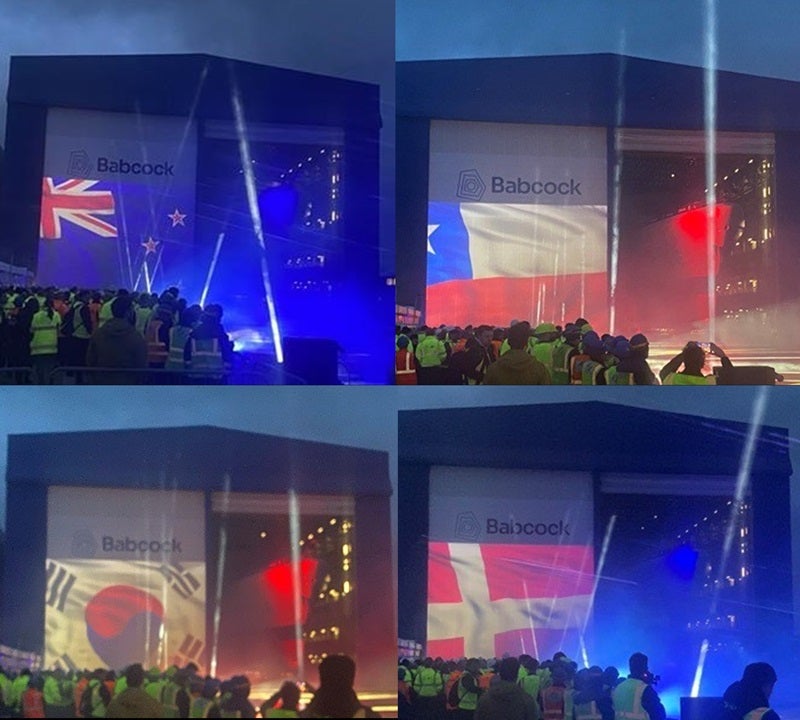
But while HMS Active was rolling out of the Venturer Building atop a moving platform with 960 tyres, several international flags were projected alongside the emerging vessel. Beyond existing customers, this included Chile, Denmark, New Zealand, South Korea and Sweden.
Speaking to this reporter after the ceremonial steel cut, the UK minister for defence readiness and industry, Luke Pollard, was confident that the model the UK has formed with Norway, integrating their future Type 26 frigates into one force in the North Atlantic, “is hugely attractive”.
He continued: “It is attractive because [allies] value the Royal Navy as the mother… for many of their services.
“But also they can see [that such a] partnership with the UK [is] an opportunity for their own protection, their own security, and the security of the wider – especially the Euroatlantic – area.”
However, this protection is rendered less secure as Norway is considering reducing its initial five frigates to three while the UK has offered Norway its own work slots at BAE Systems’ Govan shipyard, meaning the Royal Navy will have to wait even longer for its future anti submarine warfare (ASW) ships. All this backtracking will reduce the combined fleet, rendering the joint force even less than the sum of their intended parts.
This is made worse by the fact that the number of available frigates in the Royal Navy surface fleet can now be counted on one hand. Therefore, the ability of the UK to protect others, let alone its own exclusive economic zone, is highly questionable.
Type 31 capabilities wait on DIP release
Also known as the Inspiration-class, the emerging frigate fleet, which were originally intended to support Type 26 ASW frigates, will serve as multi-purpose ships with lethal effects of their own.
Besides incorporating Sea Ceptor air defence cells, the Mark 41 vertical launch system will accommodate various missile types – Naval Strike Missile, the Stratus Future Cruise / Anti-Ship Weapon, and crucially Tomahawk land attack missiles.
Meanwhile, Type 31 will also serve as a mother ship for autonomous maritime vehicles as part of the Royal Navy’s vision for a “hybrid fleet”, although specific details for this vision have yet to be determined.
Only the baseline hull for each Type 31 ship will be built to the same standard. Like everyone else in the defence industry, Babcock still waits for the Ministry of Defence to confirm specific capabilities that will be integrated on the ships.
The company nor government officials would comment on the technical details regarding the diesel generators needed to power next generation technologies such as directed energy laser weapons such as DragonFire, which Type 45 destroyers will soon deploy from 2027.
All that one leading programme officer could confirm was that discussions are ongoing to shorten the CIP period so ships can enter service as fast as possible. This means having to wait for the Defence Investment Plan (DIP), a long awaited and routinely delayed cost breakdown for all the government’s priority defence programmes over the next ten years.
Also in attendance during the double milestone was Kate Forbes, the deputy first minister for Scotland. Speaking to Naval Technology, Forbes maintained that the Scottish Government is closely involved in formulating the DIP, particularly as a major contributor in shipbuilding:
“Obviously, skills are devolved, not preserved. So for that to be rolled out it does require Scottish Government involvement.”
But Forbes maintained that engagement over the DIP at an official level has been good so far as it pertains to the sharing of information. “But I guess, like everyone, we await the details to allow us to then proceed with the skills element.”
Nevertheless, the DIP delay and ongoing discussions with the Scottish Government have not stopped Pollard, as a UK minister, from urging Babcock to continue investing in capacity and new apprentices.
Emboldened by these signals, Babcock also maintained their ability to expand production capacity subject to receiving new orders, as the programme build lead noted:
“I will need to effectively double the size of the workforce in order to do everything I need to do here on my site. So not without its challenges, but that’s a proper challenge to have, rather than the alternative” of under utilised capacity.



