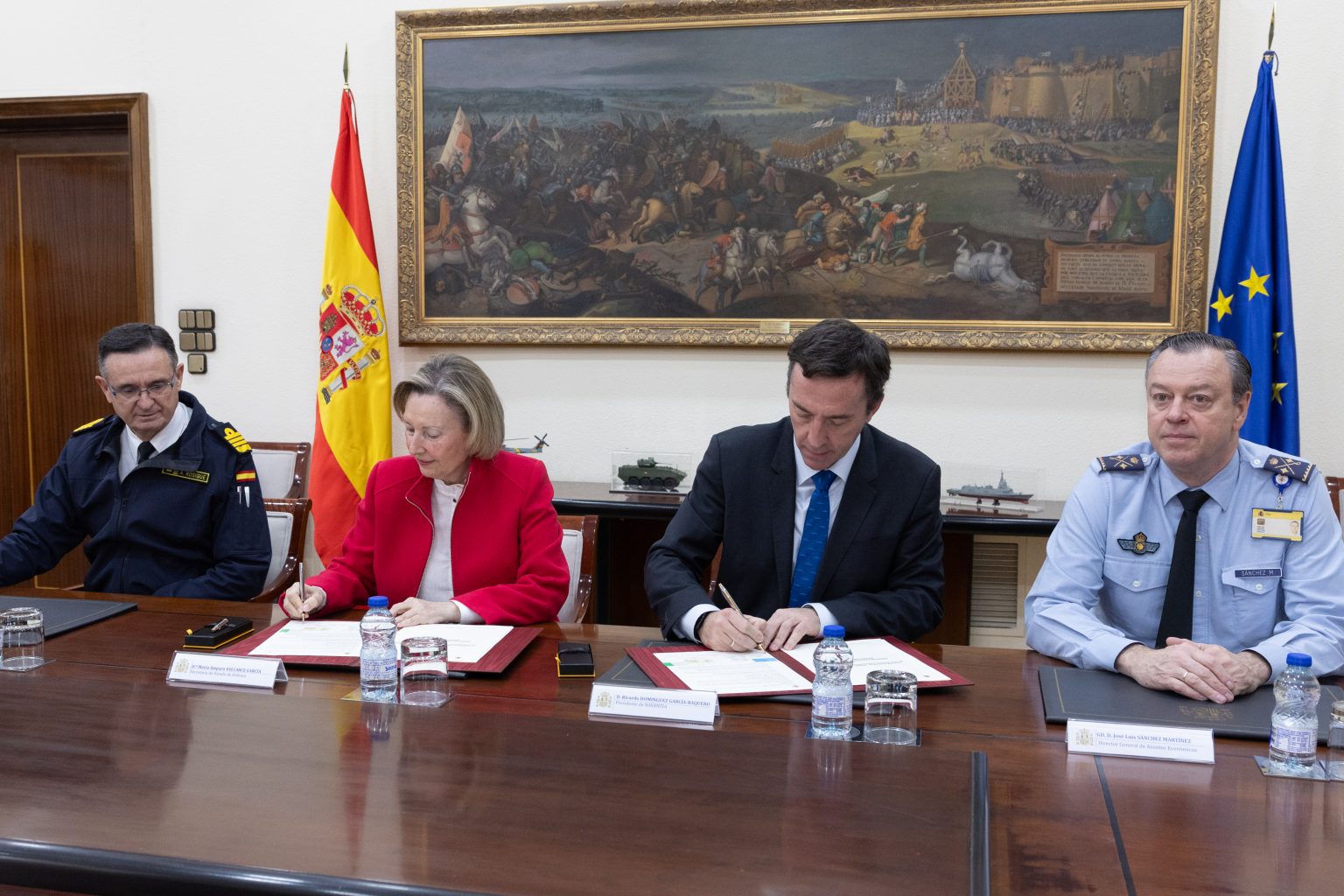
The Spanish Ministry of Defence and Navantia have initiated construction on two new coastal hydrographic vessels (BHCs) for the Spanish Navy.
Construction of the BHCs will take place at Navantia’s shipyard in San Fernando, over the next 4 years, supporting around 700 jobs, announced Navantia in a release on 20 December
Go deeper with GlobalData

Discover B2B Marketing That Performs
Combine business intelligence and editorial excellence to reach engaged professionals across 36 leading media platforms.
Hydrographical vessels are a critical component in the seabed warfare domain for navies worldwide, providing monitoring and surveillance to depths in excess of other sea-domain capabilities.
These vessels will replace the hydrographic vessel Antares, a 1970s era ship that is the last vessel of the Castor-class still in service. The new BHCs represent a renewal of the Hydrographic Fleet, with the primary function of maintaining the official nautical cartography of Spain, covering the country’s waters and coasts. This responsibility falls under the Marine Hydrographic Institute (IHM), which operates these vessels and oversees the publication and distribution of nautical charts within Spain’s national jurisdiction.
Each ship will measure 47 metres (m) in length, have a displacement of approximately 900 tonnes, and be equipped with advanced automation, enabling operation with a reduced crew of up to 30 people. These vessels will have a range of 3,000 miles and the capability to operate in waters as deep as 200m for up to 15 days.
As well as playing a role in hydrographic surveys, supporting nautical cartography, the BHCs will contribute to the protection of underwater archaeological heritage. The ships will be outfitted with specialised hydrographic equipment, including echo sounders, side scan sonar, and positioning systems for comprehensive studies of the water column and seabed, providing the Fleet with essential geographic, environmental, and meteorological information.
US Tariffs are shifting - will you react or anticipate?
Don’t let policy changes catch you off guard. Stay proactive with real-time data and expert analysis.
By GlobalDataThe autonomous suite of tools for the BHC include a Remotely Operated Vehicle (ROV), an Unmanned Surface Vehicle (USV), and a hydrographic boat, designed to autonomously gather and record data, supporting hydrographic and oceanographic tasks.



