

The UK Royal Navy has inducted its final two workboats – Merlin and Fantome – under Project Vahana, a seven-year-long programme that aims to replace a range of ageing craft across the fleet.
According to a statement on 19 July 2024, from the procurement arm of the UK Ministry of Defence – known as Defence Equipment & Support – the £48m ($62m) contract for 35 new support boats will help the Navy with services such as diving, surveying and training operations.

Discover B2B Marketing That Performs
Combine business intelligence and editorial excellence to reach engaged professionals across 36 leading media platforms.
The contractor constructed the boats according to a versatile, modular design. Known as the ‘SEA class’, the boat has a common hull that is interchangeable, allowing the Navy to adapt them for different tasks.
These two new 15-metre (m) long Vahana workboats carry different payloads and provide improved speed, operational range and navigation equipment. However, the size of the class differs from 11m in length up to Magpie, the largest, at 18mlong.
Dorset-based Atlas Elektronik UK (AEUK), a Thyssenkrupp subsidiary, manufactured the support craft. AEUK delivered the last two vessels to the Navy’s Fleet Hydrography and Meteorology unit, based in Devonport. The milestone marks the full operating capability of the vessels since the first of the class, HMS Magpie, was delivered in 2018.
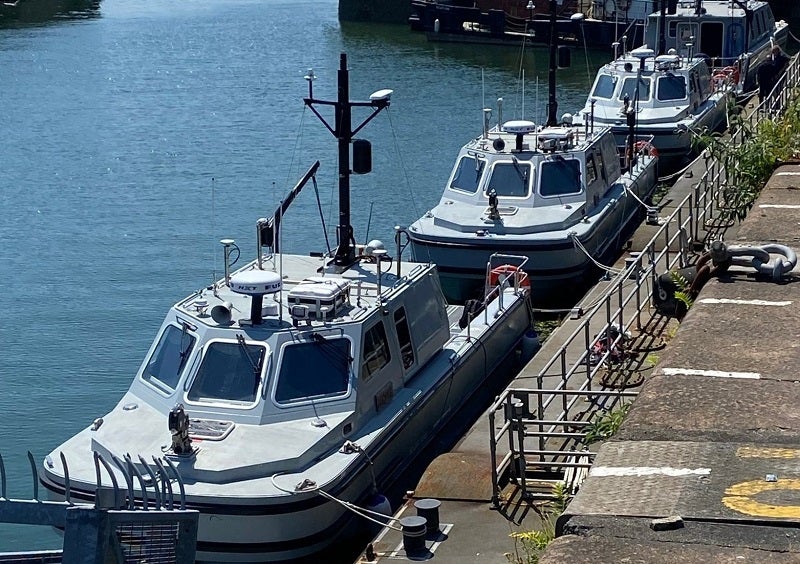
The new boats are operated from British ports and Royal Navy surface vessels, and are used for several roles from logistics support, officer training, hydrographic survey, and passenger transport, to dive support and training.
US Tariffs are shifting - will you react or anticipate?
Don’t let policy changes catch you off guard. Stay proactive with real-time data and expert analysis.
By GlobalDataHead of surface ship systems division at AEUK, Wesley Galliver, explored the benefits of the practical design.
Operators can “rapidly reconfigure them for different operational roles. Through this commonality, the training, spares and documentation burden for all systems has been significantly reduced.”
Moreover, the advanced technology within the class means in the future some of the vessels could be operated remotely or autonomously – without a sailor at the helm.
Among the 35-strong fleet, AEUK lists the roles of some of the active units The service will use eight SEA-class boats for training at the Britannia Royal Naval College, these will replace the ageing P1000 picket training boats; the aircraft carrier HMS Prince of Wales will use three boats for passenger transfers; six will be fitted with dive support modules; with 13 for training, logistics and support and survey services.


