
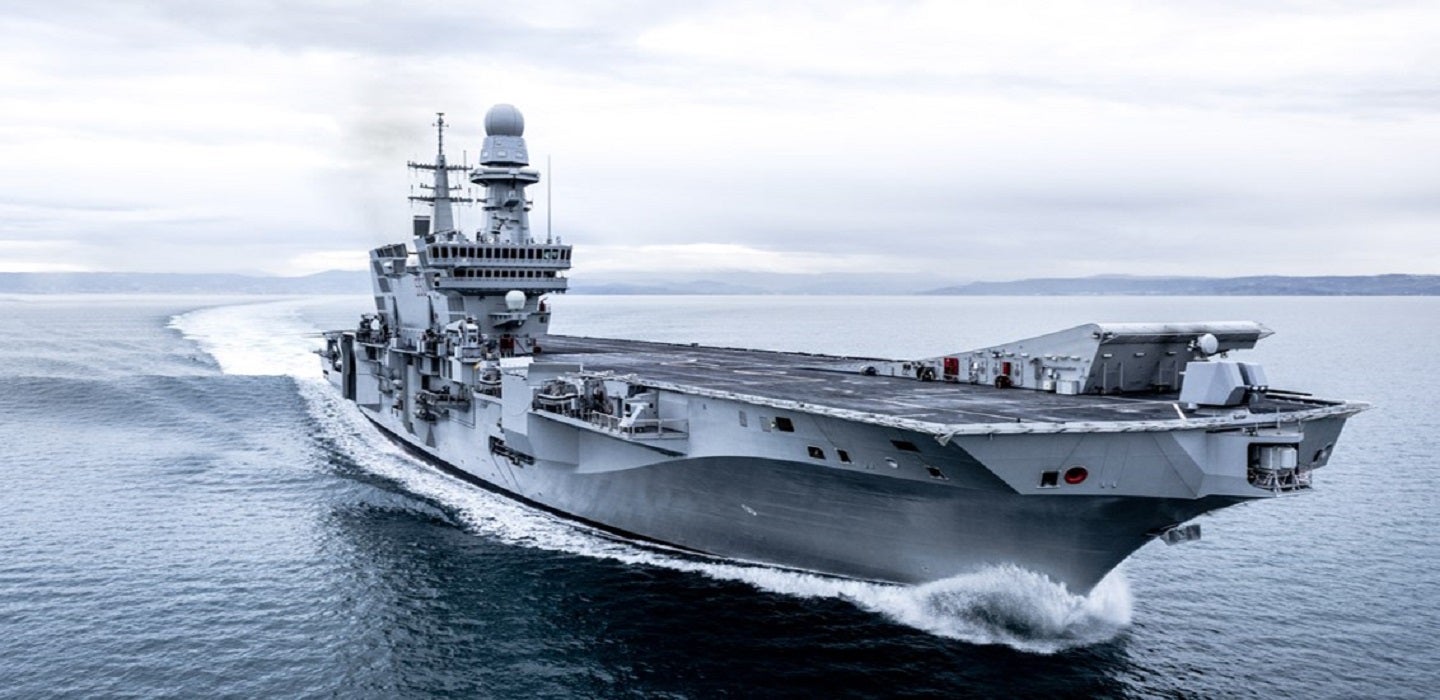
Orizzonte Sistemi Navali (OSN), a joint venture owned by Fincantieri and Leonardo, has signed a Maintenance in Operational Conditions (MCO) framework agreement with French and Italian navy officials to develop their Andrea Doria and Caio Duilio Horizon-class frigates and Italy’s Cavour-class aircraft carrier.
The €190m ($212.8m) deal will conclude at the end of 2028, while the signing and implementation of the contract between the OSN and both navies will take place in the coming days, covering the first two years of service.

Discover B2B Marketing That Performs
Combine business intelligence and editorial excellence to reach engaged professionals across 36 leading media platforms.
Fincantieri, which holds a 51% share in the consortium, will be responsible for the in-service support activities of the platform systems and equipment, including the engine, automation system, electrical generation and air conditioning systems, manoeuvring and propulsion mechanisms, as well as the aircraft elevators of the Cavour aircraft carrier and the helicopter transport system of the Horizon-class ships.
Leonardo, which has 49% OSN share, will maintain all subsystems related to the Combat System, radar sensors, Combat Management System, launchers and weapon systems of the two classes of ships, at the La Spezia and Taranto naval bases. The Leonardo subsystems involved in the maintenance amount to around 50 pieces of equipment.
French and Italian naval integration through OSN
OSN is the system integrator of the Italian-French FREMM programme for the construction of 10 frigates for the Italian Navy and, on the international market, of important programmes for the construction of amphibious units and minesweepers.
The main activities of OSN include: vessel system integration; physical and functional integration; integrated training; in-service support and vessel life-cycle management.

US Tariffs are shifting - will you react or anticipate?
Don’t let policy changes catch you off guard. Stay proactive with real-time data and expert analysis.
By GlobalDataAccording to GlobalData intelligence, the Italian Navy has planned two new 175-metre, 10,000-ton destroyers to replace the aging ITS Durand de la Penne and ITS Mimbelli.
Intended to serve alongside the two Horizon-class destroyers currently in service, these new ships will fulfil the Italian Navy’s tradition of having two pairs of destroyers in the fleet, a practice continued since the 1960s. Final operational requirements will be ready by the end of 2022. The navies will sign the construction contract in 2023, which will be completed by 2025 before being pressed into service by 2028.
With a planned crew of 300, the vessels will carry significant defensive and offensive capabilities, including; 48 missile launcher cells, Aster anti-air missiles, and a land-strike missile. The Italian Navy has stated that being able to operate at least two destroyers simultaneously is vital to Italy’s contribution to Nato coalition operations, and a common role envisaged for the vessels is forming part of an allied carrier strike group. With a full spectrum of armaments and room for further upgrade, these surface vessels may be some of the most capable in Europe when they enter service.
From the Italian perspective, it is essential that the Horizon-class vessels – which the navy calls ‘destroyers’ but are frigates according to standard Nato classification – can operate at the same level of capability and to the same extent as the navy’s forthcoming next generation destroyers.


