
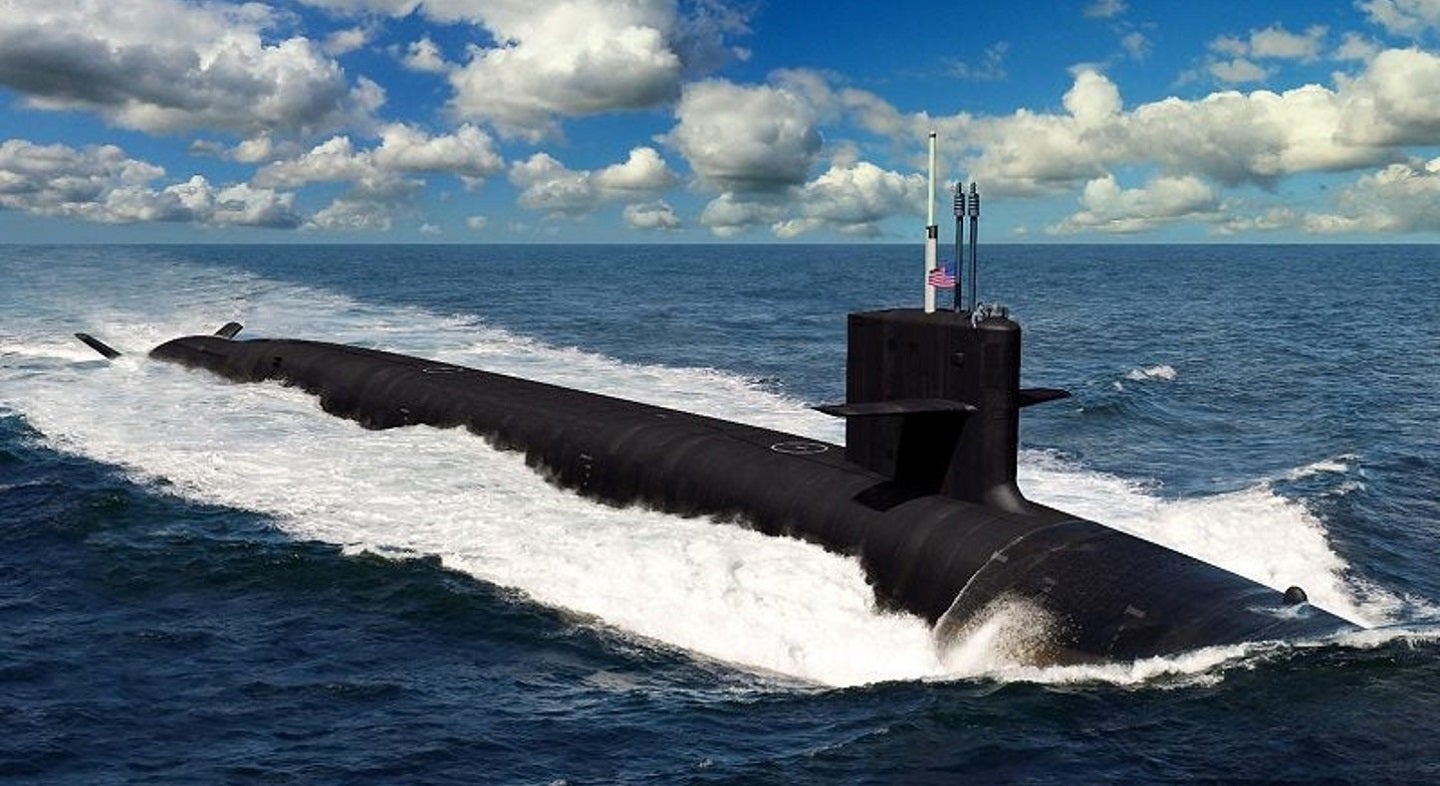
General Atomics Electromagnetic Systems (GA-EMS) announced on 30 June that it has been contracted by General Dynamics Applied Physical Sciences (GD-APS) to come up with a design for next generation submarine propulsor technology.
The design concept comes under the Advanced Propulspor Experimental (APEX) programme. The US Department of Defense’s (DoD) Defense Advanced Research Projects Agency (DARPA), which leads the programme, will develop and demonstrate a new generation of propulsion technolgoy designs to power submarines and other undersea vehicles.
Go deeper with GlobalData


Discover B2B Marketing That Performs
Combine business intelligence and editorial excellence to reach engaged professionals across 36 leading media platforms.
“We are excited to leverage our expertise in system design, modeling, and analysis, along with our extensive manufacturing experience to support the APEX programme objectives. We look forward to working with General Dynamics to develop and explore propulsion concepts focusing on efficiency, signature, mechanical design and limits, and operational considerations” said Scott Forney, president of GA-EMS.
Phase one of the APEX programme will last 24 months, with GD-APS as the prime contractor. GA-EMS will perform propulsion system design, engineering and analysis in its Boston, MA facility, and any required manufacturing and testing in its Manufacturing Center of Excellence in Tupelo, MS.
Lithium-ion to be the “game changer for submarine” propulsor
In its report on ‘The Global Submarine Market, 2023-2033’, GlobalData intelligence says that the use of lithium-ion batteries will be the next big technological development in the submarine market.
The incorporation of lithium-ion batteries into diesel-electric submarines will provide a hybrid propulsion capability and significantly reduce the acoustic signature of a submarine, making it harder to detect.
Lithium-ion batteries have a lot of advantages, such as keeping their output steady even when the charge runs low. These batteries are lighter than lead-acid batteries, they can be charged exceptionally quickly, and they can store much more energy.
In March 2020, the Japan Maritime Self-Defense Force became the first to adopt lithium-ion battery technology on its Soryu-class submarines. The use of lithium-ion batteries increases submarines efficiency and endurance level.
The new technology provides reduced vibration and noise, greater onboard comfort, better propulsion efficiency, a light weight, and a compact size. The pump-jet is equipped with a ring-shaped electrical motor, which turns the vane rotor inside the pump-jet cavity to create thrust. The submarine is difficult to detect and is much quieter without a drive shaft. Furthermore, the new propulsor can reduce cavitation, which helps to improve the acoustic signature performance of the submarine.
Forney considered “efficiency” and “signature” to be some of the key factors in the design of GA-ESM’s new propulsor, which suggests the likelihood that the breakthrough battery will be incorporated into the new design for the US DoD.



