
Comtech PST, a subsidiary of Comtech Telecommunications, has won a contract from Northrop Grumman to supply solid-state, high-power RF amplifier systems for the US Navy’s next-gen jammer system.
The amplifier systems will be used on the US Navy’s Next Generation Jammer – Low Band (NGJ-LB) Demonstration of Existing Technologies (DET).
Go deeper with GlobalData


Discover B2B Marketing That Performs
Combine business intelligence and editorial excellence to reach engaged professionals across 36 leading media platforms.
The US Navy’s next-gen jammer system is an advanced electronic attack technology that combines beam-jamming techniques with electronics.
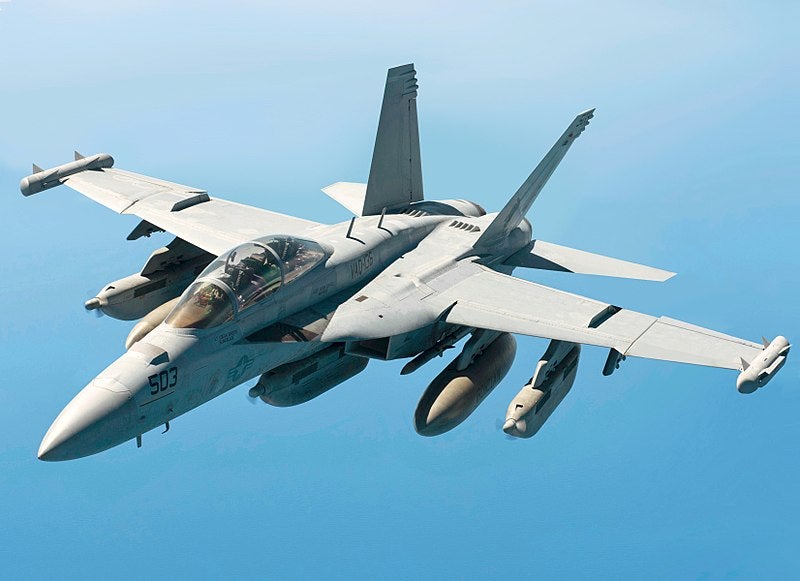
It is expected to replace the EA-18G Growler aircraft’s legacy ALQ-99 tactical jammer system and provide advanced airborne electronic attack capabilities to counter complex air defence and communications systems.
Comtech Telecommunications president and CEO Fred Kornberg said: “This significant award demonstrates Comtech’s strength in developing solid-state, high-power RF amplifier systems for advanced airborne electronic warfare systems.”
In October last year, Northrop Grumman secured a $35m contract from the Naval Air Systems Command to demonstrate existing jammer capability for the NJG-LB programme.
Northrop Grumman is the airborne electronic attack integrator for the US Navy’s existing EA-18G Growler electronic warfare system.
The company also partnered with Harris for the NJG-LB DET programme. As part of the partnership, Harris will supply electronic attack equipment to Northrop Grumman.
Northrop Grumman will integrate Harris’ equipment into its NGJ-LB pod system. This will provide a modular, scalable and reconfigurable capability to the US Navy to help it keep pace with evolving threats.
The EA-18G Growler aircraft can operate from either an aircraft carrier or from land bases. It has been developed to replace the US Navy EA-6B Prowler aircraft.


