
A-18M Autonomous Underwater Vehicle
A-18M is a new autonomous underwater vehicle (AUV) designed and developed by ECA Group.


You have successfully submitted your enquiry. Someone from our company will respond ASAP
Chrisar develops software for sonar processing, analysis, measurement, classification and identification of underwater signatures.
All the software is based on COTS technology and is available on any kind of PC platform running under Windows® or Linux. Chrisar can provide customers with complete integrated software and hardware for ground-based or on-board use.
Chrisar develops two ranges of products:
The basic Chrisar-LAB is designed for general analysis and measurement of underwater noises. It can process up to 64 channels in real-time with more than 40kHz of bandwidth. It offers facilities for lofar processing (stationary signal) and spectrogram processing (transient signal). The post-processing mode allows user to make fine measurement and analysis, reporting and archiving.
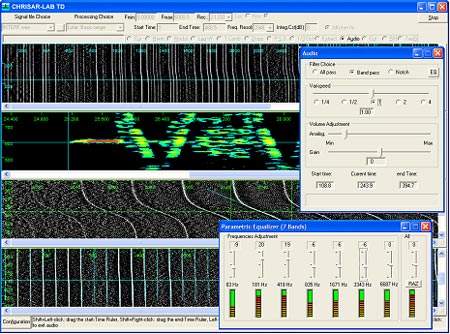
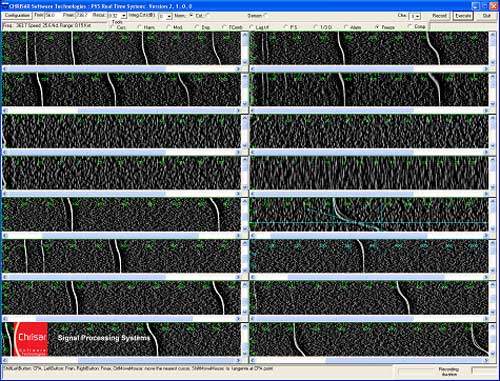
Chrisar-LAB integrates algorithms and tools such as:
Chrisar-LAB is open to other systems, such as customers' databases, and can be integrated with them.
Sonar lookout equipment
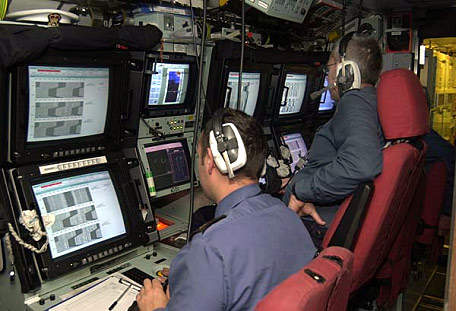
Chrisar-LAB can be specifically configured for sonar lookout. It is a very good alternative for low-cost refitting of submarines or ASW frigates, providing:
For maritime patrol operations, Chrisar-LAB integrates all algorithms for the demodulation of LOFAR, DIFAR and DICASS sonobuoys. It integrates specific algorithms for localisation like hyfix, multi-statism and energy plotting.
The ground-based version for mission planning and analysis, called fast time acoustic analyser (FTAA) is full compliant with Stanag 4283 annex B and C and can process up to 64 sonobuoys.
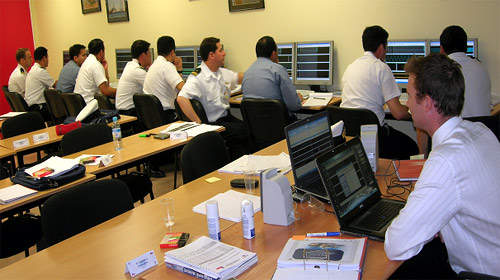
Chrisar-LAB is particularly useful for training future sonar oparators or analysts in the technics of passive sonar processing and classification. The French company NAVFCO gives all its passive sonar courses to foreign navies with the support of Chrisar-LAB.
Simulators can be combined with Chrisar-LAB to create real acoustic situations (see Chrisar-SIM below). The replay function allows the teacher to quickly place the students in these situations.
Chrisar-SIM is a range of software that aims to give users a true perception of real simulated acoustic situations. The simulators provided by Chrisar are useful for training operations and operational prediction.
The acoustic situation and sound simulator (AS3) is a powerful tool able to simulate a complete underwater acoustic situation. Each produced sound is of the form s(t) and simulates a local listening of the ambient noise situation. The main characteristics of simulated sounds are:
Up to 16 outputs may be simultaneously produced, either analogically or digitally. The simulated situation is the result of scenarios which integrate up to 16 targets. Features of simulated situations are:
Propagation and performance simulator
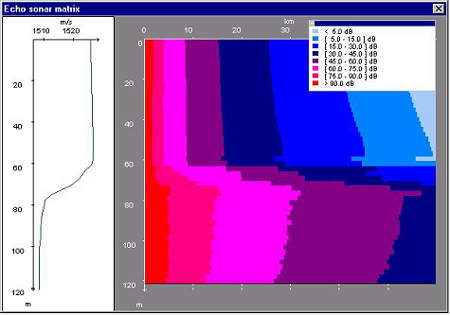
ACSRAY is a software which calculates the performances of an active low frequency sonar in shallow or deep water, and a specific version is dedicated to direct routes.
The basic version of ACSRAY is designed to be educational, to allow the user to set and tune all the parameters:
The computing engine of ACSRAY can be integrated in operational systems.
Bathy can be imported from external files, manually computed or statistical. Many standard sea bottom models are available. The results are represented in 2D or 2D½.
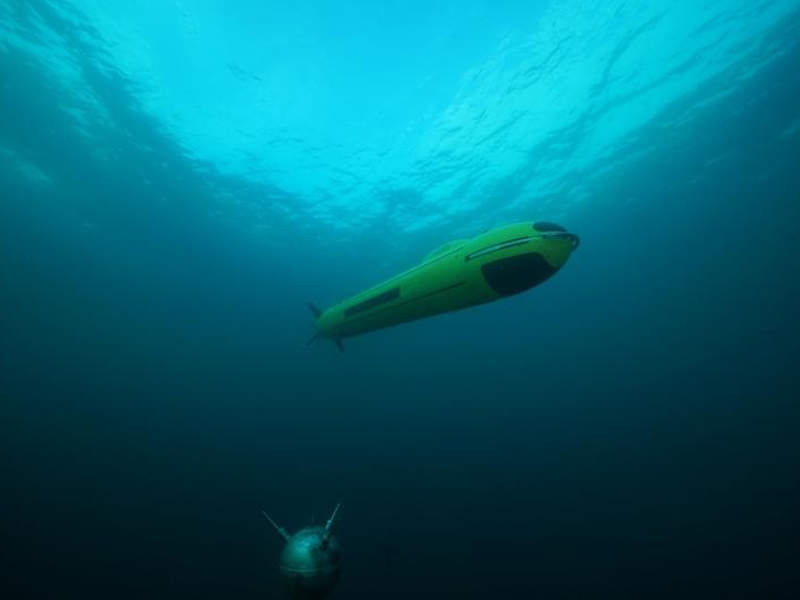
A-18M is a new autonomous underwater vehicle (AUV) designed and developed by ECA Group.