


For decades, advanced military propulsion has centered on building ever-more capable fighters and bombers—delivering more thrust, more range, greater power and thermal management, and longer service lives. Those requirements remain essential. However, the rise of autonomous systems, advanced effectors, and autonomous collaborative platforms is redefining what propulsion must deliver.
Customers today want greater numbers of systems. They want them faster. They want the ability to iterate as missions and threats evolve. And they need an economic model that enables those capabilities to be fielded at scale. All of this changes the propulsion equation.
European nations are developing their own autonomous and collaborative combat-air concepts. Architectures and timelines vary, but the direction is unmistakable: autonomous and collaborative aircraft are becoming a core element of future force design—not an adjunct to it.
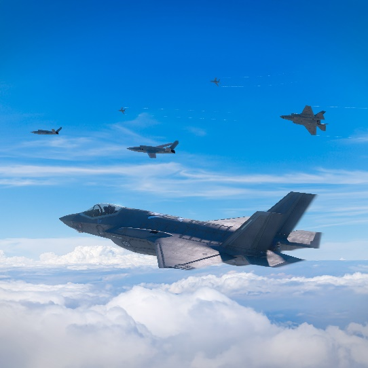
This shift creates a new propulsion demand signal, fundamentally different from the traditional fighter-engine market. Customers require engines in greater quantities, across multiple thrust classes, and with dramatically different mission lives. Some platforms will prioritize range and endurance, while others will focus on speed, payload, or cost. Certain systems will fly repeated missions over many years, and others will have mission lives measured in only tens of hours. More than ever, propulsion must be optimized for the life, value, and urgency of each mission.
Speed to field is becoming a performance requirement in its own right. Meeting it means leveraging mature technologies where appropriate, and applying digital engineering, additive manufacturing, and rapid development to compress timelines. It also means designing producibility into engines from the start. Affordable mass only matters if industry can actually produce at mass.
RTX’s Pratt & Whitney is expanding aggressively into the autonomous and attritable space. The company is leveraging proven commercial engine technology, including its PW500 and PW300 families, to accelerate capability delivery for autonomous platforms.
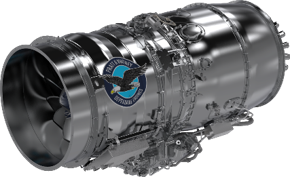
In parallel, Pratt & Whitney is also developing an all-new family of small engines, the Pratt & Whitney Valox™ engine family, ranging from 500 to 1,800 pounds of thrust. These engines are designed from the outset for rapid development, affordability, and scalable production.
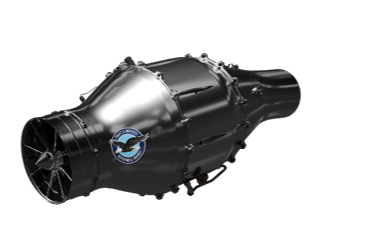
To support this new era of air warfare, Pratt & Whitney is investing in the capabilities that matter most: advanced manufacturing, additive production, digital engineering, engine testing, rapid development.
Autonomous collaborative platform propulsion demand cannot be met through technology development alone. It also requires the industrial capacity to move quickly into production. At a topline, Pratt & Whitney has delivered significant industrial growth since 2019, with major capital investments focused on capacity at scale, readiness and affordability, lifecycle sustainment, and next-generation engine technology. The company continues to self-invest in facility upgrades, additional test cells, additive manufacturing and digital capabilities while leveraging government funding to progress new capabilities and engine designs. In 2026, RTX announced $194M in increased capacity in Europe, on top of the more than $165M the company invested in CapEx in Europe in 2025.
RTX can contribute the critical technologies that will make future autonomous collaborative forces operationally effective, from advanced propulsion and avionics to mission computing, resilient communications, sensors and weapons – supported by its strong industrial footprint in Europe, with more than 21,000 employees across 65 locations.
Affordable mass is not simply an airframe challenge—it is an industrial challenge. And propulsion must be ready to scale with it. Pratt & Whitney is preparing for the future of air combat, investing and building the propulsion systems that will power it.
