

- The US Navy has reclassified Blocks V and VI Virginia-class submarines, which use the extended payload module, to an SSGN role
- With a greater depth of munitions, the Navy suggest the upgraded submarines will replace the ageing Ohio-class SSGNs
- This decision does not constitute land attack priority; it is to ensure the Navy maintains the same level of firepower
The US Navy has reclassified Blocks V and VI Virginia-class fast-attack submarines, which use the Virginia Payload Module (VPM), to a guided missile (SSGN) role.
Until now, these $5bn boats were grouped with the existing, stealthy fast-attack submarines (SSNs). But due to the additional space the 84-foot VPM mid-body extension provides in storing munitions, the incoming submarines fit comfortably within the Navy’s SSGN requirement.

Discover B2B Marketing That Performs
Combine business intelligence and editorial excellence to reach engaged professionals across 36 leading media platforms.
There are four existing Ohio-class SSGNs. However, USS Georgia will begin the inactivation process after more than four decades in service which leaves a looming capability gap until the new boats come into service between 2029 and 2038.
“The Submarine Force is defined by our ability to operate undetected and strike without warning,” reinforced Vice Admiral Rick Seif, commander of the Submarine Forces. The VPM-equipped SSGNs will provide a persistent forward presence, ready to project decisive combat power when needed.
No meaningful change
While the new designation indicates a change in the expected mission set of the VPM boats, Mark Cancian, senior adviser with the Center for Strategic and International Studies, maintains that reclassification does not embody any practical change.
“The same submarines will exist regardless of how they are labeled,” he told Naval Technology. “Submarines with VPMs had always been considered a replacement for the Ohio-class SSGNs.”
Neither will the Navy’s decision directly affect the submarine industrial base, said Dave McCall, retired Navy Captain and COO for Bartlett Maritime, an organisation that helps to resolve US submarine maintenance and capacity backlogs.
One factor driving the decision, Cancian stipulated, is a desire to signal the Navy’s commitment to long-range ground attack, which has become an important Navy function during the Iran war but also in previous instances going back to Desert Storm in 1991.
In the Gulf, the US Navy is learning lessons from its growing consumption of advanced missiles. US defence industry must catch-up to deliver sustainable stockpiles, demonstrated by a steady flow of contracts for more missile components.
Making up for lost missiles
The inventory of Tomahawk Land Attack Missiles (TLAMs) will start to ease by the time all the VPMs are delivered in 12 years time, assuming there are no further major expenditures, which cannot be discounted in the current geopolitical landscape.
But in the meantime, Cancian expects the Navy will have to do some “cross-decking,” where sailors take missiles off ships that are not deploying and putting them on platforms that are. The Navy has done this many times in the past when munition inventories are tight, “but it adds a lot of work” he said.
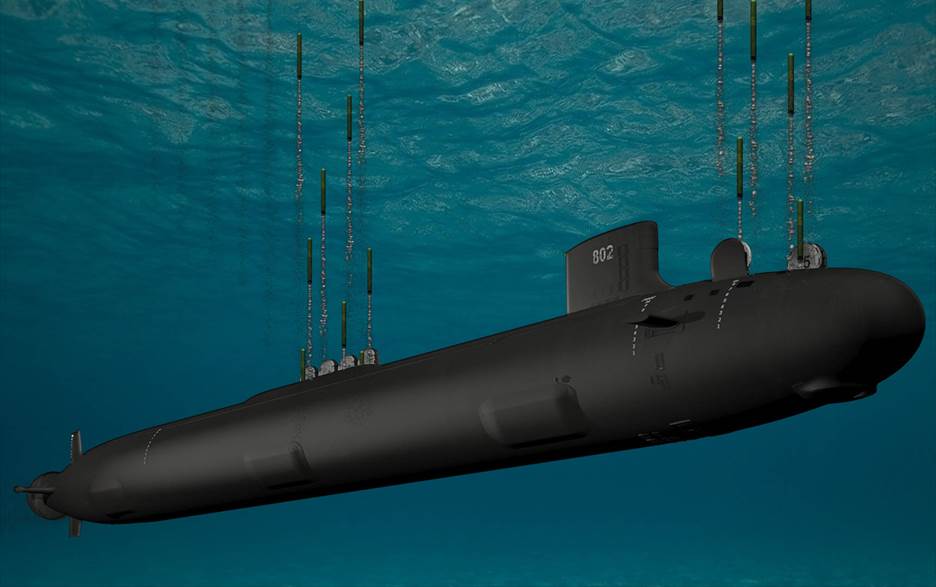
But more capacity is needed. In fact, the Navy will need to fill the missile capacity of the unparalleled Ohio-class, in which each hull carries 154 TLAMS each.
The four additional launch tubes in the VPM can carry a total of 28 additional TLAMs (seven per tube), which would increase the total number of weapons carried by the SSN design from about 37 to about 65 – an increase of about 76%.
While it takes several Virginia SSGNs to muster the missiles of one Ohio submarine, these munitions are disaggregated, which complicates the combined salvo.
Undersea threat
While the VPM provides a coveted ground attack capability, Vice Admiral Rob Gaucher, director of Submarine Programs, also pointed to the lethality the system brings to the “undersea fight.”
Naval Technology contacted the US Navy to confirm whether it intends to end the production of the SSN design without the VPM extension, but the service did not respond before publication. However, the reclassified boats still retain the same anti-submarine warfare capability of earlier SSNs, which means the new SSGNs may continue performing this role to some extent.
But the VPM also provides a new ASW enhancement.
The large diameter tubes in the VPM will launch large displacement uncrewed underwater vehicles (UUVs), which will undertake submarine hunting as well as intelligence, surveillance and reconnaissance responsibilities.
The module could fit Kongsberg’s HUGIN autonomous underwater vehicle in its 87-inch diameter tubes, for example.
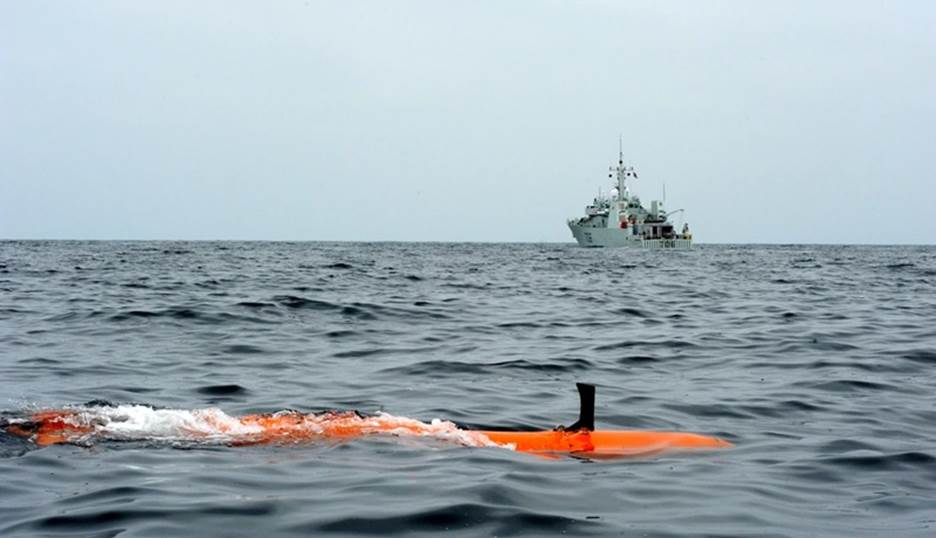
Two years ago, the Defense Innovation Unit expressed a requirement for autonomous underwater sensing and payload delivery in dispersed, long-range, deep and contested environments.
More recently, L3Harris won a contract to deliver a Torpedo Tube Launch Recovery system. This indicates the Navy’s prioritisation of smaller diameter torpedo tubes for small UUV deployment.
Before a UUV can sit inside a VPM, the massive physical launch tubes must be manufactured to support diverse payload weight distribution.
Last year, General Dynamics Electric Boat subcontracted BAE Systems to produce VPM tubes for Block VI submarines. These tubes will provide greater payload flexibility, according to the manufacturer, although it did not specify the launching of UUVs in the release.


