

- Sweden’s defence materiel administration (FMV) has placed an order for uncrewed surface vessels (USVs) for 3D mapping of waterways
- The task, currently undertaken by reconnaissance personnel, will speed up waterway surveyance prior to bridging
- These systems will help the military overcome the treacherous waterways in the High North
Sweden’s FMV has placed an order for an unspecified number of Sonobt 5 USVs to provide a more efficient means of surveying waterways prior to establishing floating bridges and other field reconnaissance tasks.
Evologics, a German supplier, will deliver units through the local distributor, BUVI Scandinavia with delivery expected in the autumn of 2026, at which point the systems will undergo testing in both coastal and inland environments.

Discover B2B Marketing That Performs
Combine business intelligence and editorial excellence to reach engaged professionals across 36 leading media platforms.
The contract value is Skr43m ($4.5m), which includes training and support.
Althought the systems can provide hydrogrpahic surveys, the fleet will largely be used for surveyance in support of wet gap crossings.
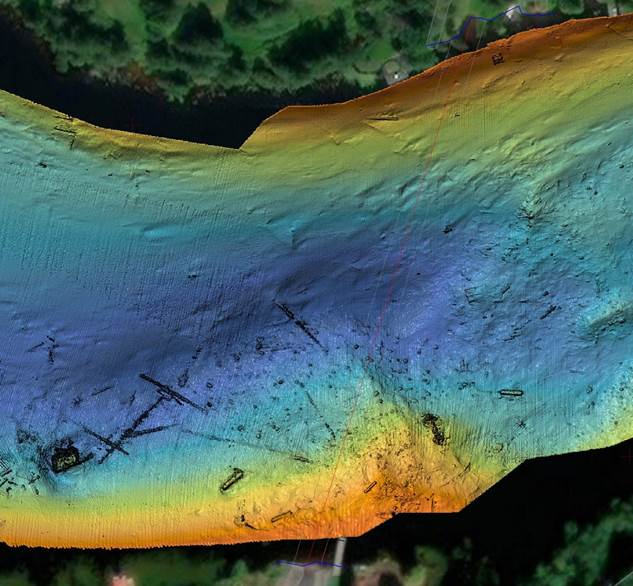
Gabriel Dalborg, systems engineer for the FMV, described the technical process:
“With this system, detailed 3D images of the seabed can be created in a short time. This will lead to more efficient and faster decision-making and improved fieldwork capabilities within the Armed Forces.”
Risk: rivers and waterways
Historically neutral, albeit a recent member of the Nato military alliance, Sweden’s defence posture focuses on territorial integrity. Doctrinally, this will persist since the Arctic nation is suitably placed to support the alliance’s Northern Flank, where Russia is increasingly present as new waterways emerge.
Currently, Swedish Army reconnaissance units perform surveys themselves. This is not only time-consuming but, in Arctic conditions, where there is an undammed riverine landscape in Lapland, this will likely have a detrimental impact to the movement of troops.
While the Cold Response 26 exercise in March demonstrated trans-Nordic movement by land, rivers and water hazards can easily delay such movement or present chokepoints.
Alternative options
Uncrewed systems provide a risk-free alternative means of assessing waterways, and the utility of USVs in this context is a given since the system can operate on the river surface.
However, the UK, another Nato partner, are exploring uncrewed aerial systems (UAS) for wet gap crossings. These UAS systems, the UK Ministry of Defence suggested, will deploy sensors from the air, which at first glance seems less efficient than USVs.
However, when approachign wet gap crossings, reconnaissance units must also battle with a land element – namely the seabed and riverbanks. These factors can be unstable to support some bridging efforts, such as traditional floating bridges, which require a solid river bank.
That said, the Swedish military do operate M3 amphibious bridge and ferry systems, the latest of which were procured from General Dynamics European Land Systems in September 2024. These, unlike floating bridges, the vehicles do not rely on stabilsied soil, there is no need to concentrate ramps.


