

- The Royal Navy has equipeed RFA Lyme Bay with autonomous MCM capabilities
- European partners are coordinating a prospective MCM mission in the Strait of Hormuz
- This report examines the ships and capabilities the Royal navy have to hand for such an endeavour
The UK Royal Navy is implementing measures to preserve the few mine-countermeasure (MCM) capabilities available to the service.
Its policy is made all the more significant as European partners begin to coordinate a potential mission to remove underwater mines laid by the Iranian regime in the Strait of Hormuz in an effort to curtail global trade, thus pressuring the United States through asymmetric warfare despite the overwhelming air campaign over the Islamic Republic.
Go deeper with GlobalData


Discover B2B Marketing That Performs
Combine business intelligence and editorial excellence to reach engaged professionals across 36 leading media platforms.
American President Donald Trump criticised British Prime Minister Keir Starmer for his refusal to send minehunters during the ongoing conflict in March.
But now, as the navy readies the fleet, it is worth examining the nature and scale of what the service could feasibly muster.
Crewed ships
To begin with, the Royal Navy lately announced that it has equipped RFA Lyme Bay, based in Gibralter, with new minehunting technologies over the last several weeks.
Serving as an MCM mothership, Lyme Bay will host a 12-metre uncrewed surface vessel (USV) RNMB (Royal Navy Motor Boat) Ariadne, which is designed to detect and destroy sea mines autonomously or remotely using the Thales Towed Synthetic Aperture Multiviews systems.
Other equipment on board includes another uncrewed multirole boat.
This boat can deploy Seacat – an underwater vehicle that produces detailed 2D or 3D sonar picture of the seabed, communicating via a fibre optic cable tether to the boat. Likewise, the boat can also deploy the strictly autonomous underwater vehicle Remus, which surveys the seabed.
According to the release, Royal Navy Digital’s Maritime C5i Support Unit identified unspecified “areas of improvement” besides certain strong performance indicators such as its anti-virus management and training delivery.
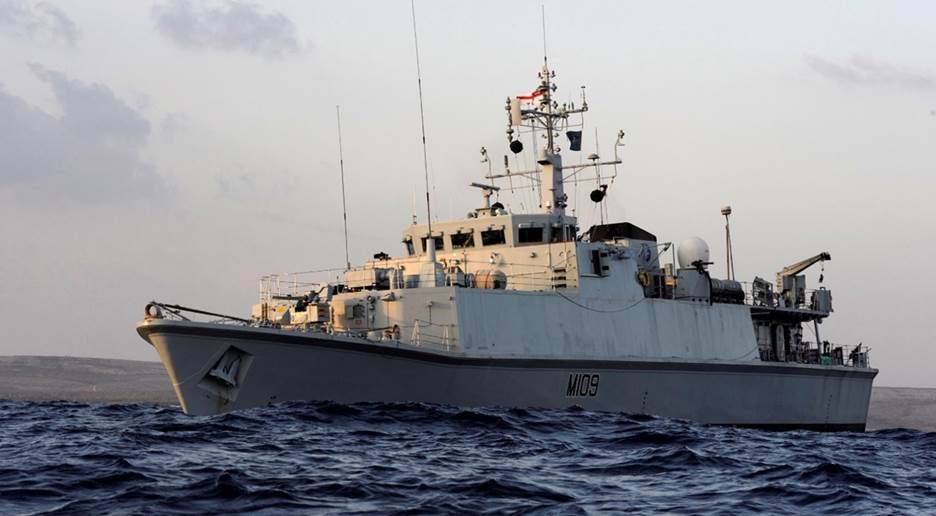
Other minehunter vessels include the last Sandown-class vessel in the fleet, HMS Bangor, which was originally intended for retirement soon but the Government has since changed its mind due to the its MCM gap.
Currently, Defence Readiness Minister Luke Pollard said that “repairs are underway” to ensure her return to service after the vessel sustained significant damage during a collision in Bahrain in 2024. Notably, the same official anticipated that these structural repairs would be completed by the end of April, now a full month ago.
In the end, she too will likely incorporate autonomous MCM technologies along the same lines as Lyme Bay.
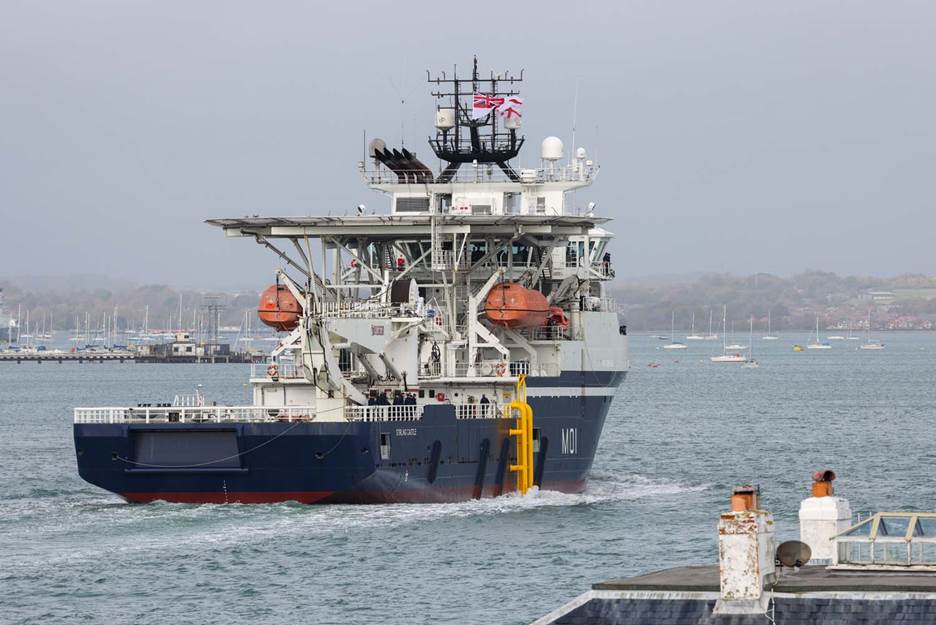
Meanwhile, HMS Stirling Castle, a former Royal Fleet Auxiliary vessel that now sails under the white ensign as of July 2025, will also bolster the crewed portion of the MCM fleet.
However, it would do so in low-threat environments in a non-combat transport role as the vessel is not armed like HMS Lyme Bay, which has a Phalanx close-in weapon system and 30mm autocannons. This suite of weapon systems is needed for the highly contested Hormuz strait, where vessels could be attacked by Iranian one-way attack drones as demonstrated by the Yemeni Houthis in the Red Sea in previous years. For this reason, HMS Stirling Castle will be limited to UK home waters security.
Uncrewed MCM vehicles
The ultimate aim in the MCM space is for the Royal Navy to detect and remove underwater mines without risking the lives of personnel. This explains the ostensible mothership role which legacy surface vessels will continue to play.
But among the autonmous MCM vehicles, some of which were mentioned above, the Royal Navy appears to include 20 USVs (of which ten have been delivered) it has purchased from Kraken Technologies under Project Beehive.
The K3 Scout, as the system is known, is a medium-sized USV that is 8.4 metres in length with a 1.93m beam while displacing a maximum of 2,500 kg.
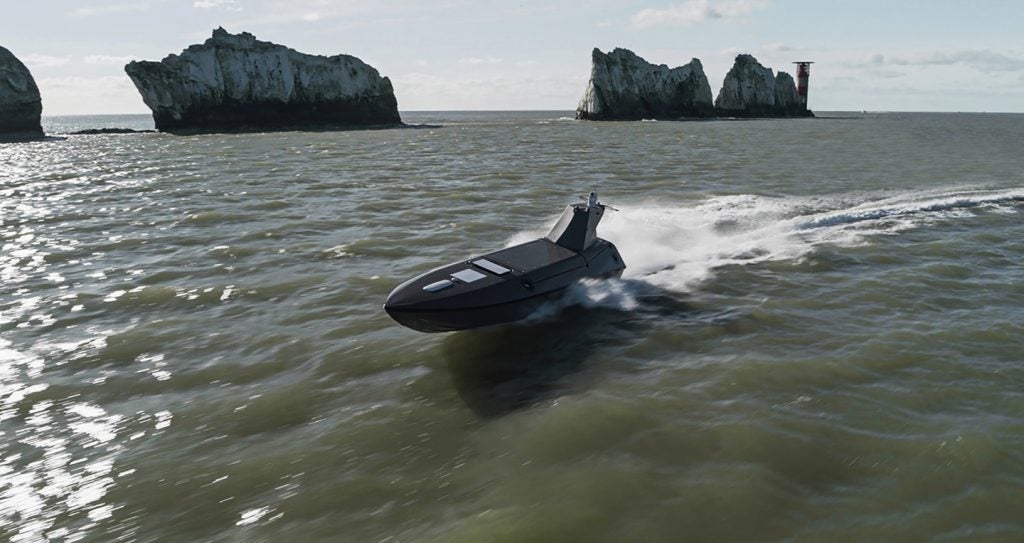
According to a statement last week regarding mine warfare capability across crewed ships, Pollard added them to its portfolio despite the systems being procured for training and development with the Coastal Forces and the Royal Marines.
This is the first time these USVs are referred to in an MCM role.
But the systems are capable of minesweeping as it features large, interchangeable payload capacity while the open software architecture may accommodate third-party sensors.
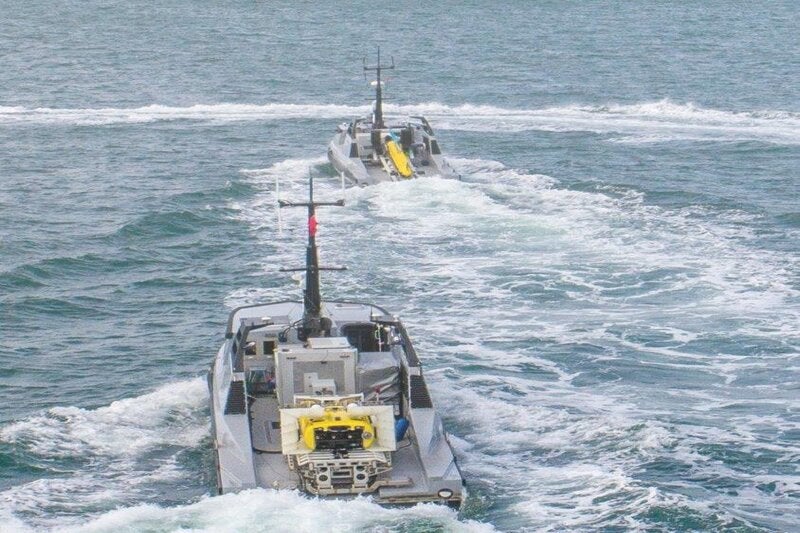
Elsewhere across the fleet, the service has inducted the second of four Maritime Mine Counter Measure (MMCM) systems, RNMB Adventure.
The MMCM programme is a joint intiative with France to use autonomous vessels instead of legacy crewed MCMVs to sweep for underwater mines. The programme is developed by Thales and managed by the European defence programmes overseer OCCAR.


