

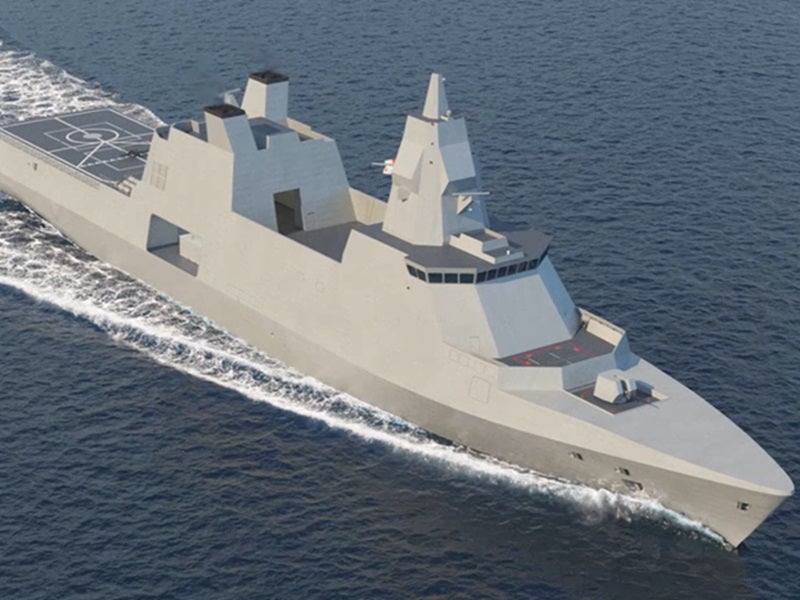
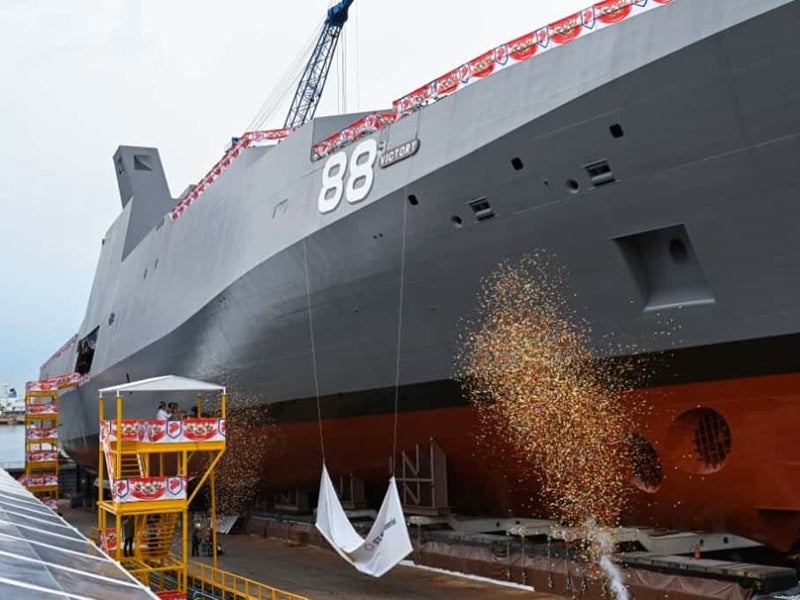
The Victory‑class multi‑role combat vessels (MRCV) are designed to operate as motherships for unmanned systems, integrating operations across air, surface and subsurface domains for the Republic of Singapore Navy (RSN).
The vessels are designed to undertake a broad spectrum of missions, including maritime security and surveillance, and combat operations and are the largest and most complex warships constructed in Singapore to date.
Recommended White Papers
Recommended Buyers Guides

Development of the vessel is led by the Defence Science and Technology Agency (DSTA) in collaboration with DSO National Laboratories (DSO), Singapore Technologies Engineering (ST Engineering) and international partners.
The basic design of the vessel was developed by Odense Maritime Technology (OMT) in partnership with Saab-Kockums.
In March 2023, Singapore’s Ministry of Defence (MINDEF) awarded a contract to ST Engineering for the design and construction of six MRCVs.
ST Engineering launched the lead ship of the Victory‑class MRCV named Victory at its Benoi Yard in Singapore in October 2025.
The remaining vessels will carry the names: Victory, Valour, Vigilance, Valiant, Vigour and Vengeance.
ST Engineering plans to deliver the MRCV fleet progressively from 2028.
Victory-class MRCV specifications
The Victory‑class MRCVs will measure 150m in length with a 21m beam, and a standard displacement of around 8,000 tonnes (t).
The vessels will have a top speed of more than 22 knots and a range greater than 7,000 nautical miles. Standard accommodation is provided for fewer than 100 personnel.
The MRCVs will replace RSN’s current Victory‑class missile corvettes, which have been in service since 1989.
Design and features
Extensive 3D modelling and digital‑twin technologies were used to develop and refine the design of the Victory‑class MRCVs virtually before construction.
This approach reduced reliance on costly physical prototypes, minimised design rework, cut material waste and shortened the delivery timeline for a mothership tailored to the Singapore Navy’s needs.
The platform features modular systems and significant growth margins. The superstructure is constructed from lightweight composite materials supplied by Saab, lowering the centre of gravity to improve stability and freeing weight allowance for future equipment.
Advanced automation enhances crew efficiency and safety, with the bridge being able to be operated by two personnel rather than five. The engineering control centre also requires only a single operator instead of four.
Victory-class multi‑role combat vessels payload
The mission bay of the MRCVs can house eight containerised modules, which can be reconfigured rapidly for a wide range of tasks, enhancing operational flexibility for roles such as humanitarian assistance and disaster relief (HADR).
The ability to accept standard shipping containers also simplifies logistics, allowing food, stores and maintenance equipment to be loaded and discharged efficiently and safely.
For example, the mission bay can incorporate rapidly deployable maritime containers (clinics installed in standard shipping containers) to expand medical capacity for HADR missions, if the ship’s built‑in medical facilities are insufficient for a particular incident.
A cargo elevator and fittings enable efficient internal transfer of such containers. Furthermore, onboard cranes ease the handling of supplies, weapons and equipment.
The aft flight deck can accommodate one medium‑lift helicopter alongside multiple UAVs.
Sensors and weapons
The vessel will be equipped with advanced sensors and weapons for high‑end warfare and to serve as a command platform in support of Singapore Armed Forces operations. Its combat management system (CMS), developed domestically by DSTA, provides enhanced sense‑making and decision‑support capabilities.
The MRCV sensor suite comprises a Thales multi‑function radar, a Thales fire‑control radar and a SAFRAN electro‑optical system, supported by a hull‑mounted sonar. Integrated cybersecurity measures protect sensor networks and data links.
The weapons fit includes a Leonardo STRALES‑guided 76mm gun, an MK30‑C 30mm remotely operated weapon station, MBDA MICA surface‑to‑air missiles, ASTER surface‑to‑air missiles, and a surface‑to‑surface missile system.
Propulsion
The Victory-class MRCVs will be equipped with GE Vernova’s Electric Grid with Integrated Full Electric Propulsion (IFEP) system.
The Electric Grid supplies the electrical power needed for propulsion and supports all operational and mission systems, including radar and communications. Because electrical power can be distributed flexibly to any load on the ship’s network, it offers greater energy efficiency and lower operating costs than a traditional mechanically driven arrangement.
The system comprises a full suite of equipment, including generators, medium-voltage switchboards, transformers, variable frequency drives (VFDs) for propulsion, electric propulsion motors, thruster motors, soft starters, shore power connections, the power management system (PMS), and the propulsion control system (PCS).
Mission capabilities of Victory-class MRCVs
Together with the RSN’s current fleet, the Victory-class MRCVs will strengthen Singapore’s capacity to protect its sea lines of communication and support regional security frameworks as well as international initiatives.
The MRCV combines the combat capability of a modern frigate with the carriage and control facilities required to function as a mothership for diverse unmanned systems.
Unmanned surface vessels (USVs), unmanned aerial vehicles (UAVs) and autonomous underwater vehicles (AUVs) launched from the MRCV can operate jointly to extend surveillance and operational reach across all domains.
A single MRCV, supported by a suite of unmanned systems, can undertake missions that would previously have required several crewed warships.
