

HMS Prince of Wales, the flagship aircraft carrier of the UK Carrier Strike Group (CSG) mission deployed to the Indo-Pacific earlier this year, has returned for the final leg of its journey closer to home in the Mediterranean Sea.
The CSG, comprising around 4,000 personnel and several allied ships, returned via the Suez Canal, bottlenecked by the Red Sea, where commercial vessels enter with trepidation while allied warships seek to protect the sanctity of global trade from Houthi strikes.
Go deeper with GlobalData


Discover B2B Marketing That Performs
Combine business intelligence and editorial excellence to reach engaged professionals across 36 leading media platforms.
UK defence minister Alistair Carns and minister for Europe, North America and Overseas Territories, Stephen Doughty, welcomed the ships and crews in Crete as they returned to European waters.
From there, the CSG will go on to conduct a series of engagements with Nato and European Union countries, through port visits to Greece, Albania, Italy, and Spain.
Next stop: Falcon Strike
Upon entering the Mediterranean once again, after a five-month stint in the Indian and Pacific Oceans, the force will converge with other Nato allies, led by the Italian Air Force, alongside the air forces of Greece and the United States.
As part of Exercise Falcon Strike, a large-scale air and maritime exercise, participants will focus on integrating fourth and fifth-generation aircraft, refining coalition tactics, and strengthening logistics cooperation among F-35 users.
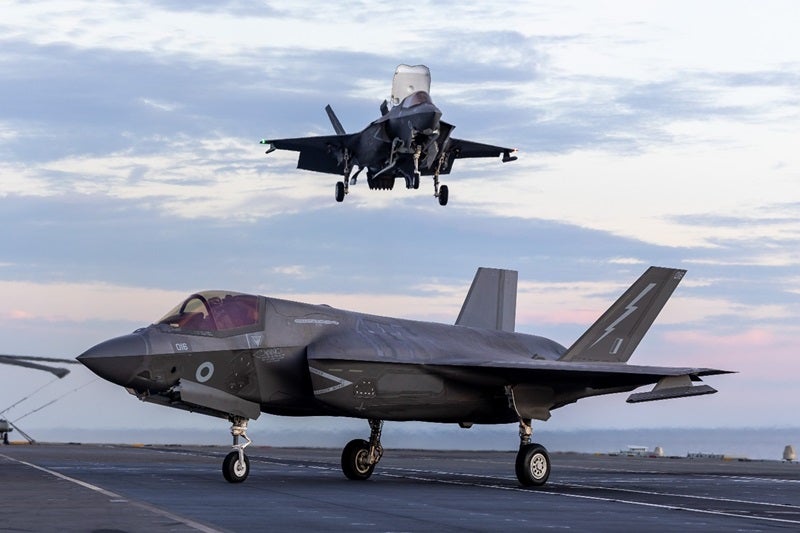
“This [CSG and exercise] has been a sustained demonstration of reach, resilience, and relevance,” said Air Marshal Allen Marshall. But contrary to this contestable assertion, it is hoped that the UK has learned from the logistical limitations faced during the mission, stretching their capability so far from home.
A clear failure came when a British F-35 was stranded in India, a country whose ties with Russia leave open a potential breach of information related to the advanced platform, after encountering mechanical issues during CSG operations.
While Indian officials guarded the sophisticated aircraft around the clock, it was not until the following month that the first UK military personnel managed to get on site to begin repairs.
Future carrier plans
As the CSG mission comes to an end, it may also mark the culmination of the vessel – at least for now.
With the Treasury under immense pressure, and the relative inactivity of each of the costly platforms going forward, it may push the Royal Navy to mothball one of its two Queen Elizabeth Class aircraft carriers.
Assuming that is the case, the Prince of Wales will be the likely pick after its eight-month mission, enduring maintenance issues, and since the recent sea trials of its sister ship, the first in class, HMS Queen Elizabeth, indicate its reentry into service.
One of the carriers will still be of use as the Royal Navy experiments with its “hybrid carrier airwing” concept, a key feature of the Atlantic Bastion concept considered in the Strategic Defence Review.
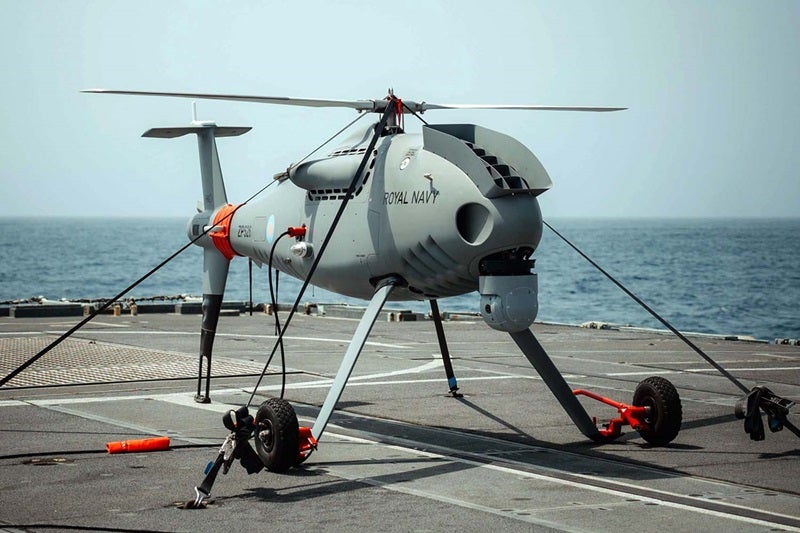
This will see the aircraft carrier outfitted to accommodate both crewed and uncrewed platforms. Currently, both are configured to operate the short take-off and vertical landing ‘B’ variant of the F-35 Lightning II. But supplementing some of these F-35Bs with uncrewed systems would provide greater combat mass and an extended engagement range.
Expert analysis from London’s International Institute for Strategic Studies has suggested the Navy may need to integrate an electromagnetic aircraft launch system to deploy and catch the future fixed-wing uncrewed aerial systems (UAS) they intend to use on the hybrid carrier airwing.
However, this may still be avoided since the Navy’s existing UAS are all rotary systems which of course, by their nature, take-off and land vertically. These systems include the heavy lift quadcopter, Malloy T-150, used to deliver supplies between warships during the CSG mission as well as the rotary-wing Peregrine UAS used for intelligence, surveillance, and reconnaissance at sea.


