

In August 2025, the UK government announced a £10bn ($13.5bn) deal to supply UK-made Type 26 frigates to Norway. The deal marks Norway’s largest defence procurement to date and the UK’s most substantial export of warships when based on value. While at the geopolitical and tactical levels this historic deal has many operational implications, reflecting the evolving security landscape and increased tensions with Russia, opportunities have also arisen for the industry.
The historic deal will yield five antisubmarine warfare (ASW) ships for the Norwegian military, contributing to a combined fleet with the UK’s eight Type 26 frigates. This fleet will conduct joint operations, fostering enhanced cooperation between the already close allies. In addition to injecting £10bn into the UK economy, according to the UK Ministry of Defence and BAE Systems, the deal will be highly beneficial to the UK supply chain, supporting 4,000 jobs and over 400 companies across the UK. This presents opportunities for various firms.

Access deeper industry intelligence
Experience unmatched clarity with a single platform that combines unique data, AI, and human expertise.
As alluded to by the UK government, many small and medium-sized enterprises (SMEs) may benefit from opportunities arising from this deal. Given that the Type 26 proposal aims to deliver ASW capabilities, significant emphasis is placed on relevant cutting-edge technology, with BAE Systems, the prime contractor for the Type 26, outlining the implementation of various advanced systems. However, the successful delivery of these capabilities is dependent on critical componentry, as demonstrated by the Sonar 2087 towed array. While Thales UK is the prime contractor for the Sonar 2087 system, UK SME Marshall received a contract lasting until 2039 from Thales UK for maintenance, production, and support of essential antisubmarine sonar array componentry for the Royal Navy. This includes the Sonar 2087, meeting a crucial demand for delivery of the specific system and wider proposal by extension. SMEs providing similarly niche hardware are therefore well-positioned to receive supply contracts in the short-medium term for when these and future comparable technologies require development to achieve technological overmatch within increasingly innovative domains. However, opportunities are not limited to componentry subcontracting.
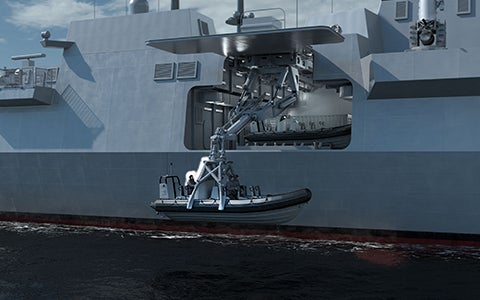
Flexible mission spaces are also key features within the Type 26. These refer to large mission bays amid ships that can house mission-specific platforms, with Rolls-Royce being awarded a Mission Bay Handling System contract by BAE for the Type 26. BAE says that these mission bays provide the Type 26 with its multi-mission capability. As highlighted by the Royal United Services Institute (RUSI), much of the technology enabling flexible mission bay operations, particularly systems like autonomous underwater vehicles (AUVs) and unmanned surface vessels (USVs), originates from SMEs. RUSI further notes that in addition to the Type 26 deal with Norway, a deal for the UK to export Type 31 frigates to Denmark is pending. This is significant as both Type 26 and Type 31 frigates are expected to complement each other on operations in the North Atlantic. While the Type 26 will serve as the primary ASW capability within the Atlantic Bastion concept, the Royal Navy’s proposal for a layered and connected ASW fleet in the North Atlantic comprising crewed and uncrewed vessels, the Type 31 will deliver multipurpose support on operations. Building on RUSI’s argument, with both vessel types expected to utilise modular mission bays, uncrewed systems and interchangeable payloads could be deployed between vessel classes and across jointly operational navies in the future. As outlined by RUSI, the Type 26 deal and possibly the Type 31 deal support potential economies of scale in the development of autonomous and uncrewed systems. This is due to the greatly increased number of vessels operating flexible mission spaces ensuing from both deals, thereby expanding opportunities for SMEs to deploy their technologies. With the growing likelihood of more ships across joint operational fleets being capable of flexibly housing uncrewed systems through similar mission bays, these shared development efficiencies will strengthen the feasibility of SMEs producing compatible systems. Therefore, SMEs who can meet evolving operational requirements of vessels employing modular mission bays within joint fleets will likely experience increased and sustained demand.
The UK-Norway Type 26 deal could strengthen the ASW capabilities of the Royal Navy and Norway, while benefiting industry players ranging from primes to SMEs through specific capability demands. While the deal will likely reward firms who can shoulder technological requirements through subcontracting, the modularity and versatility of the Type 26’s flexible mission spaces, in addition to other vessel types with similar capabilities expanding joint fleets, could reduce the risks associated with more experimental capability development by specific firms. The Type 26 deal could therefore stimulate SME innovation and strengthen the UK’s naval industrial base. However, the sustainment of these firms beyond initial subcontracting and subsequent long-term fielding of vital platforms will rely heavily on the adaptability of procurement and exportation.