

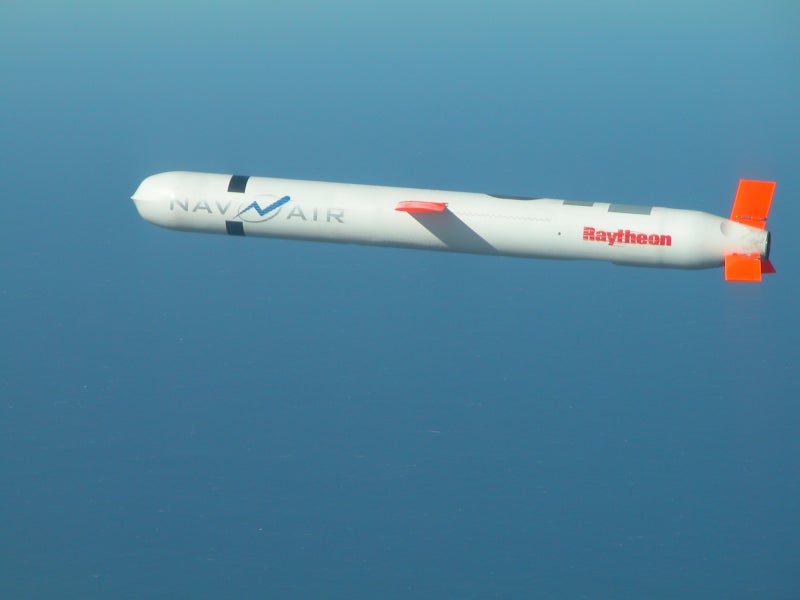
Tomahawk is a long-range, all-weather, subsonic cruise missile originally produced by General Dynamics.
The missile is currently manufactured by Raytheon and is in service with the surface ships and submarines of the US and the UK’s Royal Navy.
Recommended Buyers Guides

The Tomahawk Land Attack Missile (TLAM) can strike high-value or heavily defended land targets. The Block II TLAM-A missile achieved initial operating capability in 1984. The missile was first deployed in combat during Operation Desert Storm in 1991.
US deployment of Tomahawk missiles against Iran
The US is using a range of weapons including the Tomahawk missile in the ongoing US-Israeli strike campaign Operation Epic Fury initiated against Iran.
Launched in February 2026, US Central Command (CENTCOM) claims the operation has struck more than 5,000 Iranian military assets.
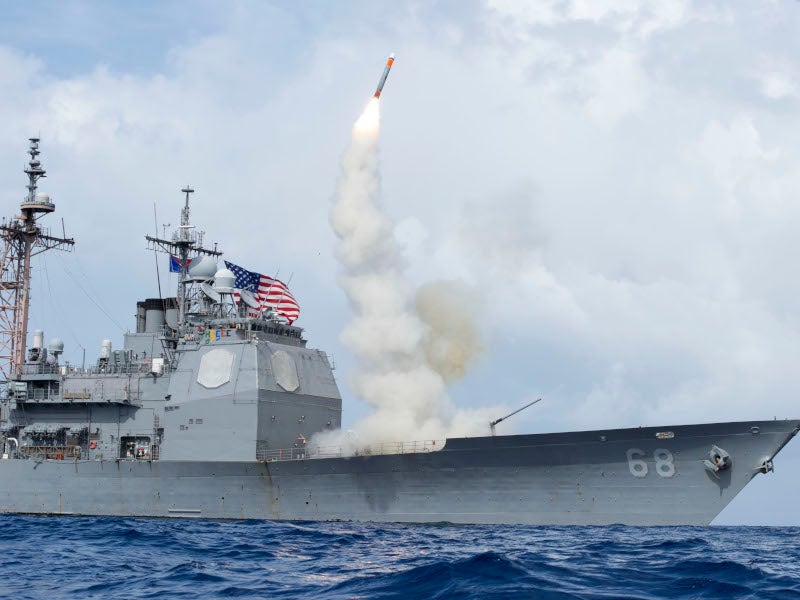
CENTCOM also revealed that naval vessels such as the Arleigh Burke-class guided-missile destroyers USS Spruance (DDG 111) and USS Thomas Hudner (DDG-116) are actively deploying Tomahawk missiles against Iran.
In March 2026, the US Chairman of the Joint Chiefs of Staff, General Dan Caine, revealed that the US was shifting its strategy from using stand-off missiles such as the Tomahawk to stand-in munitions such as Joint Direct Attack Munitions and Hellfire missiles.
Tomahawk missile orders amid Iran-Middle East crisis
Raytheon signed five major framework agreements with the US Department of Defense in February 2026 aimed at scaling up manufacturing capacity and accelerating delivery schedules for several key systems.
These include the Tomahawk missiles in Land Attack and Maritime Strike configurations, AMRAAM missiles, Standard Missile-3 Block IB (SM-3 IB) and Block IIA (SM-3 IIA) interceptors, and the Standard Missile-6 (SM-6).
In March 2026, Mobix Labs secured a production purchase order to supply components for the Tomahawk cruise missile programme.
Tomahawk design features
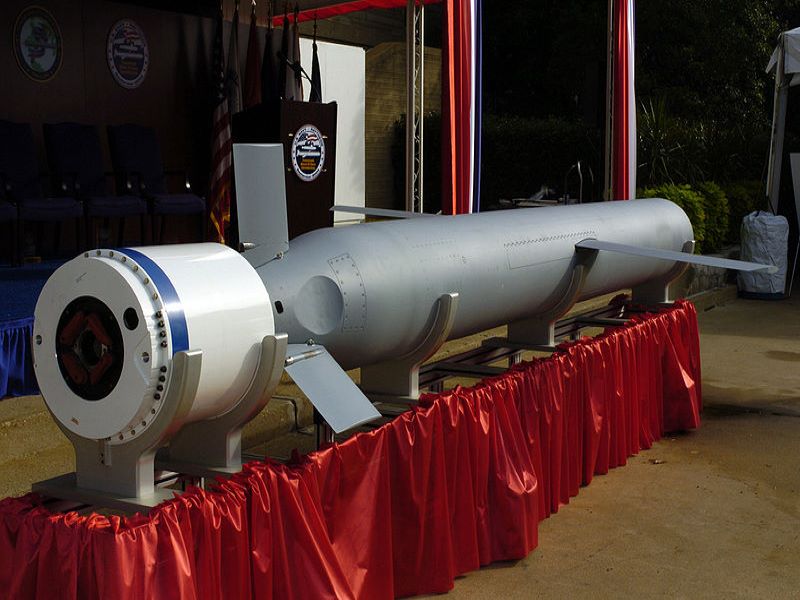
The Tomahawk missile is 6.18m (20.3ft) in length, 53.34cm (21in) diameter and has a 2.59m wingspan. The weight of the missile is 1,510kg (3,330lb) with a rocket motor. It has a lifespan of 30 years.
The missile is designed to operate at very low altitudes while maintaining high-subsonic speeds. Its modular design enables the integration of numerous types of warheads, guidance and control systems.
It carries a nuclear or conventional payload and can be armed with a nuclear or unitary warhead or a conventional submunitions dispenser with combined-effect bomblets.
The Tomahawk weapon system includes the Tomahawk missile, Theatre Mission Planning Centre/Afloat Planning System and the Tomahawk weapon control system for surface vessels or the combat control system for submarines.
Guidance and control
The Tomahawk Block IV uses GPS navigation and a satellite datalink to continue through a pre-set course. The missile can be reprogrammed in-flight to a new target.
The two-way satellite communications are used to perform post-launch mission changes throughout the flight. The on-board camera provides imagery of the target to the commanders before the strike.
The guidance system is assisted by Terrain Contour Matching. The Digital Scene Matching Area Correlation system or GPS provide terminal guidance.
The Tactical Tomahawk Weapons Control System (TTWCS) integrated within the ship’s systems computes the path to engage targets. The system enables the planning of new missions on board the launch vessel. TTWCS is also used to communicate with multiple missiles for reassigning the targets and redirecting the missiles in flight.
The Block IV Tomahawk missile is outfitted with an advanced electronic support measure seeker. Its joint multi-effects warhead enables the commander to control the blast.
Propulsion
The Tomahawk Block IV missile is powered by a Williams International F415 cruise turbo-fan engine and ARC MK 135 rocket motor. The propulsion provides a subsonic speed of 880km/h.
Tomahawk launch platforms
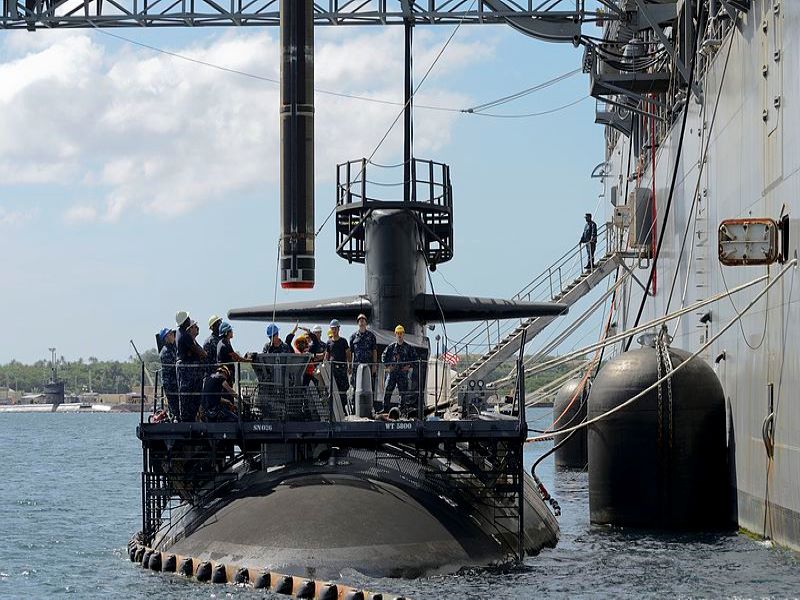
The missile can be launched from more than 140 US Navy ships and submarines, and Astute and Trafalgar class submarines of the Royal Navy. All cruisers, destroyers, guided missile and attack submarines in the US Navy are equipped with a Tomahawk weapons system.
US Navy launch platforms were modified to accommodate upgraded Tomahawk missile variants. Four Ohio-class nuclear ballistic missile submarines were converted into cruise missile submarines for firing Tomahawk missiles.
The Virginia-class submarines and the Royal Navy Astute class submarines were also fitted with new vertical launch modules for Tomahawk missiles.
Tomahawk missile variants
The Tomahawk family of missiles includes several variants, carrying different warheads. The UGM-109A Tomahawk (Block II TLAM-A) carries a W80 nuclear warhead.
RGM/UGM-109C (Block III TLAM-C) is a conventional unitary variant, carrying a 1,000lb-class warhead. RGM/UGM-109D (Block III TLAM-D) is a submunitions dispenser variant armed with 166 combined-effects bomblets.
RGM/UGM-109E Tomahawk (Block IV TLAM-E) is the latest member of the Tomahawk missile family. It carries a 1,000lb-class unitary warhead for a maximum range of 900 nautoical miles (nm).
The Tomahawk Block IV missile demonstrated its moving target capability in tests conducted in February 2015. Raytheon conducted an active seeker test flight for the Tomahawk Block IV missile in January 2016.
The Tomahawk Block IV missiles were converted and upgraded to Block V in 2017. The upgraded Tomahawk includes extended range, enhanced navigation and communication systems and modernised data-link radio.
The upgrades were performed at Raytheon’s facility in Tucson, Arizona. The US Navy plans to use the upgraded Tomahawk cruise missiles beyond 2040.
Raytheon was contracted to integrate the upgraded navigation and communication systems into the Block IV Tactical Tomahawk (TACTOM) missile in March 2020. The upgraded version is known as the Block V TACTOM.
The Tomahawk Block Va variants are named Maritime Strike and have the capability of hitting a moving target at sea. The Block Vb features the joint multi-effects warhead system that can engage a wider range of land-based targets.
Tomahawk orders and deliveries
The US signed a foreign military sales (FMS) agreement with the UK in 1995 to supply 65 Tomahawks for use with the Royal Navy nuclear submarines, with the first batch delivered in 1998.
The US Government approved an agreement in 2003 to deliver 65 Tomahawk Block IV missiles to the UK.
In August 2004, the US Navy placed a $1.6bn multi-year procurement contract with Raytheon for 2,200 Tomahawk Block IV missiles.
Raytheon won a $346m contract to supply 473 Tomahawk Block IV missiles to the Royal Navy in March 2006. The Block IV entered service with the Royal Navy in March 2008.
Raytheon was awarded a $207m contract in March 2009 for 207 Tomahawk Block IV missiles.
The US Navy placed a $338m contract with Raytheon in June 2012 for the delivery of 361 Tomahawk Block IV missiles. Another contract worth $254.6m was awarded for Tomahawk Block IV in the same year.
The US Navy awarded a $251m contract to Raytheon for the delivery of Tomahawk Block IV missiles for both the US Navy and Royal Navy in September 2014.
Raytheon received a $139.25m contract from the US Navy in January 2015 for 100 Tomahawk Block IV missiles, followed by a $122m contract in February 2015 for 114 Tomahawk Block IV missiles.
The US Navy awarded a $303.75m contract for 214 Tomahawk Block IV missiles and spares in December 2016, followed by a $260.34m contract in November 2017 to supply 196 Tomahawk Block IV missiles.
In August 2018, the US Navy awarded a $143.27m contract to Raytheon to supply 100 Tomahawk Block IV missiles.
Raytheon received a $349m contract in August 2019 for phase two of the Maritime Strike Tomahawk Rapid Deployment Capability to improve the Tomahawk cruise missile system.
In March 2020, Raytheon was awarded two contracts, including a $493.44 contract for the modernisation of Block IV TACTOM missiles and a $147.89m contract for the delivery of 90 Block V TACTOM missiles. Another contract worth $145.1m was awarded in December 2020 for 90 Block V TACTOM missiles.
In May 2022, a $217.12m contract was awarded to Raytheon to procure 154 full-rate production Block V TACTOM missiles, followed by a $171.18m contract in December 2022 for 111 Block V TACTOM missiles. The missiles are intended for the Army, Navy and Marine Corps.
In November 2023, the Government of Japan requested the approval of an FMS to supply up to 200 Tomahawk Block IV All-Up-Rounds (AURs), up to 200 Tomahawk Block V AURs, and 14 TTWCS for $2.35bn.
The Japan Ministry of Defence signed a letter of acceptance with the US Government for the FMS in January 2024. The missile deliveries are scheduled to end by 2027.
In March 2024, Raytheon won a $287m contract for the modernisation of 166 Tomahawk Block IV missiles, including 142 for the US Navy and 24 for FMS customers.
Raytheon received a contract valued at $401.2m in December 2024 to supply 131 Block V Tomahawk missiles. The allocation comprises 26 for the US Army, 16 for the US Marine Corps, 11 for Australia and 78 for Japan.
The Government of the Netherlands requested an FMS valued at $2.19bn to purchase up to 163 Tomahawk Block V missiles, 12 Tomahawk Block IV missiles, up to ten TTWCS and up to two Tomahawk Block IV telemetry missiles.
In December 2025, Raytheon secured a $384m contract amendment, taking total committed funding to $785.25m. The order includes the procurement of a further 219 Block V Tomahawk AURs, lifting the overall quantity to 350 for the US Navy, US Army, US Marine Corps and two FMS customers.
Raytheon secured a $380.8m contract in January 2026 to cover Lot 5 and Lot 6 Tomahawk missile recertification and upgrades, and the supply of Tomahawk spares and replacement parts, including rotable pool assets.
Out of the committed funding, $99.4m provided through FMS will be committed on contract award, with further contributions to follow from the US Army, US Navy and US Marine Corps.
