

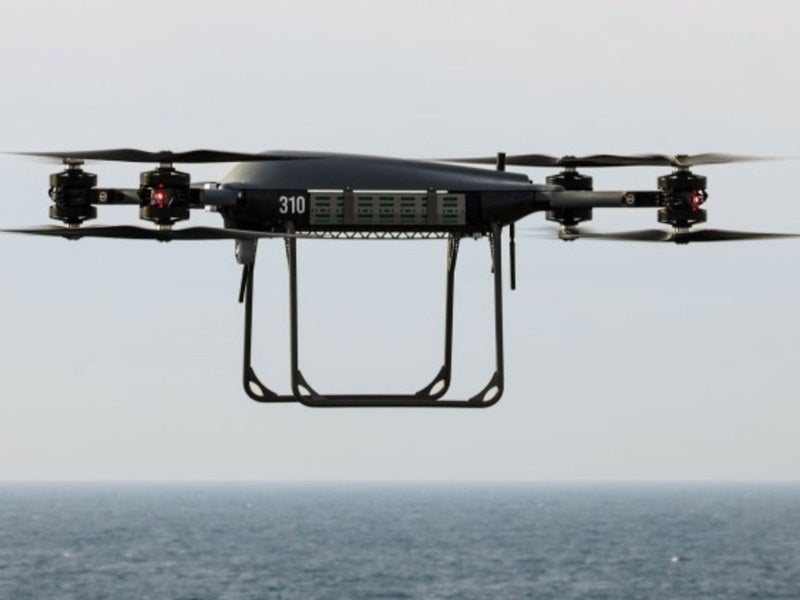
The T-150 uncrewed aircraft system (UAS) is a logistics drone designed and developed by Malloy Aeronautics, a BAE Systems-owned entity.
It is an all-electric heavy-lift UAS that can deliver rapid response solutions to a wide range of applications.
Recommended Buyers Guides

The T-150 is in frontline service with the US Marine Corps and Royal Marines.
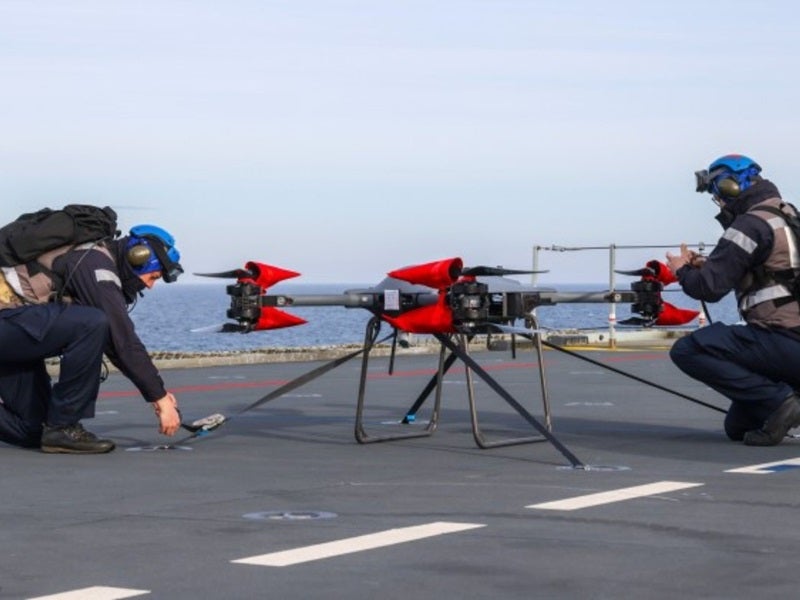
The platform was launched as part of a trial by the UK Royal Navy’s 700X Naval Air Squadron to transfer supplies between vessels during its Indo-Pacific deployment in September 2025.
It was trialled as a lower-cost alternative to using helicopters for this task, allowing the aircraft to concentrate on their primary mission of safeguarding the task force.
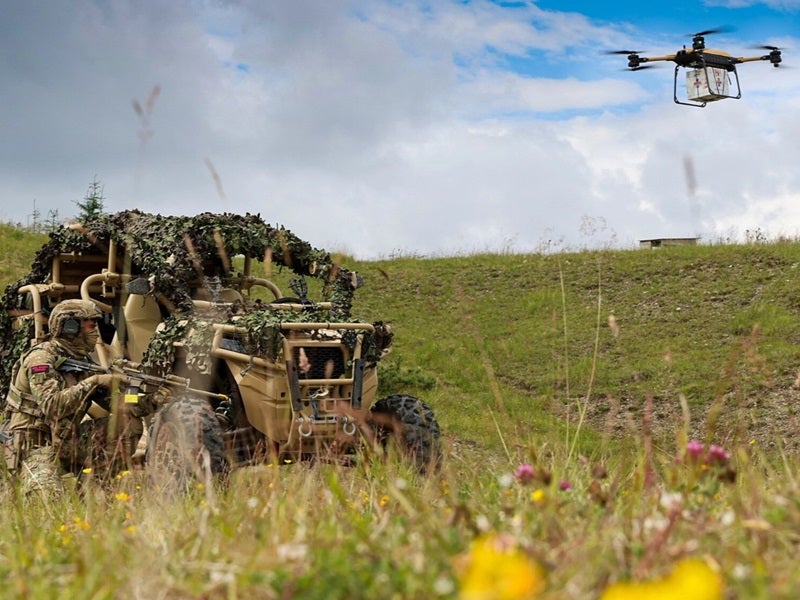
In the same month, the Royal Navy declared the T-150 ready for front line operations. A fleet of T-150 systems will be deployed to transport ammunition, weapons, food, and personal and medical supplies to Royal Marines Commandos operating in a wide range of extreme environments.
The T-150 is also being assessed in service with the UK Carrier Strike Group in the Indo-Pacific and has recently achieved a milestone, transferring supplies from the aircraft carrier HMS Prince of Wales to the destroyer HMS Dauntless for the first time.
Nine T-150 aircraft are presently assigned to Operation Highmast, the UK Carrier Strike Group’s eight-month Indo-Pacific deployment. The systems have completed almost 150 deck landings and logged more than 20 hours of sortie flying.
The T-150 was also tested in a joint event hosted by the Royal Navy and the US Army in South Korea in October 2025. The system demonstrated its ability to rapidly transport supplies such as ammunition, water and medical kits across operational distances, while also offering assistance to casualties when other personnel are unable to reach them.
T-150 specifications
The T-150 UAS measures 2.65m in length, has a width of 2.05m and is 0.71m in height.
The uncrewed aircraft has a maximum payload capacity of 68kg and can fly at a maximum speed of 30 metres per second (m/s) with a range of up to 37km.
The UAS features eight rotor blades, each around 2ft in length, with an endurance of up to 40 minutes.
It incorporates removable, hot-swappable rechargeable batteries and a remote payload release mechanism.
Design and features of T-150
The T-150, part of Malloy Aeronautics’ T-Series platform, is built on an open architecture to facilitate integration and future upgrades. Its weatherproof construction ensures reliable performance even in adverse conditions.
The platform offers vertical take-off and landing (VTOL) capability combined with multi-role functionality, enabling rapid deployment and flexible mission profiles. It requires a team of two, including one remote pilot and a second to monitor the aircraft’s command unit.
The aircraft can be flown manually or autonomously to designated waypoints with an underslung cargo.
Customised transport solutions of the system support secure and efficient movement, while the design is free of International Traffic in Arms Regulations restrictions to simplify international interoperability and export.
Optional features include precision autonomous landing, anti-GPS jamming, an on-board mission computer and a bespoke advanced mission-planning system.
The aircraft’s limited training requirements, paired with low operating and maintenance costs, provide a cost-effective, sustainable alternative to traditional systems.
It is also available in a sea operation configuration, customised payload integration and interoperability with other military systems.
T-Series variants
Malloy Aeronautics developed the T‑Series for military missions that demand heavy-lift capability.
The platform enables supplies to be moved without putting troops in direct danger and supports operations in high-risk environments and disaster areas while maintaining a minimal environmental footprint.
The series comprises various UAS platforms based on the payloads, including the T-400, T-600 and T-650.
The T-400 has a payload capacity of 180kg under the harshest of conditions and features removable batteries.
The T-600 was originally designed as a demonstrator aircraft, capable of VTOL with a payload capacity of up to 200kg and speeds in excess of 125km per hour. It has an operational range of up to 55km, depending on payload.
The T-650, claimed to be the world’s heaviest-lifting all-electric VTOL UAS, will be developed to operate either as a stand-alone asset or integrated across multi-domain systems with other assets across the fleet, offering further opportunities to streamline operations.
It will be capable of delivering 300kg of payload and will benefit from a number of advantages resulting from its VTOL configuration. It is runway independent with a beyond visual line of sight capability, enabling it to operate from hard-to-reach locations that are inaccessible by most alternative forms of aircraft or ground vehicles.
