

The CH-53K® King Stallion is a next-generation heavy-lift cargo helicopter manufactured by Sikorsky Aircraft, a Lockheed Martin company.
The King Stallion helicopter made its first flight in October 2015 while the first CH-53K helicopter was delivered to the Marine Corps in May 2018.
Recommended Buyers Guides

The rotorcraft, which serves as a critical land and sea-based logistics connector, will eventually replace the CH-53E helicopter of the US Marine Corps (USMC).
CH-53K is the only heavy-lift helicopter that will remain in production through 2032 and beyond.
In September 2025, Sikorsky was awarded a $10.85bn contract by the US Navy to produce up to 99 CH-53K King Stallion helicopters for the US Marine Corps over five years.
The contract is the largest single order of that type to date and will guarantee steady deliveries between 2029 and 2034.
CH-53K King Stallion development
Sikorsky built seven CH-53K prototypes, including four engineering development models and two System Development Test Article (SDTA) aircraft.
Spirit AeroSystems delivered the fifth CH-53K King Stallion SDTA helicopter fuselage in April 2018.
The first training device for the CH-53K helicopter was delivered to the H-53 Heavy Lift Helicopters programme office (PMA-261) in April 2020.
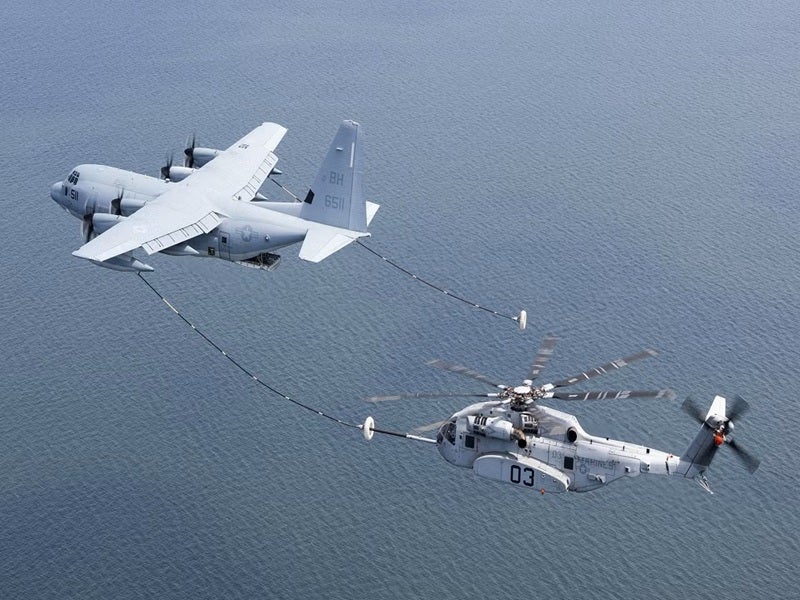
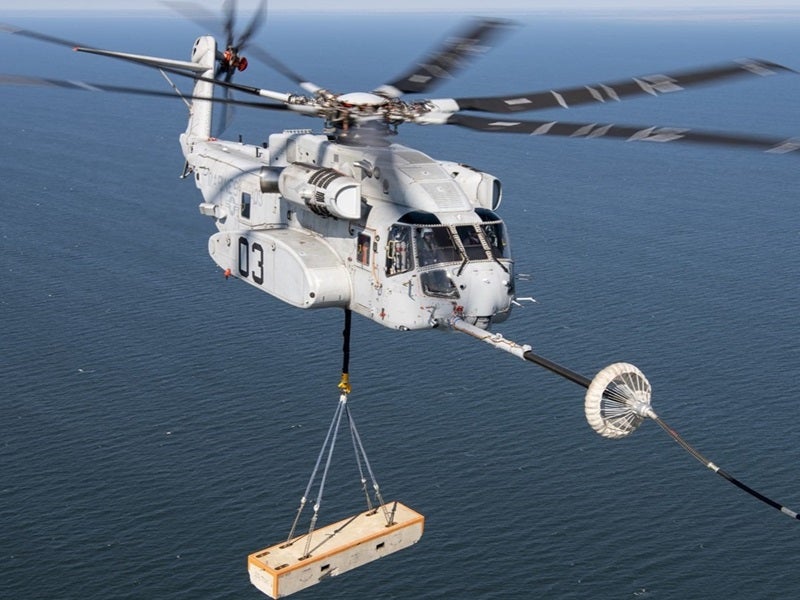
The helicopter demonstrated its aerial refuelling capabilities during an air-to-air refuelling test with a KC-130J aerial refuelling tanker in the same month.
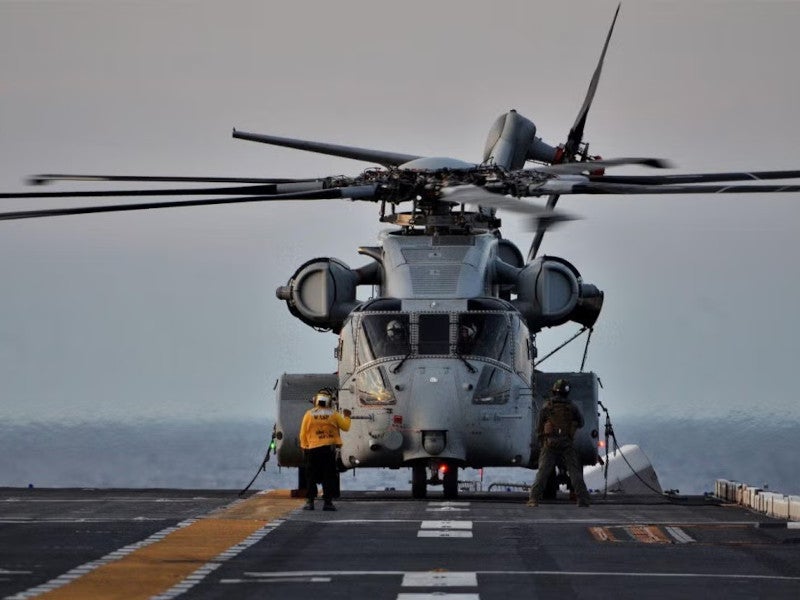
This was followed by the rotorcraft completing a series of sea trials in the Atlantic Ocean in June 2020. The tests were conducted on the US Navy’s Wasp-class landing helicopter dock (LHD) amphibious assault ship, USS Wasp.
The USMC announced initial operational capability (IOC) for the CH-53K heavy‑lift helicopter in April 2022, confirming the platform’s readiness to deploy Marines and equipment forward worldwide.
Furthermore, the US Navy declared full-rate production of the CH-53K helicopter in December 2022.
CH-53K King Stallion design and features
The CH-53K helicopter’s design features a smaller shipboard footprint, reduced operating costs per unit, as well as fewer direct maintenance man-hours per flight hour when compared to the CH-53E.
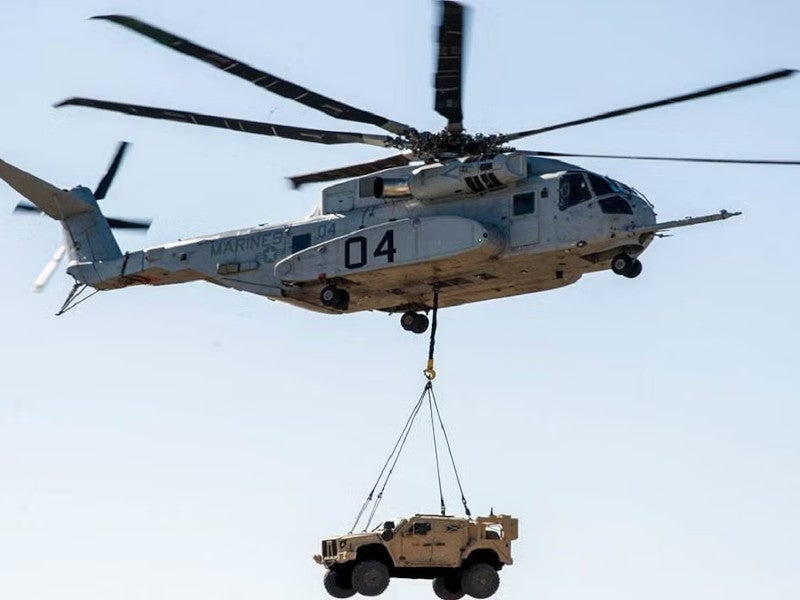
The helicopter has an overall length of 30.2m, a fuselage width of 5.3m and a height of 8.6m. It is engineered to carry 12,247kg at a mission radius of 203km in marine environments, representing nearly three times the baseline capacity of the CH-53E. Its maximum external lift capacity is 36,000lb (16,329kg).
The rotorcraft is operated by two pilots and can be accompanied by up to three aircrewmen, based on the mission requirements.
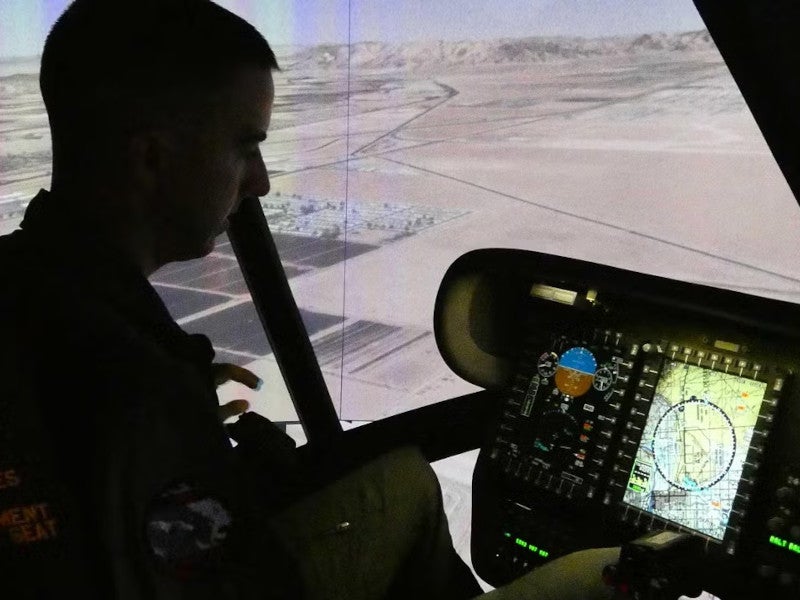
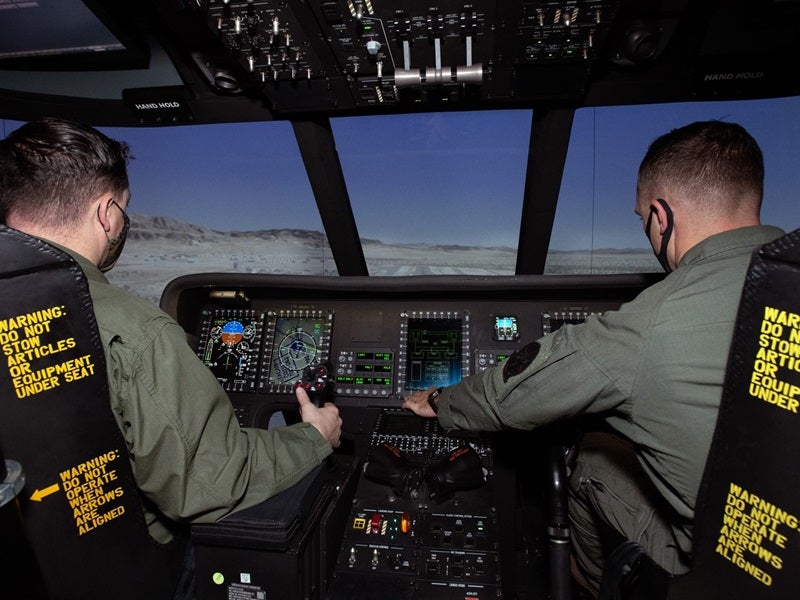
It can be installed with a containerised flight training device (CFTD), which offers realistic cockpit or system displays and can also simulate weather and tactical environment.
The CFTD can also connect to other simulators to provide enhanced attitude control and other aircraft training scenarios.
The powerful diagnostic functions enable the monitoring of the helicopter’s performance and health, allowing maintainers to resolve issues before a mission.
The helicopter is fitted with fourth-generation, high-efficiency composite rotor blades featuring swept anhedral tips. It also uses elastomeric rotor heads.
CH-53K cockpit
The CH-53K features a next-generation, joint-interoperable CAAS “glass” cockpit, designed to streamline and enhance the entire pilot-vehicle interface. The rotorcraft also features a fly-by-wire (FBW) flight control system, which reduces pilot workload.
The helicopter integrates five multi-function displays (MFDs) and two control display units (CDUs). The cockpit field of view of the helicopter is twice that of the CH-53E.
Cabin details of CH-53K
The cabin of the CH-53K measures 9.1m-long, 2.6m-wide and 2m-high. It can accommodate 34 crashworthy seats, including two pilots, two crew and 30 troops, and 24 litters.
The cabin is 30cm (12in) wider than that of the CH-53E helicopter, enabling the transportation of more troops with fewer trips. The helicopter can carry all Nato standard 463l pallets.
The flexible configurations offer maximum mission effectiveness while supporting loading/unloading of cargo without the need for reconfiguring and removing troop seating.
Engine and performance of CH-53K King Stallion
The helicopter is powered by three General Electric (GE) T408 turboshaft engines, each with a rated power output of 7,332 shaft horsepower (shp). Each engine is controlled by a dual-redundant full authority digital engine control (FADEC) system.
The new engine offers 57% more power and consumes 18% less fuel at 7,378shp, compared to the engines on board the H-53E helicopter. It also features 63% fewer parts, ensuring easy maintenance.
The helicopter cruises at a speed of 315km/h, which enables it to offer a quick response during critical situations and reduce the exposure of passengers and crew in hostile environments.
CH-53K King Stallion mission parameters
The CH-53K heavy-lift helicopter is designed for expeditionary heavy-lift transport of armoured vehicles, equipment and personnel.
It supports a range of military missions, including humanitarian aid, troop and equipment/cargo transport, and casualty evacuation (CASEVAC).
The rotorcraft can perform missions in the modern battlefield and support special operations forces, and combat search and rescue (CSAR) operations.
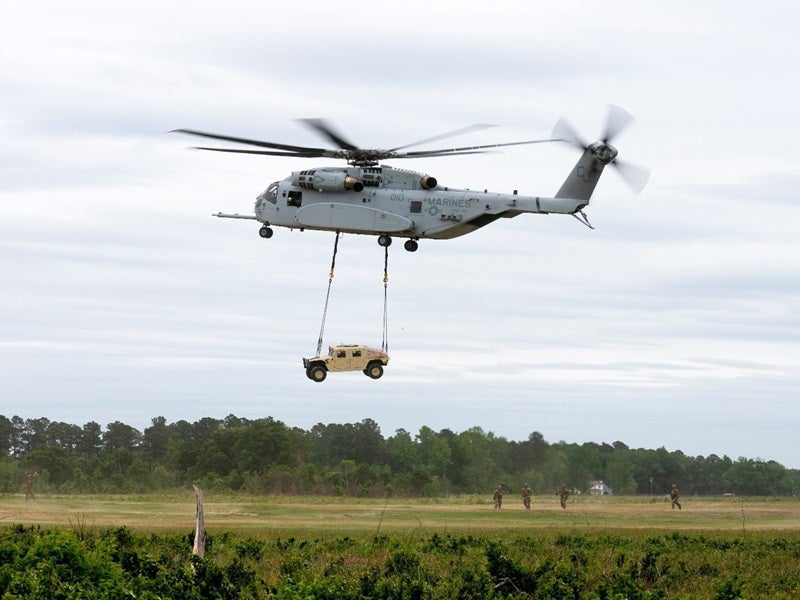
It can transport two up-armoured high-mobility multi-purpose wheeled vehicles (HMMWVs) or a light armoured vehicle variant under Navy high/hot conditions.
The wider cabin allows internal carriage of an HMMWV or two 10,000lb AMC 463L pallets.
Contractors involved
GE Aviation won a $143m contract from the US Naval Air Systems Command for building 22 engines for the CH-53K helicopter in November 2017.
Spirit AeroSystems is responsible for supplying the fuselage and performing the entire assembly of the helicopter’s cockpit and cabin.
The Protective Group received a contract to provide a crew protection kit for the helicopter in September 2018.
Lockheed Martin partnered with Veraxx to provide CFTD for the rotorcraft.
Orders and deliveries of CH-53K aircraft
The US Navy awarded Sikorsky a $2.7bn contract to build and deliver 35 additional CH-53K helicopters in August 2023.
In July 2022, Sikorsky delivered the third Low-Rate Initial Production (LRIP) CH-53K helicopter to the USMC. This was the first helicopter from the Lot 2 LRIP contract, worth $1.13bn, awarded by the US Navy in 2019 and the seventh CH-53K delivered to the fleet overall.
Sikorsky delivered two more CH-53K helicopters to the USMC in the final quarter of 2022.
A contract for nine additional CH-53K aircraft at a lower unit price than previous lot buys was signed in February 2022.
In June 2021, Sikorsky won another contract to build nine CH-53K heavy lift helicopters.
Sikorsky was awarded a contract to build six CH-53K King Stallion helicopters in October 2020 as part of a 200-aircraft Programme of Record for the USMC.
