
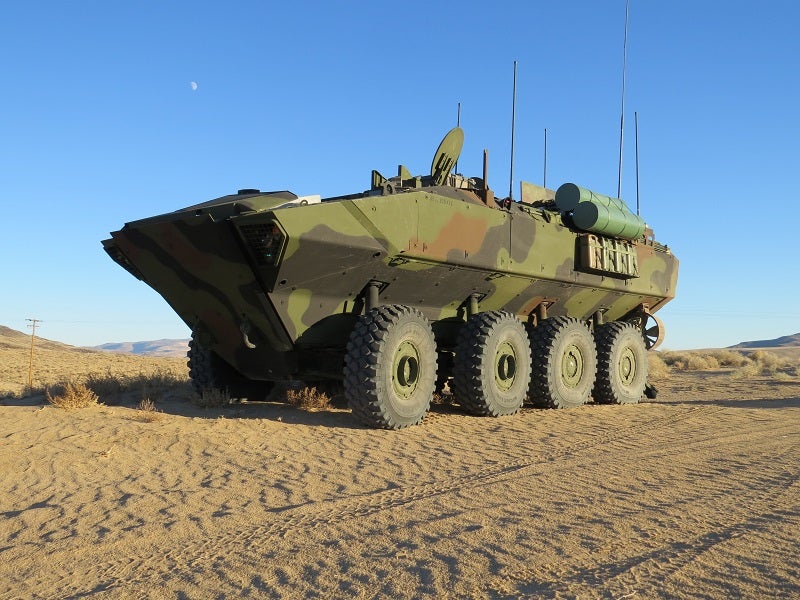
The US Marine Corps (USMC) is set to return its Amphibious Combat Vehicles (ACVs) to carry out unrestricted waterborne operations.
Since September last year, ACV operations have been restricted to land mobility and conducting gunnery and amphibious operations in protected waters.
Go deeper with GlobalData


Discover B2B Marketing That Performs
Combine business intelligence and editorial excellence to reach engaged professionals across 36 leading media platforms.
The service had suspended ACV operations in unprotected waters due to a towing mechanism issue.
The USMC said that a new tow rope technology had been developed to fix the towing issues.
The new tracked, fully amphibious ACVs will replace the USMC’s amphibious assault vehicles (AAVs).
USMC Plans, Policies and Operations deputy commandant lieutenant general David Furness said: “Amphibious operations, including the use of amphibious ship-to-shore connectors, is a foundational aspect of Marine Corps operations and is critical to the future force and its ability to remain the nation’s premier expeditionary force in readiness.”
US Tariffs are shifting - will you react or anticipate?
Don’t let policy changes catch you off guard. Stay proactive with real-time data and expert analysis.
By GlobalDataThe solution will soon be deployed to all units and training will be provided.
To meet new equipment and training requirements, units will need to finish, authenticate and certify 18 tasks before restarting waterborne operations.
Requirements include ensuring training and qualifications for crew members, equipping embarked personnel with the required equipment and putting the vehicles through all necessary inspections.
Other requirements include the use of safety boats at operations, sea state evaluations and positive communication.
These tasks were set following an investigation into an AAV accident at San Clemente Island, California, in July 2020, in which eight Marines and one sailor were killed.
Following installation and training with the new technology, units will be given permission to conduct unrestricted ACV amphibious operations in the open ocean and the surf zone.
Last February, the USMC took delivery of the first amphibious combat vehicle command (ACV-C) variant from BAE Systems for testing.
The ACV-C is designed to support command and control (C2) operations by maximising communications and analysis for marines on the battlefield.



