
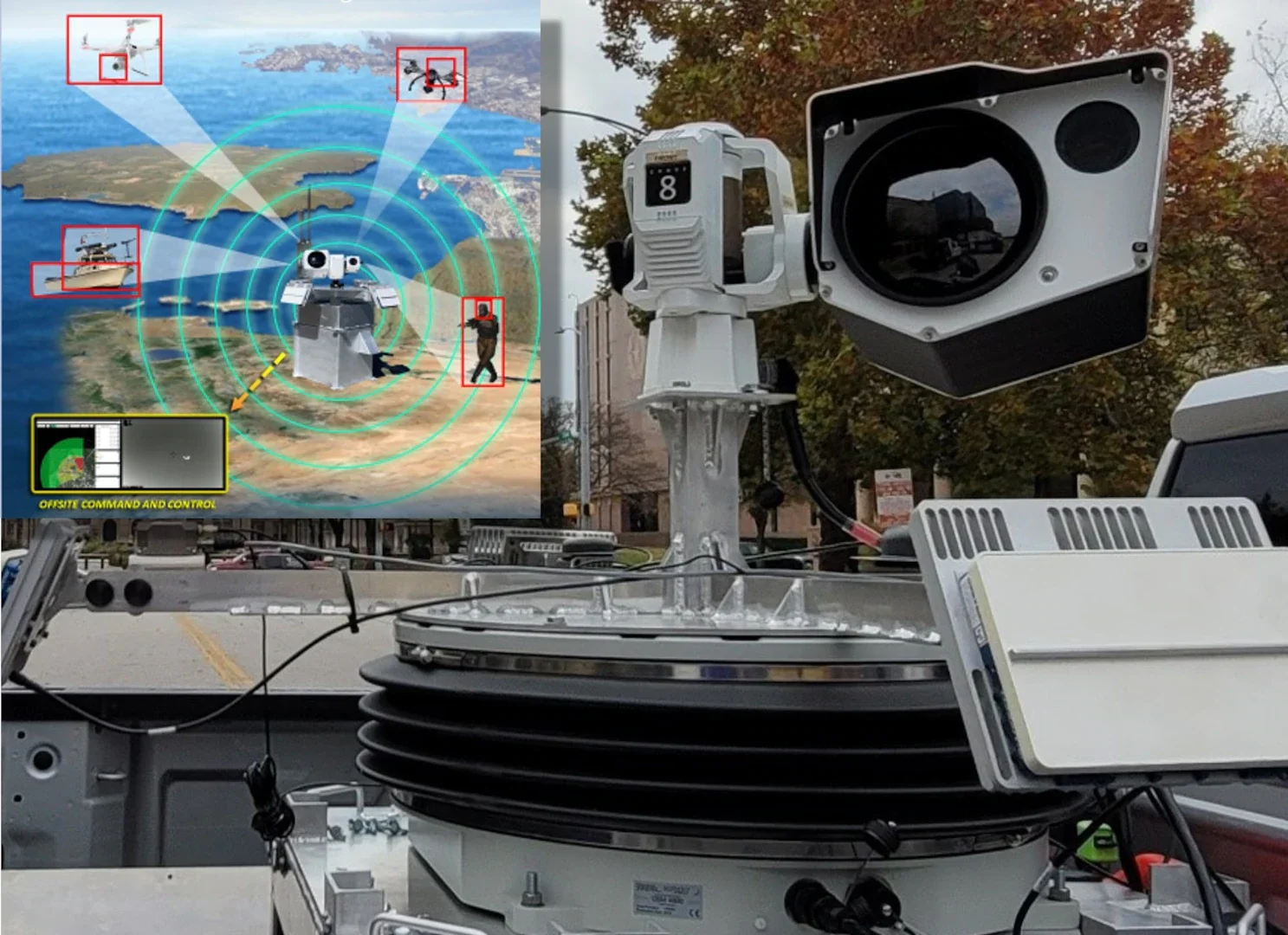
The US Naval Surface Warfare Center Panama City Division (NSWC PCD) has agreed to integrate its autonomous threat detection system onto Huntington Ingalls Industries’ (HII) uncrewed surface vehicle (USV).
Called Threat Tracker, the autonomous threat detection system has been developed by a small team of scientists and engineers from NSWC PCD’s Coastal and Maritime Security branch.
Go deeper with GlobalData


Discover B2B Marketing That Performs
Combine business intelligence and editorial excellence to reach engaged professionals across 36 leading media platforms.
The multi-platform system uses video analytics and machine learning algorithms, along with radar and sensor technologies to detect and classify possible threats.
The integration will be carried out as part of a cooperative research and development agreement (CRADA) between the two organisations.
The partnership will support the US Navy’s distributed maritime operations by providing warfighting dominance in the littoral battlespace.
Once the integration is complete, the 100% autonomous USV escort will be able to detect and intervene in various potential threats.
US Tariffs are shifting - will you react or anticipate?
Don’t let policy changes catch you off guard. Stay proactive with real-time data and expert analysis.
By GlobalDataHII Unmanned Systems Business Group senior director of technology Brian McKeon said: “One of the reasons HII has invested in USV autonomous and artificial intelligence technology is to support the navy’s distributed maritime operations.
“We’re excited to collaborate with NSWC PCD to further enhance Threat Tracker by merging the capabilities of both organisations.”
Awarded earlier this year on 20 February, the CRADA agreement falls under the transfer of technology (ToT) programme.
Under this ToT agreement, the NSWC PCD will provide required resources to HII, excluding the monetary support. The resources include equipment, personnel, facilities and intellectual property.
A US Navy case number has already been assigned to the Threat Tracker, signifying that it is on track to earn a patent. However, the patent licence agreement is yet to be developed.
NSWC PCD technology transfer manager Paige George said: “Allowing private industry to license federal technologies is good stewardship of taxpayer money and increases development of commercial technologies, which supports the national defence and economy.
“The benefit to the partner is access to federal resources which could lead to future partnerships/projects/first-come-first-serve access to the technology portfolio, relationships, etc.
“The benefit to the government is agility because the time and cost it takes for the government to take a programme from start to finish in most cases is much more expensive and time-consuming than having a company come in and license a technology and manufacture on a large scale.”



