
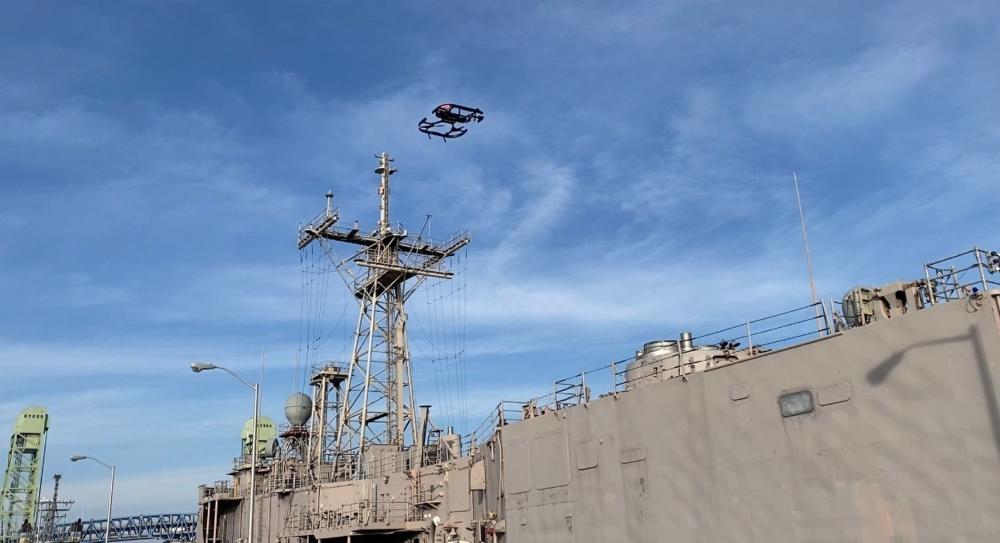
The US Navy has tested new applications for light detection and ranging (lidar) and 3D ship models aboard a decommissioned frigate.
A static detonation training event and subsequent evolution was conducted in March this year.
Go deeper with GlobalData


Discover B2B Marketing That Performs
Combine business intelligence and editorial excellence to reach engaged professionals across 36 leading media platforms.
The event was conducted as part of a lidar-focused megaproject funded by the Naval Innovative Science and Engineering (NISE) programme.
The cross-warfare centre collaboration, called megaproject, involves Naval Surface Warfare Center’s (NSWC) Philadelphia Division (PD), Port Hueneme Division (PHD) and Carderock Division (CD).
Together, the warfare centres are working to develop 3D models of entire ships from lidar scans.
The 3D models will be used for battle damage assessment, repair, installation, modernisation, and for other fleet applications.
With the use of Lidar technology to develop 3D ship models, the megaproject partners aim to minimise the need for engineering teams to travel to the ships.
It will allow additional remote support including virtual ship checks, reduced response times to casualties and maintenance issues faced by fleet at the sea.
Lidar scans objects in 3D by striking laser beams on it and measuring the duration of their return.
This technology can be used for capturing broad network or cloud of data points and stitch together scans from different perspectives to create precise 3D representation of the object.
The warfare centres will also conduct static detonation and test evolution abroad an amphibious transport dock in Hawaii this summer during Exercise Rim of the Pacific (RIMPAC) 2022.
The upcoming evolution will test the concept of generating 3D data sets using aerial imagery.
NSWC PHD research manager Jason Bickford said: “If successful, the concept will demonstrate value of 3D scanning for battle damage assessment and repair and assess the ability for operational uncrewed aerial systems (UAS) in theatre to fill critical scanning role.”



